Inside the 2026 Binaytara Global Oncology Summit: Practical Solutions for Cancer Care in Low-Resource Settings

Author
Binaytara Team
Inside the 2026 Binaytara Global Oncology Summit: Practical Solutions for Cancer Care in Low-Resource Settings
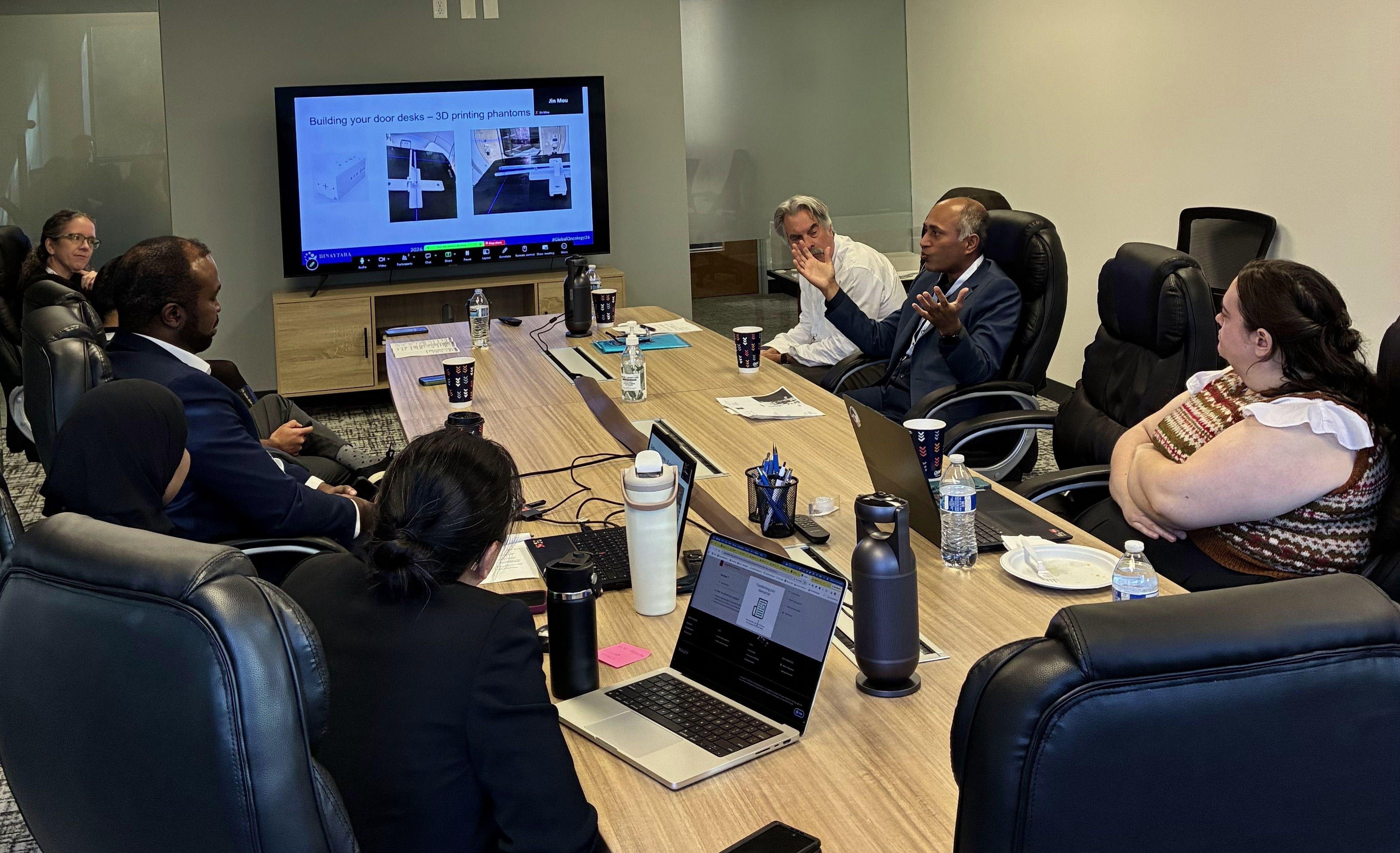
Every year, the gap between what’s medically possible and what’s actually delivered to cancer patients in low- and middle-income countries (LMICs) grows a little harder to ignore. At the 2026 Binaytara Global Oncology Summit in Seattle, clinicians, medical physicists, pathologists, and public-health researchers from around the world gathered to talk honestly about that gap.
The conversation was driven by presentation and discussion of specific projects, specific failures, and specific fixes already underway in places like Nepal, Uganda, Mozambique, and rural Washington State.
Diagnosis Is the Bottleneck, Not Just Drug Access
A recurring theme across the day: it’s not that life-saving cancer drugs don’t exist in LMICs; it’s that too often, patients can’t be diagnosed precisely enough to use them. Chronic myeloid leukemia (CML), for example, is highly treatable with oral targeted therapy, but testing for drug resistance usually requires lab infrastructure most LMICs lack. Dr. Vivian Oehler’s work on dried-blood-spot testing is changing that math: a sample that costs roughly $500 to ship as live blood can instead travel for the price of a postage stamp, dried and stable, with new point-of-care devices closing the gap even further.
The same story played out in Mozambique, where a handful of pathologists serve the entire country, and in Uganda, where donated sequencing technology improved diagnosis but couldn’t move AML survival rates on its own — because diagnosis without safe, deliverable treatment doesn’t save lives. Telepathology partnerships, like a weekly virtual case review between Lagos University Teaching Hospital and London’s Royal Marsden, are emerging as one of the more scalable ways to stretch scarce specialist capacity across borders.
Reaching Women Who Don’t Know to Look for Care
A standout project came out of Janakpur, Nepal, where Binaytara’s own cervical cancer screening program flipped the usual model: instead of waiting for women to find a clinic, the team brought a low-cost, rapid HPV test directly to communities through trusted local health volunteers. The results were striking — not just in detection rates, but in what moved the needle on follow-up care. Simply explaining the screening procedure in advance, and bringing families into the conversation, made a measurable difference in whether women returned for treatment. It’s a reminder that in global health, awareness campaigns and actual behavior change are two different things.
Training the Next Generation, Remotely
Workforce shortages came up in nearly every session, from radiation physics to pathology to oncology itself. But the summit’s most hopeful thread was how much of that gap is closing without anyone getting on a plane. Programs training medical physicists in Ukraine and Nigeria, and a free, hybrid pathology education network built by Dr. Lewis Hassell, are proving that well-designed remote training can scale specialist knowledge faster — and more sustainably — than one-off international trips ever could.
What Actually Makes Global Health Projects Work
Perhaps the most candid conversation of the day centered on failure. Speakers swapped stories of donated equipment that never ran: a sequencer with no local technician to fix it, a radiation machine with no budget for its own supplies. The pattern was consistent enough to name: solutions that are genuinely requested and owned by local partners last. Solutions pushed in from outside, however well-intentioned, tend to gather dust.
That lesson extended to how organizations like the Max Foundation structure their own work — treating medicine access not as permanent charity, but as a bridge toward full local ownership, country by country, as health systems and economies grow strong enough to take over.
The Throughline
Across every session, one idea kept resurfacing: closing the global cancer care gap isn’t really about any single breakthrough. It’s about matching the right diagnostic tool, the right training model, and the right local partnership to each specific setting — and being honest about which well-intentioned ideas simply don’t survive contact with reality.
Binaytara is proud to have convened this conversation, and even prouder of the partners — from Fred Hutch to the Uganda Cancer Institute to the Max Foundation — doing the actual work. If you’re working on closing this gap yourself, we’d love to hear from you.
Recommended Articles
City of Hope’s Dr. Vinod Pullarkat Selected for Binaytara Distinguished Faculty Award
Learn More