Binaytara Research Awards
Research funding for early-career oncology faculty and fellows
Overview
Binaytara Research Awards provide competitive grant funding for early-career faculty and fellows pursuing innovative cancer research. Awards range from $25,000 to $50,000 and are presented at Binaytara's cancer conferences across oncology, hematology, and cancer health disparities.
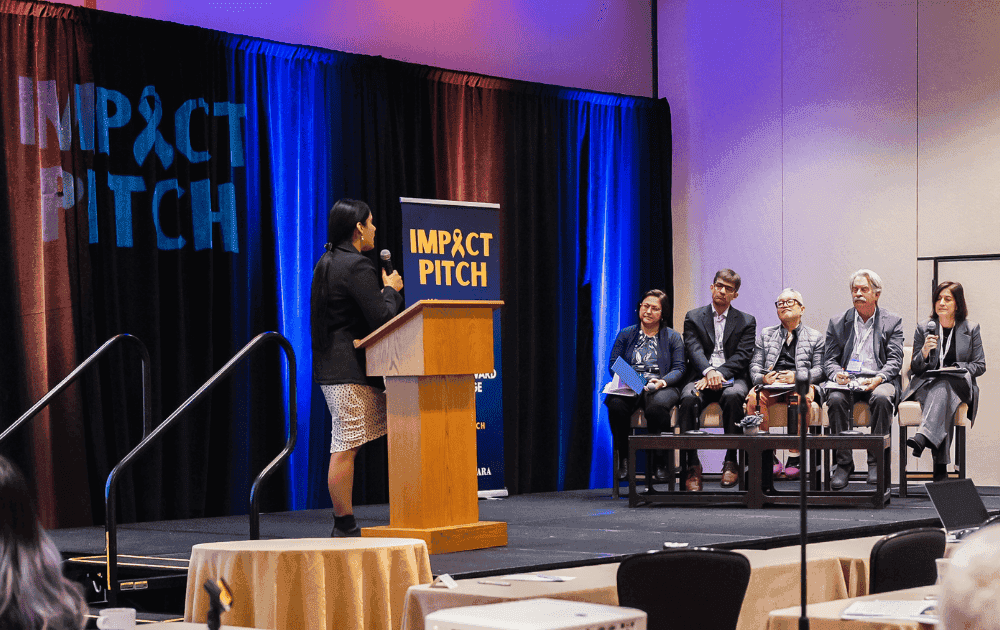
What sets these awards apart is the selection process. Rather than a traditional closed-review grant application, finalists present their research live at Binaytara's Impact Pitch: Research Award Challenge, a live competition where a panel of expert reviewers called Catalysts evaluate each proposal and determine which projects receive funding.
Who can apply: Early-career hematology/oncology faculty and fellows. No U.S. citizenship requirement. Applicants from any institution are welcome. See individual award pages for specific eligibility requirements.
ANNUAL FUNDING OPPORTUNITIES
Binaytara Implementation Science Research Awards
Funding for research focused on improving how evidence-based cancer care is delivered in real-world settings, addressing access, equity, and delivery gaps. Awards up to $25,000 each, tied to the Summit on Cancer Health Disparities.
Binaytara Lung Cancer Research Awards
Funding for high-impact research aimed at improving the understanding, diagnosis, and treatment of lung cancer. Two awards of up to $50,000 each, tied to the Seattle and Brooklyn Lung Cancer Conferences.
Binaytara Precision Oncology Research Awards
Funding for emerging investigators driving innovation in precision oncology, genomics, and targeted cancer therapies. One award of up to $25,000, tied to the Binaytara Precision Oncology Summit.
Shaji Kumar Hematology Research Awards
Funding for research advancing the science and care of hematologic malignancies, including leukemia, lymphoma, and myeloma. Faculty awards up to $50,000 and fellow awards up to $25,000, tied to the National Summit on Hematologic Cancers.

Step 1: Submit an Abstract
For awards in Precision Oncology, Hematology, and Implementation Science, applicants submit an abstract describing completed or ongoing research for presentation at the relevant Binaytara scientific meeting. Only first authors of accepted abstracts are eligible for Research Award consideration.

Step 2: Submit a Research Proposal
For awards in Lung Cancer, no abstract is required, and applicants may submit a research proposal instead. For first authors of accepted abstracts from Step 1, they will be invited to submit a research proposal. The proposed research may be entirely independent of the abstracted work.

Step 3: Impact Pitch: Research Award Challenge
Finalists present their proposals live to a panel of expert reviewers called Catalysts at the corresponding Binaytara conference. The format is a brief presentation followed by Q&A from the Catalysts in front of a live audience of conference attendees.
Previous Winners
Empowering the next generation of oncology leaders to make a real-world impact
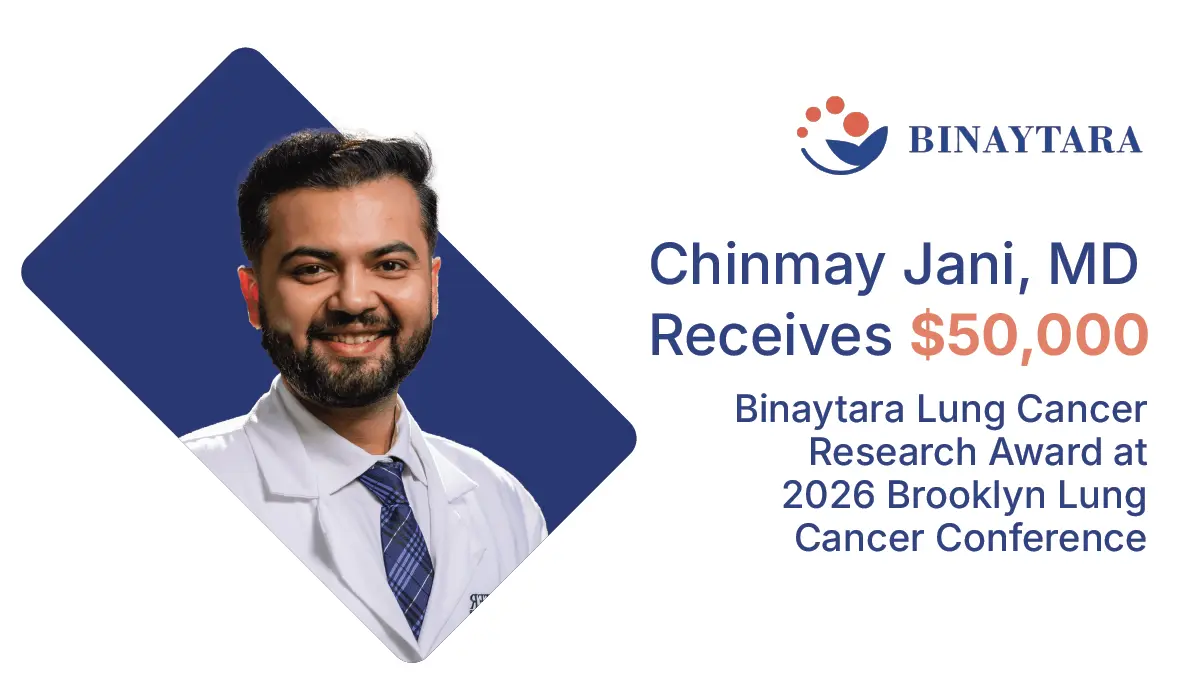
"I am deeply grateful to Binaytara, the Brooklyn Lung Cancer Conference chairs, and the Impact Pitch judges for believing in this project. Binaytara's support will now help us move this collaborative vision closer to clinical implementation as I transition to a faculty role in Thoracic Oncology and Experimental Therapeutics at Sylvester Comprehensive Cancer Center."
Dr. Chinmay Jani, University of Miami Sylvester Comprehensive Cancer Center
Read more about Dr. Jani's Impact Pitch experience
"The Impact Pitch is more than just a competition; it's a platform for early-career investigators to showcase their passion and gain invaluable mentorship. It's an incredible opportunity to learn from experts and refine our approach to improving patient outcomes."
Dr. Akshee Batra, Sylvester Comprehensive Cancer Center, University of Miami
Read more about Dr. Batra's Impact Pitch experience
"Winning this award has provided a vital boost to our research into health disparities. Binaytara's support allows us to focus on data-driven solutions that ensure every patient, regardless of their background, has access to life-saving cancer care."
Dr. Benjamin Li, Fred Hutchinson Cancer Center
Read more about Dr. Li's Impact Pitch experience
Why the "Impact Pitch" Works
Unlike traditional "black box" grant applications, our winners highlight three core benefits:
- Visibility: Present your ideas directly to a panel of world-renowned oncology leaders.
- Mentorship: Receive real-time feedback to sharpen your research methodology.
- Community: Join a network of investigators dedicated to closing the gap in cancer care.
Apply for a Research Grant
Binaytara's Research Awards Provide Grant Funding for Projects that Advance Access to Cancer Care
Binaytara Lung Cancer Research Awards
- Up to $50,000 tied to the 2026 Seattle Lung Cancer Conference, and one award up to $50,000 tied to the Brooklyn Lung Cancer Conference
Binaytara Precision Oncology Research Awards
- Up to $25,000 tied to the 6th Binaytara Precision Oncology Summit: At The Forefront of Targeted Cancer Therapy
Shaji Kumar Hematology Research Award
- Up to $50,000 tied to the Summit on Hematologic Cancers
Implementation Science Research Award
-Up to $25,000 each tied to the Summit on Cancer Health Disparities