Healthcare’s Big Picture, Small Moments: Meet Binaytara Medical Officer Dr. Amit Chaudhary
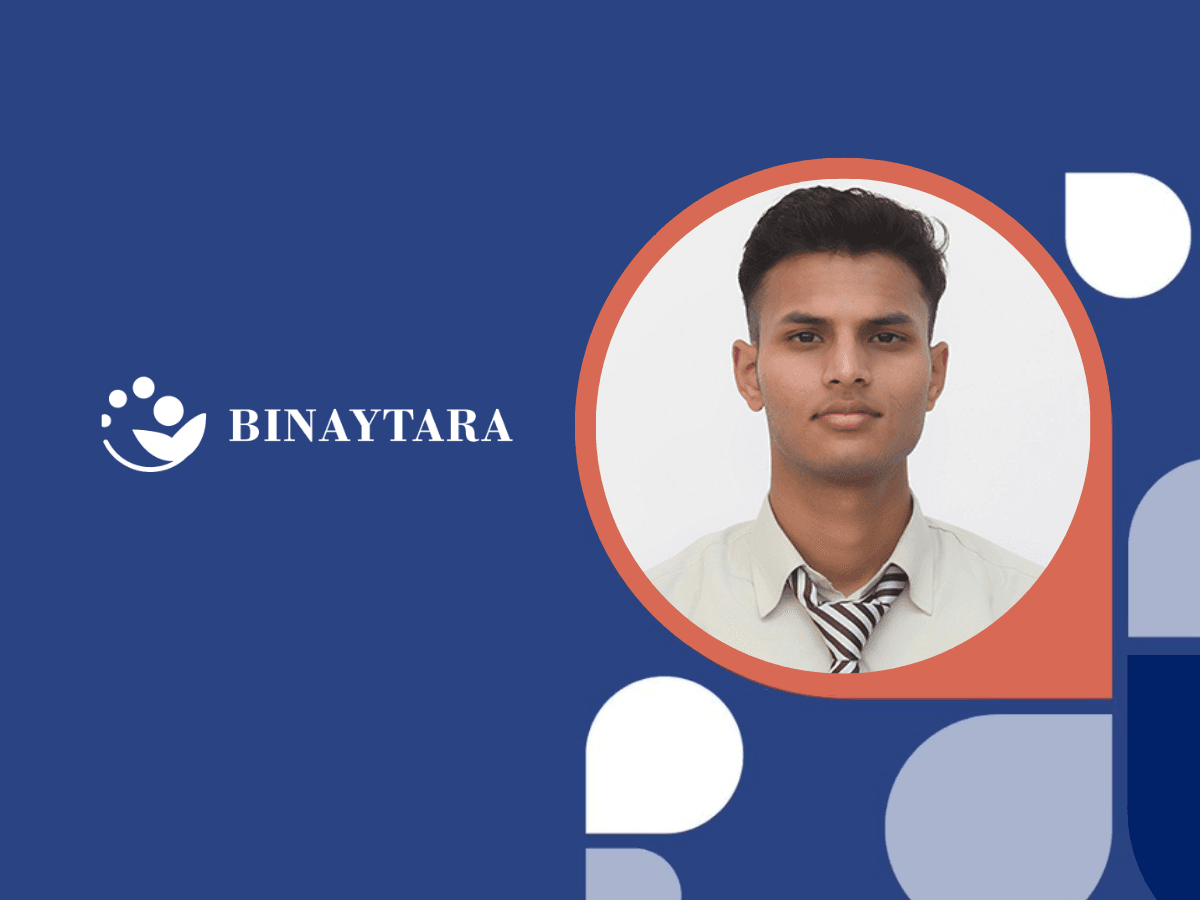

Author
Binaytara Team
Healthcare’s Big Picture, Small Moments: Meet Binaytara Medical Officer Dr. Amit Chaudhary
Dr. Amit Chaudhary has always been interested in healthcare at every level — from the individual patient to the systems that serve entire communities. As Binaytara's Medical Officer in Janakpur, Nepal, he does both: seeing patients at the Binaytara Health Clinic while contributing to cervical cancer screening programs, curriculum development, and the organization of Binaytara's annual International Cancer Congress.
Dr. Amit Chaudhary: The Doctor Interested in Health at Every Level
Dr. Amit Chaudhary is interested in healthcare: both practicing it on the individual level, and improving the entire system, transforming community health on a large scale. Luckily, as Binaytara Medical Officer, he has the opportunity to do both.
Binaytara opened its health clinic in Janakpur, Nepal, in 2018. The day-to-day operation of that clinic contributes to a broader initiative to improve cancer care in Nepal and South Asia. “My role is a blend of clinical care and community health,” Dr. Chaudhary said, noting he enjoys the balance. “It keeps me connected both to individual patients and to the broader communities we serve.”
He learned to strike a similar balance during his tenure at the Nepalese Army Institute of Health Sciences in Kathmandu, where he completed his MBBS (equivalent to an MD). There, Dr. Chaudhary found himself drawn to work in both the big-picture healthcare landscape and the individual, patient-and-provider level. As he entered internships, worked in emergency departments, and staffed outpatient clinics, he wanted to focus on “caring for individual patients, and understanding how healthcare systems can work better for the people who depend on them.”
Systems of Care, Caring for Individuals
After medical school and early-career clinical experience, “I was looking for the opportunity to grow beyond clinical practice and understand the research and public health side of medicine,” Dr. Chaudhary explained. “Binaytara gave me that opportunity. Alongside patient care, I’ve been able to learn about survey design, curriculum development, and evidence synthesis—while working on projects that have a real impact on the community.”
The patient care side of his work sees Dr. Chaudhary meeting with individual patients in the Binaytara Health Clinic outpatient department in Janakpur. Larger-scale, he’s involved in Binaytara’s cervical cancer screening and prevention program across Nepal, and in organizing Binaytara’s 8th annual International Cancer Congress.
He is particularly energized by the cervical cancer screening program in terms of impact. Despite the fact that the vaccine for cervical cancer’s greatest risk factor, high-risk HPV, has existed for two decades, cervical cancer is a significant burden for women in Nepal. The disease is effectively preventable—but not being prevented. One of Binaytara’s core implementation science research questions is to ask why, and innovate towards a cervical cancer screening intervention that will stick.
One landmark development was training local women, Female Community Health Volunteers, to help develop a culturally-tailored cervical cancer prevention program. On this front, Dr. Chaudhary has been actively involved. “It’s incredibly rewarding to see an idea grow from identifying a knowledge gap during a training survey to creating practical tools, like flip charts and educational videos, that Female Community Health Volunteers can confidently use in their own communities. Knowing that those resources can help women access screening earlier makes the work especially meaningful.”
Dr. Chaudhary After Hours: A People Person to the End
Outside of work, Dr. Chaudhary cares about who he’s with more than what he does. “I enjoy spending time with friends,” he shared. “Whether it’s catching up over good food, exploring new places, or simply sharing a few laughs after a busy week, I value those moments. They help me recharge and remind me of the importance of staying connected to the people around me.”
Recommended Articles