Author
Suhail Sapkota, MD
University of Michigan Health - Sparrow
PGY-2 Internal Medicine Resident
Who Actually Makes It Through Cancer Care? Reflections from the SCHD26 Conference
Who actually makes it through cancer care—and who falls behind? At the 2026 Summit on Cancer Health Disparities (SCHD26), one physician’s reflections reveal that inequity isn’t just about diagnosis, but the complex chain of access, communication, cost, and follow-up that determines outcomes.
Cancer Care Is More Than Diagnosis: The Hidden Barriers to Screening and Follow-Up
Before attending the Summit on Cancer Health Disparities, I had some ideas about what to expect. I had experience working with underrepresented populations, looking at disparities through the lens we’re all familiar with: race, access, and distribution of care.
But attending this conference made me realize how much more there was to explore.
After various sessions and conversations, I leave the conference even more drawn to hematology-oncology and better equipped with ideas to address disparities in the field.
It’s not the testing of the disease, it’s everything around it.
After Dr. Hina Khan's presentation on disparities in lung cancer screening and access, we were able to spend more time together to discuss barriers to care. Dr. Khan shared an example demonstrating how small, often overlooked moments can be opportunities to think deeply about access to care: when physicians order a low-dose CT scan for lung cancer screening.
This might sound simple, following the guidelines that we’ve known for years, but she framed it differently.
“How often do you think about the chain around it? Did we succeed in [making the patient aware] about its importance? How much do you know if that patient does have access to get to that scan?” Dr. Khan asked.
The last part of her question, about navigating care, stuck with me. Patients don’t just “get screened.” They have to schedule it, get there, take time off work, deal with insurance, and come back for a follow-up. This involves interdisciplinary collaborations.
But somewhere along that chain, people can quietly fall off. This doesn’t just apply to lung cancer. This is medicine in general.
Global Patterns of Cancer Disparities: Different Systems, Same Gaps
Dr. Etche, a working pediatrician from Nigeria, took me back to my country, Nepal, reminding me of my practice, which has similar challenges. There is a different healthcare system and different resources completely, and yet we were able to share similar patient stories.
Patients get screened for cervical cancer, and some may test positive. But many never make it to a biopsy. Others never get their results. Sometimes the results come back after the patient has already passed away.
We have seen so many patients sell their land and the fortune of their lifetime savings just for health treatment. What if the diagnosis itself might be wrong, as Dr. Etche asks?
Though the barriers are different, these challenges do occur in the United States, and the patterns of disparities resemble those that Dr. Etche and I discussed. We concluded that people don’t fall out of care all at once. It happens step by step, which can be difficult to capture.
Advanced Cancer Treatments Mean Little Without Access to Diagnostics
Getting the chance to speak with Dr. Jerald Radich was honestly a dream. We talked about targeted therapies, precision medicine, and biomarkers, but he simplified it in a way that shifted my thinking.
His point was simple: if you can’t identify the target, nothing else matters. That’s where the gap is, because access to diagnostics is still uneven; all the progress we talk about stays out of reach for a lot of patients.
Dr. Kalina Duncan from the NCI added another dimension: data itself can be a source of disparity. If the populations we serve are not adequately represented in research, then the outcomes we generate may not apply to them.
AI, Cost, and Equity: Can Innovation Reduce or Widen Cancer Disparities?
Then, Dr. Manish Kohli shared an unexpected statement. He described cost-effectiveness as a “biomarker.”
I am still processing while writing this, but it does make sense. If a patient is not able to afford the testing or treatment cost, that alone can determine their outcome.
Then there’s the role of AI, which came up in multiple discussions. It has the potential to reduce disparities, but also the potential to worsen them, all depending on how it’s built and who it serves. This creates uncertainty which can feel uncomfortable.
Conversations with industry professionals like Dr. Elmar Orujov made me realize that these discussions don’t stay within conference rooms. It is necessary to bring strategies for drug development and the role of AI to everyone, to have discussions about how the system should evolve.
Communication Gaps in Cancer Care: Why Language and Understanding Matter
It was not just clinicians I talked with.
Mr. Bipul Luitel, recognized as Volunteer of the Year at the Binaytara, shared something sharp about the importance of clear communication.
If we use layers of medical jargon, we unintentionally exclude people who want to contribute. He has been working on developing tools that support both patients and providers to communicate, helping bridge the gap. He thinks that when people truly understand what’s being said, they’re far more capable of contributing in meaningful ways.
Kavi from the Logistics team of the Binayatara said his definition of a successful conference felt more real than most metrics we use. We often think impact comes from papers and presentations, but sometimes it just comes from people connecting and deciding to move forward with their ideas. Hosting such an amazing platform and being able to foster these connections drives Kavi to engage more and more for this noble cause.
Why Advocacy Matters in Cancer Care: Beyond Data to Real Patient Stories
Dr. Brian Persing shared his own experience of advocacy after joining ASCO in 2017. His ideas are very practical. He stays committed to a cohesive approach when we approach policymakers. Having a similar story from a multidisciplinary team is highly valuable when we are talking with legislators.
He advised knowing who you’re taking to and where they stand. If data doesn’t land, Dr. Persing says to tell patient stories, as real stories can have a greater impact than statistics.
As a physician, you have thousands of patient stories to share about instances of delayed care or a missed diagnosis.
That idea was reinforced in my conversation with Dr. Jasmine Kamboj, the real gap we need to address is access to quality cancer care for every patient, everywhere, at every step, every day. It requires involving all stakeholders, including patients, advocates, healthcare professionals, and leaders, to move conversations beyond the conference and into real-world impact.
And when I asked about advocacy for trainees, she responded: advocacy is not a choice—it is a critical need of our times.
I realized we are not really trained on these things in our medical training, but Dr. Persing’s and Dr. Kamboj’s advice gives us a guideline to follow to increase the impact we can make as policy advocates.
Invisible Disparities in Cancer Care: Fertility, Awareness, and Missed Conversations
Walking through the array of amazing abstracts, I had the chance to meet Dr. Stephanie Haddad, who is a hematology/medical oncology fellow and mentor within the HOME network.
She spoke about fertility preservation in young cancer patients, a topic I hadn’t thought about deeply before getting her perspective.
Disparities are not always obvious. They might not show up in big datasets or headlines. Sometimes they exist in what we don’t bring up during a visit. Whether patients even get the option to preserve fertility can depend on timing, insurance, and awareness. If we don’t bring it up, they may never even know it was an option.
Rural Cancer Care and Travel Burden: The Overlooked Access Challenge
Dr. Srinivas Tantravahi, an associate professor at the Huntsman Cancer Institute at the University of Utah, brought attention to something we often miss: rural cancer care.
Interestingly, he had recently completed the Annapurna Base Camp summit in Nepal with the Binaytara team and has been supporting Binaytara in various ways. For his contribution, he was recognized as Volunteer of the Year.
His travel stories are similar to what we see in our patients. He travels to help, and patients travel long distances for cancer care. Staying away from home, managing costs and time, along with logistics, are things we don’t always fully appreciate during our clinic visit. It is probably one of the most underrepresented parts of “access to care.”
The right to health should be feasible for anyone who seeks it. Dr. Tantravahi carries that mindset into his work, willing to go wherever his patients need care. I shared my interest in traveling with him for a similar purpose of advancing access to cancer care.
From Idea to Impact: How Innovation and Collaboration Drive Health Equity
Dr. Binay Shah has been an inspiration to me even before I fully realized my own passion in Hematology and Oncology.
The idea of Binaytara to improve access to healthcare started during his residency, with great inspiration from Mother Teresa and obviously, support from his wife, Ms. Tara Shah.
I found myself pausing for a second when he said he started this during his second year of residency, exactly where I stand now. Honestly, it felt a bit intimidating—I’m still trying to manage my daily schedule, my duty hours, just keeping up with training. Am I even thinking big enough?
Binaytara has grown into something that feels like a mountain many of us want to climb, or at least be part of. Dr. Shah shared solutions that should be real, practical, and scalable.
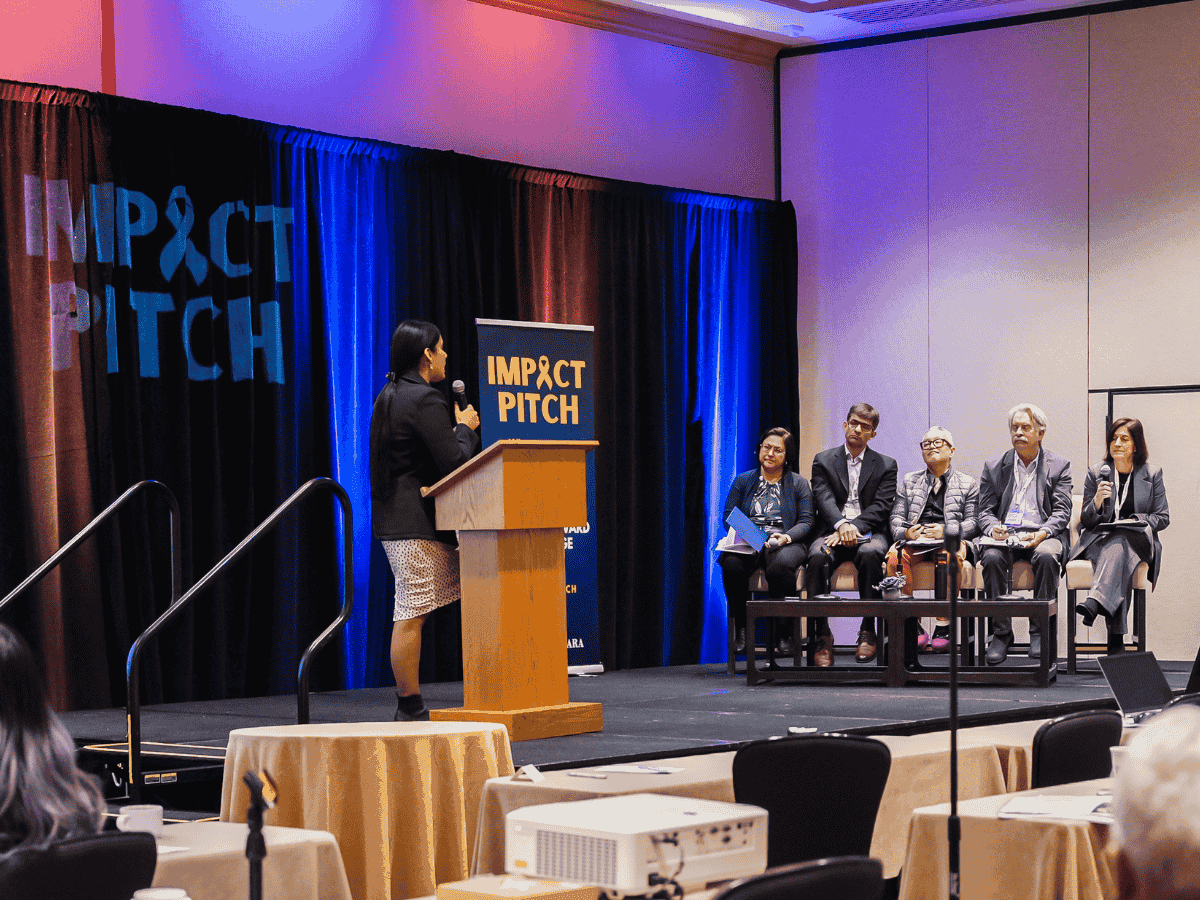
His new initiative in SCHD26 to bring a shark tank version of “Impact Pitch” was a platform that everyone enjoyed. The conference has been successful, involving doctors, nurses, APPs, nonprofit leaders, politicians, celebrities—all kinds of individuals. It felt engaging and action-oriented, a reflection of the vision of Dr. Shah.
Starting from this year, every session will be documented in the form of a review article, and will be published in the International Journal of Cancer care and delivery. This means those who missed this conference will be able to read about everything that was discussed.
I am very excited to participate in this unique space more often. It is not just a conference, but a group of people with a similar mindset continuing to improve health care with a shared vision.
Rethinking Cancer Care: Who Actually Completes the Journey?
My stay in Seattle was not as simple as I had expected when I was creating my abstract presentation. Disparities need to be seriously worked on.
I am not just thinking now about who gets cancer care, but who actually makes it all the way through. That’s where the real gap is.
I want to take a moment to thank all the volunteers, organizers, speakers, and everyone behind the scenes who made this conference possible.
This is a shared mission, and I am grateful to be part of this space.
Author Profile
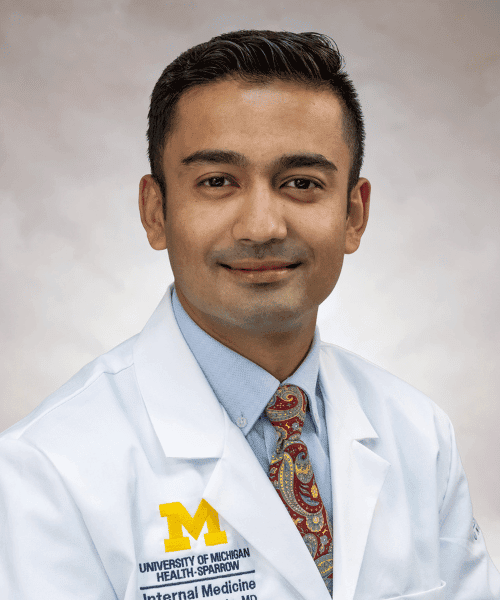
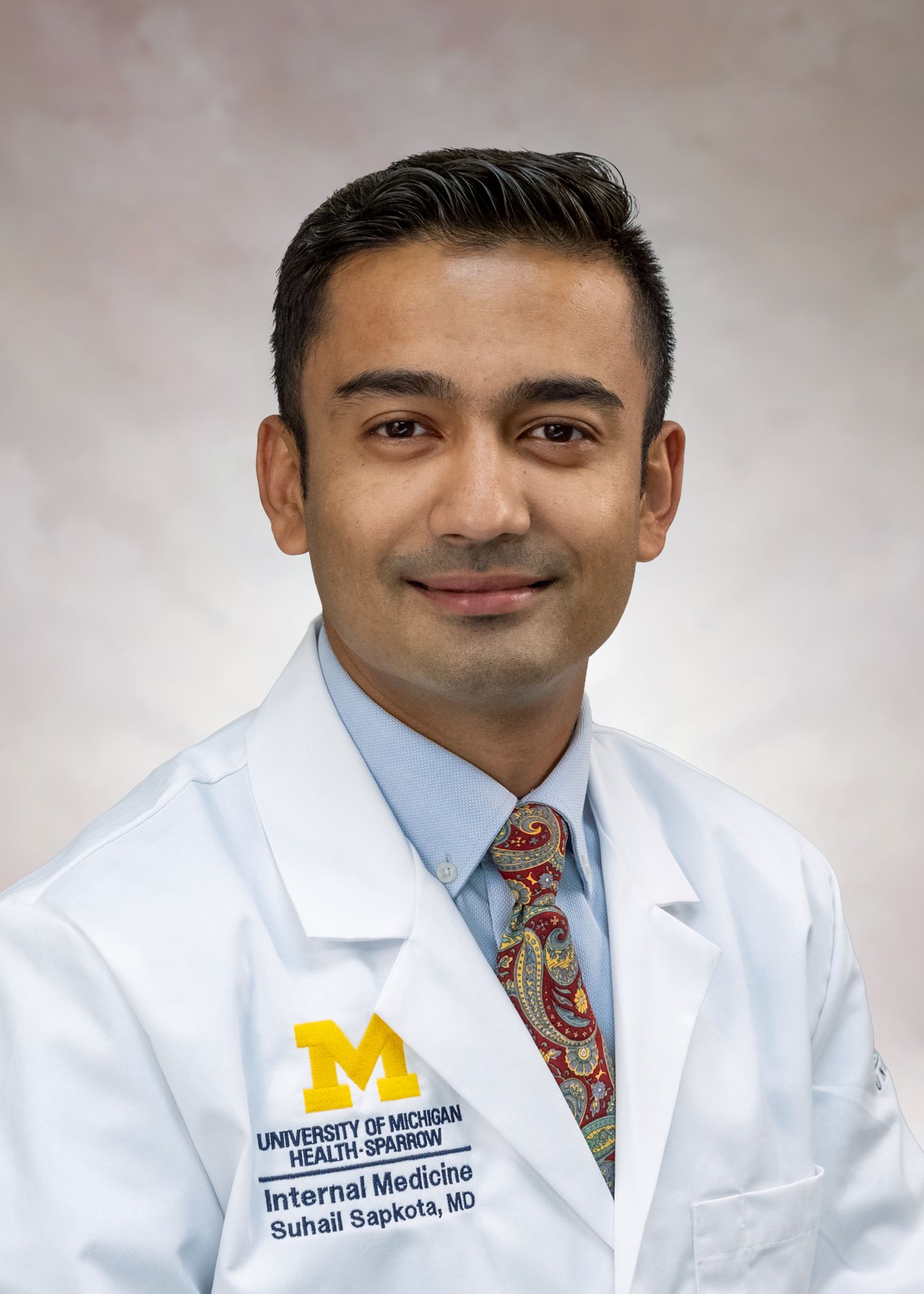
Suhail Sapkota, MD, is a PGY-2 Internal Medicine resident at University of Michigan Health - Sparrow with a strong interest in hematology and medical oncology. His work focuses on health disparities and access to cancer care, particularly among underrepresented populations. He is excited to apply for hematology-oncology fellowship with the goal of continuing to care for patients with cancer.
Recommended Articles