

Author
Binaytara Team
Global Oncology Nonprofit Binaytara Is Expanding Cancer Healthcare Access in Nigeria
Binaytara is expanding cancer care access in Nigeria through a strategic partnership in Lagos, addressing critical gaps in infrastructure, workforce training, and healthcare systems in one of Africa’s most underserved oncology landscapes.
From Nepal to Nigeria: Scaling Binaytara’s Global Cancer Care Impact
Binaytara, a United States-based global oncology nonprofit, is expanding into Nigeria following a landmark partnership with one of the largest hospitals in Lagos. This marks a diversification of the organization’s global presence, after already established projects in India, Nepal, and the United States. The global health nonprofit has established a palliative care program in India, Nepal’s first bone marrow transplant center in 2016, and a Janakpur-based cancer center in 2018, among other initiatives. Binaytara president and co-founder, Dr. Binay Shah, noted of the West African expansion, “This collaboration is another important step in our mission to improve access to cancer care in under-resourced communities.”
To this end, Nigeria presents a new market and new opportunities for impact based on Binaytara’s needs assessment to go where populations are underserved and under resourced. Only about 80 qualified cancer specialists serve a population of around 230 million Nigerians. One Nigerian hospital reported that over 51% of cancer patients arrive at their facility with a Stage 4 diagnosis, the most advanced and life-threatening stage of most cancers. Infrastructural capacity constraints make tracking and managing diagnoses nearly impossible.
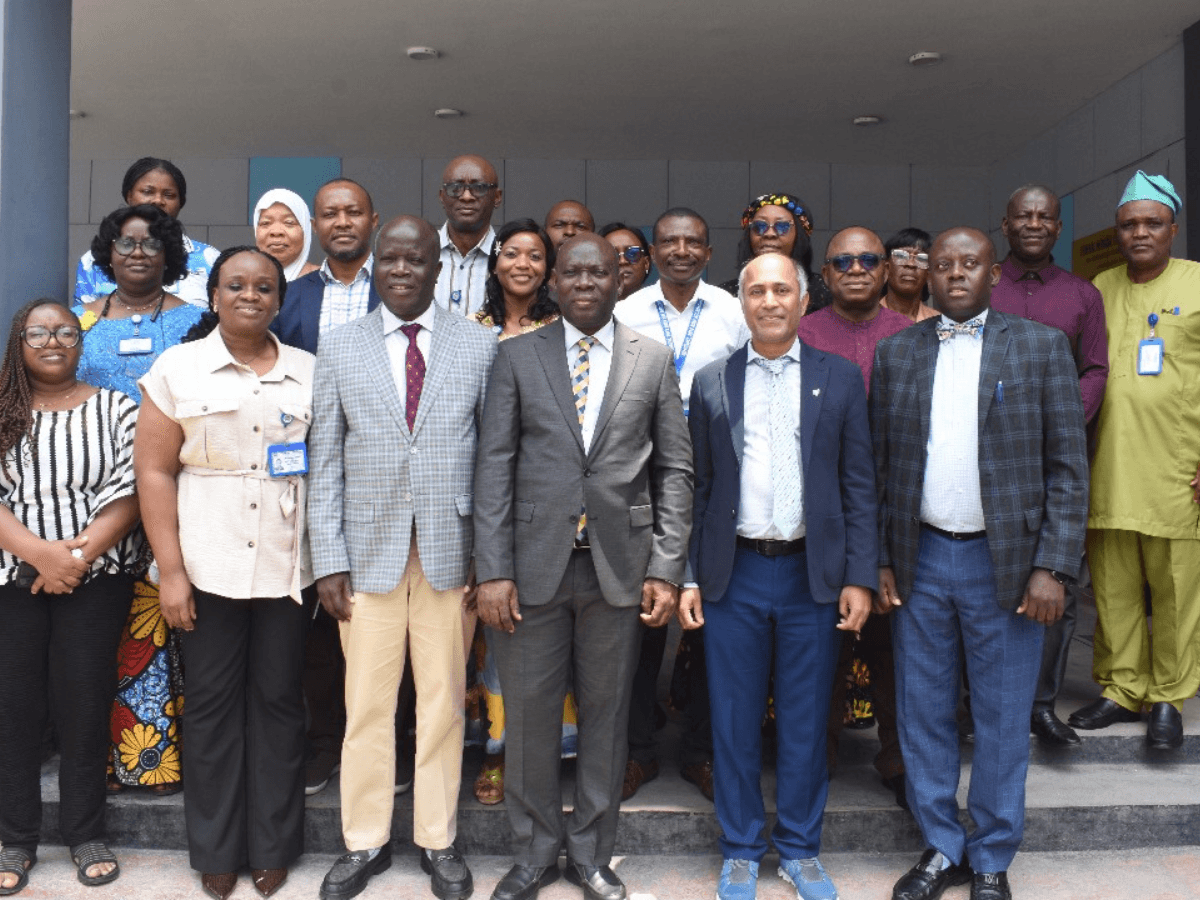
To address these observed needs, Binaytara partnered with Federal Medical Center (FMC) Ebute Metta, a large governmental hospital in Lagos. As Nigeria has the largest population of any country in Africa, and Lagos is Nigeria’s largest city, starting with this high-traffic, high-demand location is a strategic choice for Binaytara to expand access to quality, affordable, and accessible cancer care across three programs:
Improving Cancer Treatment Safety with Critical Infrastructure Investments
Infusion Pumps and Chemotherapy Equipment Enhancing Patient Care
Starting with the most urgent area for support, Binaytara has already provided tools that help make treatment safer for medical staff and patients alike: chemotherapy safety equipment and dosage devices. Specifically, the nonprofit subsidized and shipped infusion pumps, syringe pumps, and a chemotherapy hood to FMC. The pumps are critical oncology tools that allow for targeted administration of chemotherapy drugs. FMC staff report that the pumps are already serving approximately 304 patients per month.
Chemotherapy Safety Measures Protecting Patients and Healthcare Workers
The chemotherapy hood, also called a biosafety cabinet, has a bidirectional benefit for patients and medical staff alike. For one, it ensures medical staff preparing the chemotherapy drugs don’t come into contact with the toxins—critically important, as “the cumulative toxicity to personnel that arises from repeated contact with these drugs can cause health problems in the nursing staff that are beyond those expected in the patient,” according to one doctor. On the patient side, the chemotherapy hood creates a sterile environment so patients aren’t exposed to any contaminants through the medication. The chemotherapy hood is bringing safer cancer medication and administration to an average of 912 patients per month, according to FMC personnel.
Building Oncology Workforce Capacity Through Global Nurse Training Programs
Virtual Training and International Partnerships Strengthening Nursing Expertise
On the programmatic side, Binaytara is setting up virtual training sessions for nurses at FMC. This builds off Binaytara’s existing nursing personnel-strengthening framework in Nepal, which saw oncology nurses in the United States train Binaytara Health Clinic nursing staff remotely through virtual training programs. Binaytara is also sending two FMC nurses to the Tata Memorial Hospital in India for an oncology nurse training. This leverages Binaytara’s partnership with Tata Memorial Hospital, which has already provided specialty oncology training to other Binaytara Nepal staff. When the nurses return to Lagos to educate their cohort, the effect of the training initiative will ripple out—a central tenet of Binaytara’s global oncology strategy. “We want the programs we are helping build to be self-sustaining where the local community becomes completely independent,” Dr. Shah said.
Strengthening Nigeria’s Cancer Care Systems and Early Detection Programs
Launching Nigeria’s First Global Oncology Conference in 2026
Finally, Binaytara is working alongside FMC leadership to provide support on the systems level: helping establish comprehensive cancer registries and preventive oncology programs, efficient care delivery by supporting patient flow analysis, and predictive healthcare programs to boost lifesaving early diagnosis rates. The oncology education-focused nonprofit is also looking to put on Nigeria’s first annual global oncology conference in August of 2026 to strengthen West Africa’s oncology healthcare community. Conference speakers will be a mix of Nigerian and Nigerian-American doctors from the organization’s oncologist network. Binaytara brings experience and expertise in these conferences, as Binaytara currently organizes the most continuing medical education (CME) conferences in the United States, and organizes the annual International Cancer Congress in Janakpur, Nepal.
Looking Backward to Move Forward: Sustaining Impact Through Evidence-Based Global Oncology Programs
At a time when global aid organizations are receiving less funding and bilateral support than ever, Binaytara is finding the balance between innovation, expansion, and the evidence-based frameworks that have proven successful in the past. With this, the nonprofit is mobilizing on its mission of cancer health equity despite fieldwide instability. “Cancer doesn’t respect geographic, religious, or ethnic boundaries,” Dr. Shah said. “It can impact anyone, anywhere. For those of us fortunate enough to have access to world-class care, it is critical to focus on sharing best practices and expanding access to care.”
Frequently Asked Questions About Binaytara’s Cancer Care Expansion in Nigeria
1. Why is Binaytara expanding cancer care programs to Nigeria?
Binaytara is expanding to Nigeria to address major gaps in cancer care access. With only about 80 cancer specialists serving a population of over 230 million, the country faces critical shortages in oncology services, infrastructure, and early diagnosis capabilities.
2. What challenges does Nigeria face in cancer care delivery?
Nigeria faces several challenges, including limited oncology specialists, late-stage cancer diagnoses (with over 50% of patients presenting at Stage 4), and insufficient infrastructure for diagnosis, treatment, and patient tracking.
3. What support is Binaytara providing to healthcare facilities in Nigeria?
Binaytara is supporting healthcare facilities by providing essential medical equipment such as infusion pumps, syringe pumps, and chemotherapy safety hoods, improving both treatment precision and safety for patients and healthcare workers.
4. How is Binaytara improving oncology training in Nigeria?
Binaytara is enhancing oncology training through virtual education programs for nurses and by facilitating international training opportunities, including sending Nigerian nurses to Tata Memorial Hospital in India for specialized oncology training.
5. What is Binaytara’s approach to building sustainable cancer care systems?
Binaytara focuses on long-term sustainability by strengthening healthcare systems, establishing cancer registries, improving patient flow processes, and enabling local healthcare professionals to become independent through training and knowledge transfer.
6. Are there plans for future oncology initiatives in Nigeria?
Yes, Binaytara plans to host Nigeria’s first annual global oncology conference in 2026, bringing together local and international experts to further strengthen cancer care capacity in the region.
7. How does this expansion align with Binaytara’s global mission?
This expansion aligns with Binaytara’s mission to improve access to cancer care in underserved communities worldwide by combining infrastructure support, education, and system-level interventions to create lasting impact.