
Author
Binaytara Team
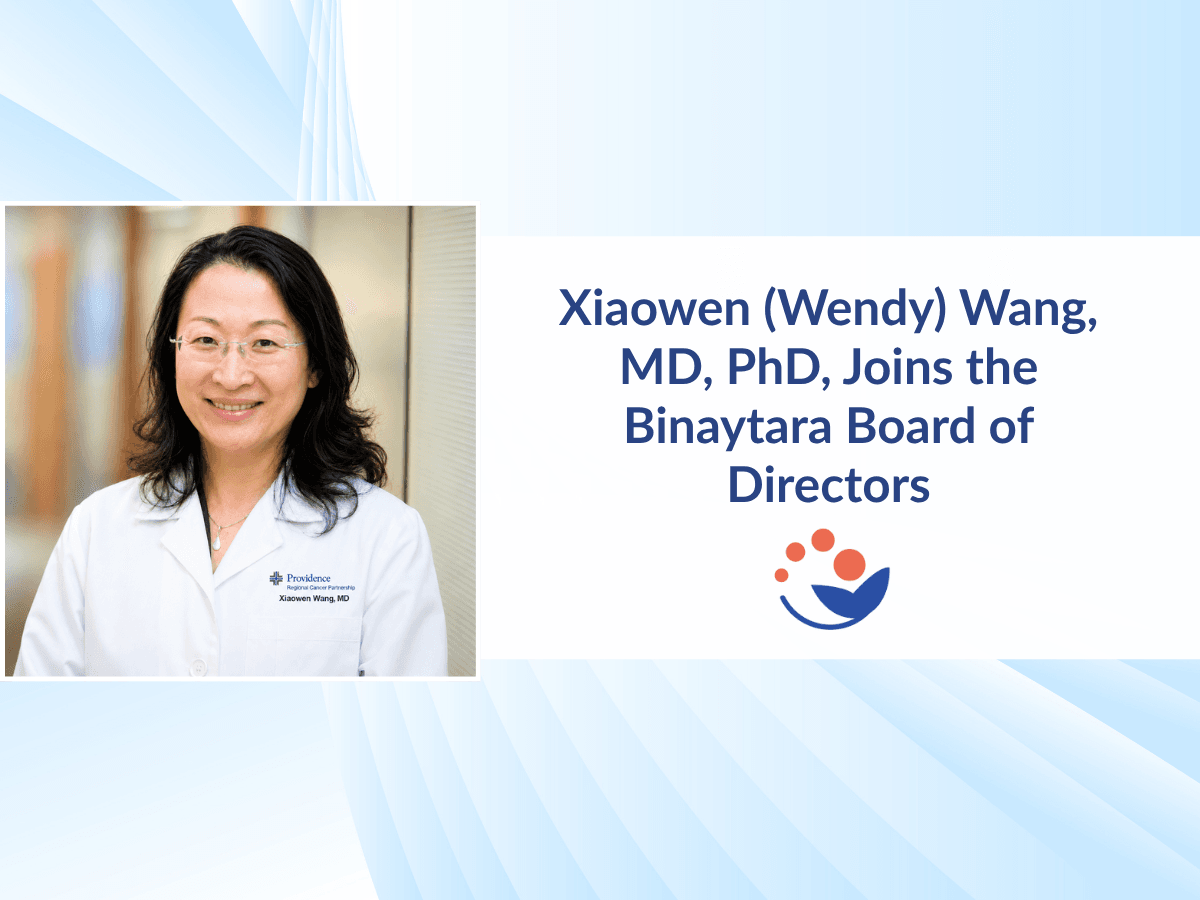
Xiaowen (Wendy) Wang, MD, PhD, joins the Binaytara Board of Directors
Xiaowen "Wendy" Wang, MD, PhD, a Washington-based oncologist and clinical investigator at Providence Regional Cancer Partnership, has joined the Binaytara Board of Directors. A longtime supporter of Binaytara's mission, Dr. Wang's commitment to global cancer health equity was deepened by a 2023 visit to the Binaytara Health Clinic in Nepal — an experience that made the "zip code difference" in cancer care impossible to ignore.
Key Takeaways
- Xiaowen “Wendy” Wang joins the Binaytara Board of Directors, strengthening the nonprofit’s leadership in global oncology and cancer health equity.
- Dr. Wang’s experience visiting the Binaytara Health Clinic in Nepal deepened her commitment to reducing global cancer disparities and improving access to cancer care in underserved communities.
- Through research, patient care, and nonprofit leadership, Dr. Wang supports Binaytara’s mission to expand equitable cancer education, prevention, and treatment in the United States and internationally.
Global Oncology Stakeholder Joins the Binaytara Board
Xiaowen “Wendy” Wang, MD, PhD, has joined the Binaytara Board of Directors alongside David Aboulafia, MD; Navneet Majhail, MD, MS, FASTCT; Mark Pegram, MD; and Binay Shah, MD. Dr. Wang is a Washington-based practicing oncologist at Providence Regional Cancer Partnership, where she treats patients with all types of cancer, including hematologic malignancies, breast cancer, liver cancer, neuro-oncological conditions, and ovarian cancer. She is also involved in clinical trials, focusing particularly on developing novel therapies that improve outcomes for cancer patients. She is a clinical associate professor at Elson S. Floyd College of Medicine of Washington State University. She offers her clinical expertise and research background to the Binaytara Board as the nonprofit strives to improve patient outcomes for underserved communities in the United States and abroad. “Realizing the basic needs in Nepal, and also in other parts of the country… I think we ought to help those people who are in need, with the resources and the knowledge we have,” Dr. Wang said of her connection to Binaytara’s mission.
Toward Health Equity in Nepal and Beyond
It was, indeed, a Binaytara-led trip to Nepal that solidified Dr. Wang’s commitment to minimizing cancer health disparities. In 2023, Dr. Wang “went to Nepal and visited the hospital there,” the oncologist recalled, referring to the Binaytara Health Clinic in Jankpur, Nepal. “That was a trip that was very memorable. I got to know more about [Binaytara], its work—got to know the local people, their culture. I just felt very connected with the cause.”
She was struck by the difference between the cancer care available in Nepal and the cancer care she was able to offer through her Washington practice. In Nepalese communities, for example, there is a much higher incidence cervical cancer, often of more advanced stages. Cervical cancer is almost completely preventable with the right tools and resources. These tools and resources are widely available in most parts of the United States, leading to significantly decreased incidence; not so in Nepal.
It was clear in that moment: geography is a huge factor in a person’s experience with cancer. In many cases it determines whether or not they survive their diagnosis—which Dr. Wang calls “the zip code difference” when this is the case in the US.
Following that trip, Dr. Wang remained close to Binaytara’s mission, serving as faculty at Binaytara continuing medical education (CME) conferences. The 2026 invitation to join the Board came as a surprise, but Dr. Wang had a ready answer. Going forward, “I'd like to contribute to [Binaytara’s] work at a different level,” the oncologist said. “It's a great alignment.”
The Roads Taken: Immunology, Oncology, and World Travel
For her part, Dr. Wang has always been drawn to the promise at the heart of medicine and oncological care: making a difference in patients’ lives through treatment. Growing up in China, Dr. Wang spent time at the hospital where her mother, a nurse, worked. “I got a lot of influence from her,” Dr. Wang recalled. “Hearing the stories she brought home, how she interacted with patients and doctors. It was pretty natural for me to want to go into medicine.”
After medical school came a period of post-graduate studies in North America, fostered by her intellectual curiosity. Growing up, Dr. Wang was inspired to achieve a high academic excellence, which led naturally to pursuing her PhD degree in immunology. Later, Dr. Wang returned to medicine, becoming the clinician-investigator she is today. Now, she satiates her curiosity through clinical trials, being the local medical oncologist lead in breast cancer, and her drive to make a difference in her patients lives.
It was interacting with patients that brought her back to medicine. “It was just so striking to me how a beautiful life can be saved or destroyed,” Dr. Wang said, recalling a teenage patient dealing with Acute Myeloid Leukemia whom she encountered in one of her early medical school rotations. “That is, I think, part of what drew me to oncology. I wanted to treat those patients and make a difference in their lives—especially for the young and vulnerable, to make the most impact.” Dr. Wang’s scientific curiosity and commitment to research made itself apparent here: “And to cure one patient at a time,” she added.
Health Equity and Hemingway
For Dr. Wang, it comes down to this: people deserve the best possible cancer care. Unfortunately, the “zip code difference” means that’s not a reality: the treatments Dr. Wang administers at her clinic in Washington every day to her patients could be too expensive for many patients in low- and middle-income countries—if the treatments are available at all. Within the United States, rural communities and high-density low-income neighborhoods see similar outcomes, especially for those who do not have quality health insurance coverage. Action is an imperative. “I see those people who live far from my community, their lives, the discrepancy in the care they get, and I feel they are just like us. They are like our family in a bigger sense.”
When she’s not at a patient’s bedside, doing research, or contributing to Binaytara’s strategy and mission through Board Member meetings, Dr. Wang might be found reading. She reads widely—from Hemingway to biographies of US historical figures to Chinese classical literature (her current area of interest). She continues to travel extensively and finds her serenity in music.
Recommended Articles
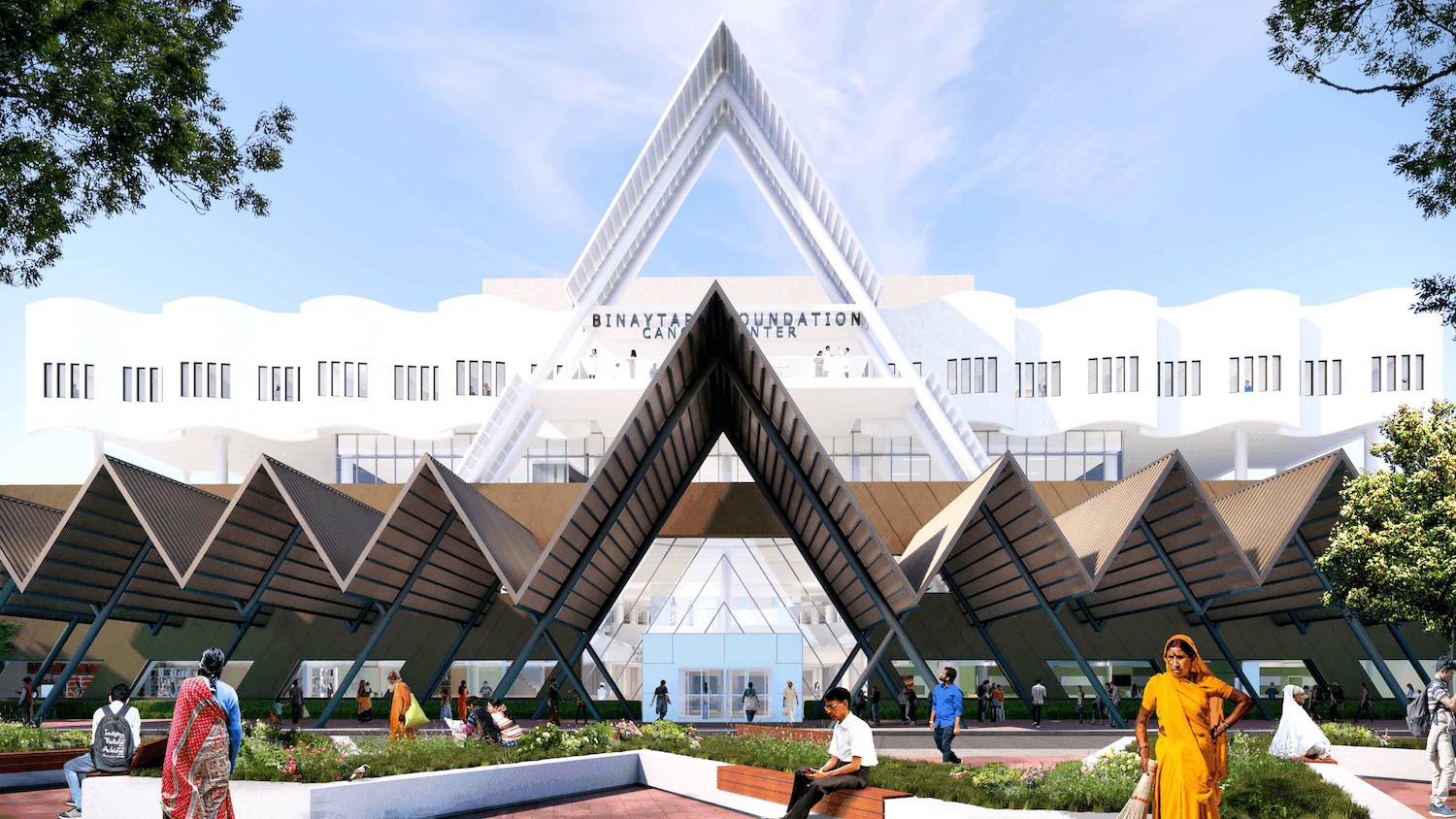
Government of Nepal Grants Key Environmental Approval for $30 Million Binaytara Cancer Hospital
Learn more