
Listening Before Serving: What 69 Households Told Us About Health Care in Janakpur

Author
Binaytara Team
Listening Before Serving: What 69 Households Told Us About Health Care in Janakpur
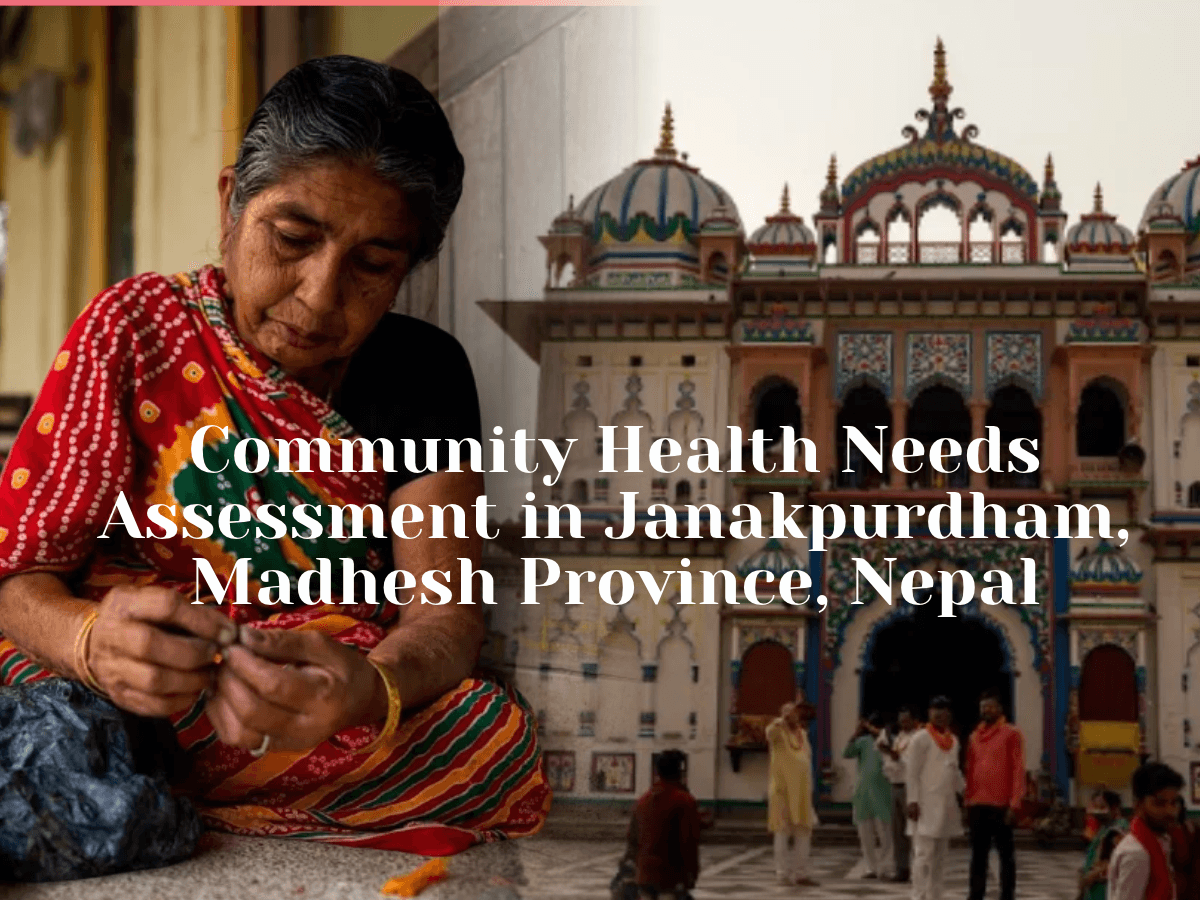
Before building health services, you have to know what a community needs. A household survey of 69 families in Janakpur, Nepal, found a high burden of hypertension and diabetes, steep financial barriers to care, and almost no cancer screening. Three in four respondents couldn't name a cancer warning sign, and 94% said they would use a nearby clinic.
Janakpurdham is the capital of Nepal's Madhesh Province, but we know surprisingly little about the health of the people who live there. Systematic, community-level data on disease burden and care-seeking is sparse. That's a problem for anyone trying to build services that fit the community, whether a clinic, a screening program, or a cancer hospital.
So a team went door to door. Trained enumerators interviewed 69 households across wards of Janakpurdham Sub-Metropolitan City, asking about health status, how people seek care, what stands in their way, and what they know about cancer. The sample is small and skews male, so the findings are descriptive rather than definitive. But the picture is consistent across nearly every domain.
A high burden of chronic disease
Hypertension was reported in two-thirds of households (66.7%), and diabetes in about one in five. Many people who had been diagnosed were not staying on treatment. Some took medication irregularly, and some had stopped entirely. Stopping is a distinct problem from inconsistent use, and it likely calls for a different response.
Care that is out of reach, and expensive
- 81.2% of households reported at least one significant barrier to care, including cost, distance, closed facilities, missing medicines, and a lack of female health workers.
- Among households citing cost, about half had taken loans or sold assets to pay for treatment.
- Only 14.5% had any member enrolled in government health insurance. Nearly 45% didn't know the scheme existed.
- Even though most households live near a health post, only 13% use it first when sick. More than a third go straight to a government hospital in the city, a sign of low confidence in local services.
Cancer: low awareness, almost no screening
- 75.4% of respondents couldn't name a single cancer warning sign.
- Awareness of breast and cervical cancer was 23% and 17%, even though both are leading causes of cancer burden for women in Nepal.
- More than half had never heard of cancer screening. Fewer than 5% of female household members had ever been screened.
- The most common reason for skipping screening was having no symptoms. Some respondents also described watching and waiting when they noticed a lump or symptom, rather than seeking care right away.
These are two separate barriers. Opening a screening site won't help if people believe screening is only for those who feel sick.
Not every ward is the same
Ward 25 showed higher rates of chronic disease, lower household assets, greater reliance on firewood and other biomass fuels, and lower cancer awareness than Ward 16. Vulnerability isn't evenly spread, which suggests that ward-targeted programs may reach more people than blanket ones. This needs confirmation in larger studies.
What people asked for
When asked if they would use a nearby community clinic, 94.2% said yes. They asked for qualified doctors, diagnostics like lab work, X-ray, and ultrasound, emergency care, affordable medicines, maternal and child health services, and cancer screening. Many also named mental health services unprompted, a notable signal in a setting where mental health needs are often underreported.
Why this matters
These findings are the groundwork for what Binaytara is building. More than 22,000 people in Nepal are diagnosed with cancer each year, and nearly 67% die, largely because timely, affordable treatment is out of reach. The survey shows what that looks like at the household level: people who can't name a warning sign, almost no screening, local facilities they don't fully trust, and costs that push families into debt.
To close that gap, Binaytara is building a 250-bed comprehensive cancer hospital in Janakpur. It will provide prevention, diagnosis, treatment, and palliative care, including radiation oncology, surgical oncology, and advanced chemotherapy. It is designed to treat an estimated 20,000 patients a year and serve a population of more than 25 million across Southern Nepal and Northern India, many of whom now travel 8 to 10 hours for care.
But the survey is a reminder that a hospital alone won't change outcomes. People who believe screening is only for the symptomatic won't walk in for it, and trust in local care has to be earned. That's why the hospital is one part of Binaytara's C.A.R.E. model: care centers, advocacy, research, and education. Since 2018, the Binaytara Health Clinic in Janakpur has served more than 2,500 local patients with cancer care, screenings, diagnostics, and HPV tests close to home. Free health camps bring screening to rural communities, Female Community Health Volunteers help more women attend and follow through, regular tumor boards connect local clinicians with US oncology experts, and ongoing outreach works to reduce stigma around cancer.
The next step is larger, stratified surveys with better representation of women, to confirm these patterns and guide programs. In the meantime, the community has been clear about what it wants: 94% said they would use a clinic nearby.
Interested in how Binaytara uses data to design programs in Janakpur? Subscribe to our newsletter and select global health.
Recommended Articles

Inside the 2026 Binaytara Global Oncology Summit: Practical Solutions for Cancer Care in Low-Resource Settings
Learn More