
Changing global political priorities and shrinking health budgets are threatening access to lifesaving cancer treatments worldwide. At the 2025 Binaytara Global Oncology Summit, global health leaders examined how funding cuts, shifting policies, and weakened health systems are impacting the most vulnerable patients—and highlighted collaborative strategies to strengthen global cancer care access despite these challenges.
This article summarizes the transcript from Session 2 of the 2025 Binaytara Global Oncology Summit. It has not been reviewed by the speaker and may contain errors.
The session was chaired by Pat Garcia-Gonzalez, cofounder and Chief Executive Officer of The Max Foundation, a nonprofit dedicated to improving the lives of people living with cancer worldwide. She also delivered the keynote lecture featured in this article.
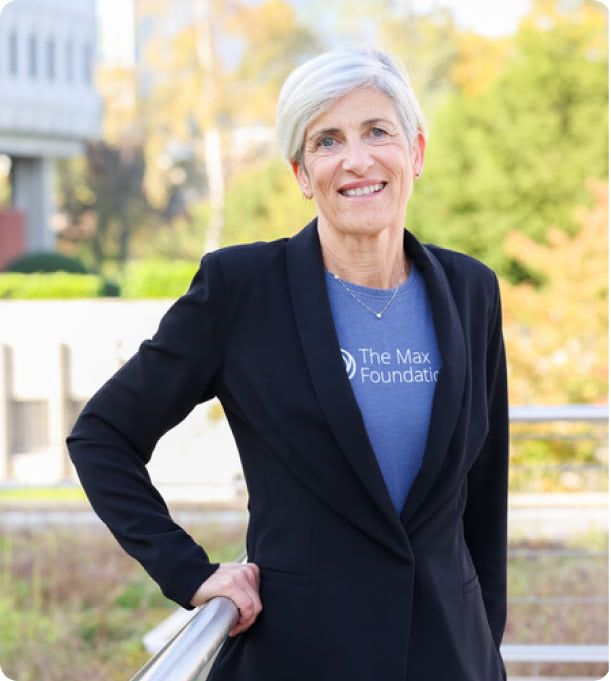
Pat Garcia-Gonzalez, cofounder and CEO of Max Foundation.
Bridging the Global Cancer Treatment Gap: The Max Foundation’s Impact
The Max Foundation was established 28 years ago in memory of Max, who was diagnosed with chronic myeloid leukemia (CML) at age 14 and passed away at 17 before modern treatments became available. The foundation began with a simple website and email address, and from day one has received daily emails from people worldwide facing a devastating reality: their loved one has cancer, effective medicine exists, but it is not available in their country.
A pivotal moment came in 2001 when a 22-year-old in Honduras needed access to a new CML drug. This led to a landmark partnership with Novartis and the creation of the Glivec International Patient Assistance Program (GIPA), providing imatinib to patients in 80 countries where the drug would never be commercialized. This revealed an important truth: most medicines never reach half the world's countries by design due to complex distribution challenges.
After 15 years of administering Novartis's program, the foundation changed its business model in 2016 to operate its own program, enabling partnerships with multiple pharmaceutical companies. The foundation now works with seven companies, provides access to 15 different drugs, and has helped over 100,000 patients across 80 countries, delivering more than 600,000 years of life. The work includes a substantial CML program and, since two years ago, breast cancer treatment access.
Responding to the Global Health Funding Crisis
The dramatic shift in global health funding over recent months, particularly USAID cuts, along with reductions from France, Germany, and the UK, is affecting the most vulnerable populations. While those in power create concerning headlines, most people remain generous individuals helping their communities. The challenge is ensuring these voices are heard.
COVID-19 was only four years ago, when the world learned we're all interdependent. This is not the time to "be a goldfish" and forget. One young CML patient in Jamaica, diagnosed at age five, faced recent hurricanes with unknown safety outcomes, illustrating ongoing challenges for vulnerable populations.
Rather than retreating, the foundation decided to double down. Currently helping 40,000 patients annually, the new goal is ambitious: provide treatment access to 100,000 patients in a single year by 2030. This is supported by a newly signed five-year agreement with Novartis (representing years 25-30 of the partnership), covering six drugs for CML, metastatic breast cancer, PNH, GIST, and other indications. In global oncology history, there may be nothing more sustainable than Novartis's contribution to global health.
Reducing Barriers to Cancer Care Access Through Stronger Health Systems
"Optimizing care" is the key concept for the next five years, efficiently using existing resources to help more patients. The foundation believes the best way to strengthen health systems is by ensuring treatment availability as the anchor, then building patient-centered systems around that foundation.
Optimization looks different across diseases. For CML, the foundation treats 30,000 patients, with 1,000 on treatment for over 20 years and 20,000 for over 10 years. Since some CML patients can now safely discontinue treatment, many may not need ongoing medication, but this cannot be determined without proper monitoring and PCR access. For CML, optimization means ensuring monitoring; for breast cancer, it means building diagnostics infrastructure from the ground up.
A success story from El Salvador illustrates the vision: Jessica was diagnosed with CML at 16, completed her law degree while on treatment, and now works with Social Security coverage. Her treatment has transitioned to the government program. The foundation aims to be a bridge to access, not a permanent solution, stepping back when governments can take over.
How Resource Optimization and Collaboration Can Reduce Global Cancer Care Barriers
The foundation is focusing on resource optimization by listening to physicians on the ground and providing what they actually need, rather than imposing external ideas. Everyone is discussing innovative funding at global conferences, and this difficult time demands different thinking.
Critically, there is a responsibility to remove silos. Too often, multiple organizations discover they are all working at the same hospital, forcing a single oncologist to host numerous visitors weekly with MOUs and programs. Greater efficiency and collaboration are essential.
The current landscape is challenging, with the most vulnerable suffering the most. It is easy to feel powerless. However, those of a certain age know everything moves in cycles—this won't last forever. The task is identifying opportunities emerging from this difficult time. This is a moment to innovate and continue focusing on people who need help. Suffering can be alleviated, and premature cancer deaths can be prevented.
Because we can, we must.