
AN AUTHORITATIVE RESOURCE FOR EVERYTHING ABOUT CANCER
Research
The volume and pace of cancer research, from preclinical studies to clinical trials and FDA approvals, can make it challenging to stay informed. This section highlights the latest developments and translates complex scientific concepts into clear, accessible insights for both healthcare professionals and the broader public.

Managing Capivasertib-Associated Hyperglycemia: A Structured Monitoring Schedule That Patients Can Follow
By Arika Sandbach, PharmD, BCOP
Capivasertib, an oral AKT inhibitor for HR-positive, HER2-negative advanced breast cancer with PIK3CA, AKT1, or PTEN alterations, carries a labeled hyperglycemia risk requiring structured, front-loaded monitoring.
Managing Capivasertib-Associated Hyperglycemia: A Structured Monitoring Schedule That Patients Can Follow
By Arika Sandbach, PharmD, BCOP
Capivasertib, an oral AKT inhibitor for HR-positive, HER2-negative advanced breast cancer with PIK3CA, AKT1, or PTEN alterations, carries a labeled hyperglycemia risk requiring structured, front-loaded monitoring.
Managing Capivasertib-Associated Hyperglycemia: A Structured Monitoring Schedule That Patients Can Follow
By Arika Sandbach, PharmD, BCOP
Capivasertib, an oral AKT inhibitor for HR-positive, HER2-negative advanced breast cancer with PIK3CA, AKT1, or PTEN alterations, carries a labeled hyperglycemia risk requiring structured, front-loaded monitoring.

A Hidden Dosing Trap in Antibody-Drug Conjugates: How Weight-Based Rounding Can Silently Double a Dose Increase
By Ian Ingram, PharmD, BCOP
A delayed neutropenia case reveals how UGT1A1 metabolizer status and weight-based dose rounding can silently double a sacituzumab dose error.
A Hidden Dosing Trap in Antibody-Drug Conjugates: How Weight-Based Rounding Can Silently Double a Dose Increase
By Ian Ingram, PharmD, BCOP
A delayed neutropenia case reveals how UGT1A1 metabolizer status and weight-based dose rounding can silently double a sacituzumab dose error.
A Hidden Dosing Trap in Antibody-Drug Conjugates: How Weight-Based Rounding Can Silently Double a Dose Increase
By Ian Ingram, PharmD, BCOP
A delayed neutropenia case reveals how UGT1A1 metabolizer status and weight-based dose rounding can silently double a sacituzumab dose error.

A Near-Complete Response to Immunotherapy Highlights an Overlooked Sun-Driven Sarcoma
By Athar Eysa, MD
Pleomorphic dermal sarcoma is a rare, ultraviolet-driven skin cancer that shares biology with better-known immunogenic tumors.
A Near-Complete Response to Immunotherapy Highlights an Overlooked Sun-Driven Sarcoma
By Athar Eysa, MD
Pleomorphic dermal sarcoma is a rare, ultraviolet-driven skin cancer that shares biology with better-known immunogenic tumors.
A Near-Complete Response to Immunotherapy Highlights an Overlooked Sun-Driven Sarcoma
By Athar Eysa, MD
Pleomorphic dermal sarcoma is a rare, ultraviolet-driven skin cancer that shares biology with better-known immunogenic tumors.

Peripheral T-Cell Lymphoma: Why "Not Otherwise Specified" Should Be a Last Resort, Not a Default
By Yumeng Zhang, MD
T-cell lymphomas account for roughly 10% of non-Hodgkin lymphoma in Western countries, and up to about 20% in parts of Asia, a genuine epidemiologic difference.
Peripheral T-Cell Lymphoma: Why "Not Otherwise Specified" Should Be a Last Resort, Not a Default
By Yumeng Zhang, MD
T-cell lymphomas account for roughly 10% of non-Hodgkin lymphoma in Western countries, and up to about 20% in parts of Asia, a genuine epidemiologic difference.
Peripheral T-Cell Lymphoma: Why "Not Otherwise Specified" Should Be a Last Resort, Not a Default
By Yumeng Zhang, MD
T-cell lymphomas account for roughly 10% of non-Hodgkin lymphoma in Western countries, and up to about 20% in parts of Asia, a genuine epidemiologic difference.

PD-L1 Alone Isn't Enough, and Neither Is TMB: What Would a Real Immunotherapy Biomarker Look Like?
By Robert Samstein, MD, PhD
Only a minority of patients meaningfully benefit from immunotherapy, and right now we largely rely on a single, binary metric (PD-L1) to try to select who that is.
PD-L1 Alone Isn't Enough, and Neither Is TMB: What Would a Real Immunotherapy Biomarker Look Like?
By Robert Samstein, MD, PhD
Only a minority of patients meaningfully benefit from immunotherapy, and right now we largely rely on a single, binary metric (PD-L1) to try to select who that is.
PD-L1 Alone Isn't Enough, and Neither Is TMB: What Would a Real Immunotherapy Biomarker Look Like?
By Robert Samstein, MD, PhD
Only a minority of patients meaningfully benefit from immunotherapy, and right now we largely rely on a single, binary metric (PD-L1) to try to select who that is.
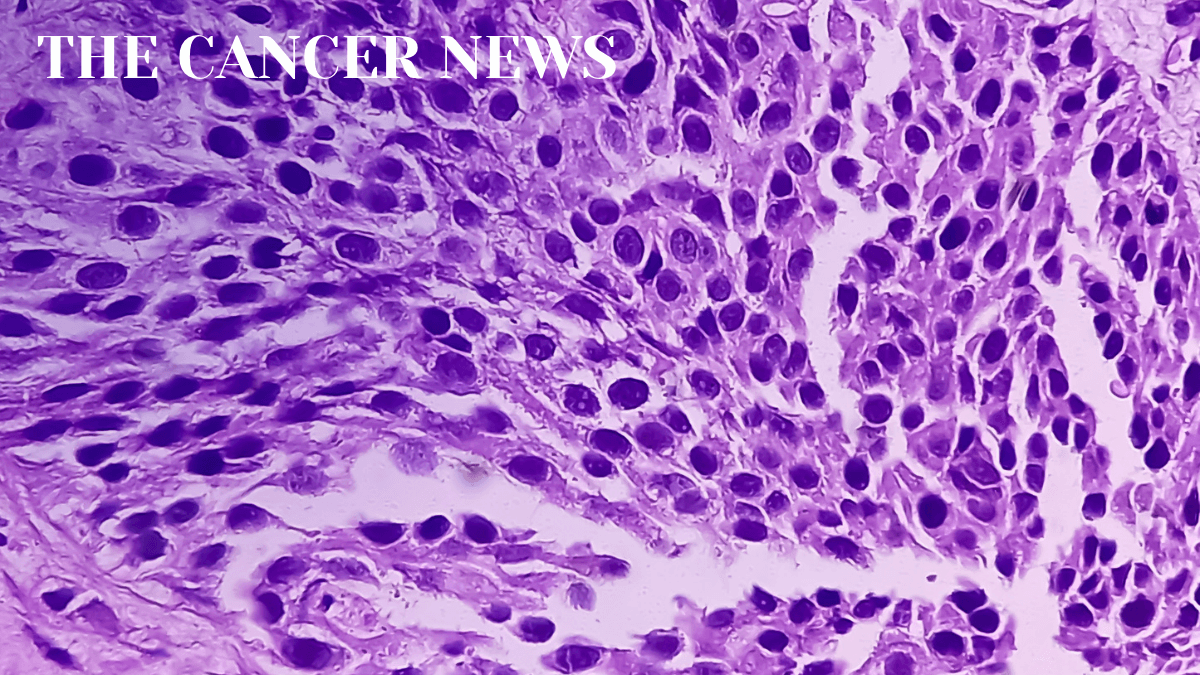
Two Advances Are Reshaping Bladder Cancer Care Before and After Surgery
By Munveer Bhangoo, MD
For more than two decades, cisplatin-based chemotherapy followed by radical cystectomy has been the standard approach to muscle-invasive bladder cancer (MIBC)
Two Advances Are Reshaping Bladder Cancer Care Before and After Surgery
By Munveer Bhangoo, MD
For more than two decades, cisplatin-based chemotherapy followed by radical cystectomy has been the standard approach to muscle-invasive bladder cancer (MIBC)
Two Advances Are Reshaping Bladder Cancer Care Before and After Surgery
By Munveer Bhangoo, MD
For more than two decades, cisplatin-based chemotherapy followed by radical cystectomy has been the standard approach to muscle-invasive bladder cancer (MIBC)

A Rare Liver Cancer in a Young Woman Underscores the Need for More Options
By Erika Maestas, MD
Fibrolamellar hepatocellular carcinoma is a rare liver cancer that strikes young people without the usual liver disease risk factors, and it has no systemic therapy proven to extend survival.
A Rare Liver Cancer in a Young Woman Underscores the Need for More Options
By Erika Maestas, MD
Fibrolamellar hepatocellular carcinoma is a rare liver cancer that strikes young people without the usual liver disease risk factors, and it has no systemic therapy proven to extend survival.
A Rare Liver Cancer in a Young Woman Underscores the Need for More Options
By Erika Maestas, MD
Fibrolamellar hepatocellular carcinoma is a rare liver cancer that strikes young people without the usual liver disease risk factors, and it has no systemic therapy proven to extend survival.

ER-Positive Breast Cancer in 2026: New Oral Endocrine Agents and the Case for ctDNA-Guided Switching
By Natalie Chen, MD
Despite substantial treatment advances, roughly a quarter of patients with early-stage ER-positive breast cancer still develop recurrence within five years
ER-Positive Breast Cancer in 2026: New Oral Endocrine Agents and the Case for ctDNA-Guided Switching
By Natalie Chen, MD
Despite substantial treatment advances, roughly a quarter of patients with early-stage ER-positive breast cancer still develop recurrence within five years
ER-Positive Breast Cancer in 2026: New Oral Endocrine Agents and the Case for ctDNA-Guided Switching
By Natalie Chen, MD
Despite substantial treatment advances, roughly a quarter of patients with early-stage ER-positive breast cancer still develop recurrence within five years

Surgery or Radiation for Stage III Lung Cancer? The Better Question Is Not Which, But When Do We Decide
By Neel Chudgar, MD
The surgery-versus-radiation debate in stage III NSCLC is increasingly the wrong framing; the better approach is starting with the best available systemic therapy
Surgery or Radiation for Stage III Lung Cancer? The Better Question Is Not Which, But When Do We Decide
By Neel Chudgar, MD
The surgery-versus-radiation debate in stage III NSCLC is increasingly the wrong framing; the better approach is starting with the best available systemic therapy
Surgery or Radiation for Stage III Lung Cancer? The Better Question Is Not Which, But When Do We Decide
By Neel Chudgar, MD
The surgery-versus-radiation debate in stage III NSCLC is increasingly the wrong framing; the better approach is starting with the best available systemic therapy

Combining Immunotherapy With Local Treatment Advances Liver Cancer Care, While a Provocative New Question Emerges About Diabetes Drugs
By Ursa Brown-Glaberman, MD
For more than two decades, transarterial chemoembolization (TACE) has been the standard of care for unresectable hepatocellular carcinoma (HCC) eligible for embolization, typically producing a median progression-free survival of eight to ten months.
Combining Immunotherapy With Local Treatment Advances Liver Cancer Care, While a Provocative New Question Emerges About Diabetes Drugs
By Ursa Brown-Glaberman, MD
For more than two decades, transarterial chemoembolization (TACE) has been the standard of care for unresectable hepatocellular carcinoma (HCC) eligible for embolization, typically producing a median progression-free survival of eight to ten months.
Combining Immunotherapy With Local Treatment Advances Liver Cancer Care, While a Provocative New Question Emerges About Diabetes Drugs
By Ursa Brown-Glaberman, MD
For more than two decades, transarterial chemoembolization (TACE) has been the standard of care for unresectable hepatocellular carcinoma (HCC) eligible for embolization, typically producing a median progression-free survival of eight to ten months.