

Author
Binaytara Team
Binaytara Spring Research Day 2026: Catalyst for Change in Global Cancer Equity
Binaytara’s inaugural Spring Research Day 2026 marks a defining moment in its mission to reduce global cancer disparities. Centered on the theme “Catalyst for Change,” the event highlights implementation science, global collaboration, and the launch of a new Binaytara Cancer Research Institute aimed at translating evidence into real-world impact.
Key Insights
- Binaytara hosted its first-ever Research Day (Spring 2026), formalizing research as a central strategic priority.
- A Binaytara Cancer Research Institute is actively in development, focused on implementation science.
- Research initiatives span cancer screening, HPV vaccination, digital health tools, and global health disparities.
- The theme “Catalyst for Change” reflects a commitment to translating knowledge into real-world impact.
- Dr. Jin Mou was recognized for leading the development of the research institute initiative.
A Milestone Event: Binaytara’s First Research Day
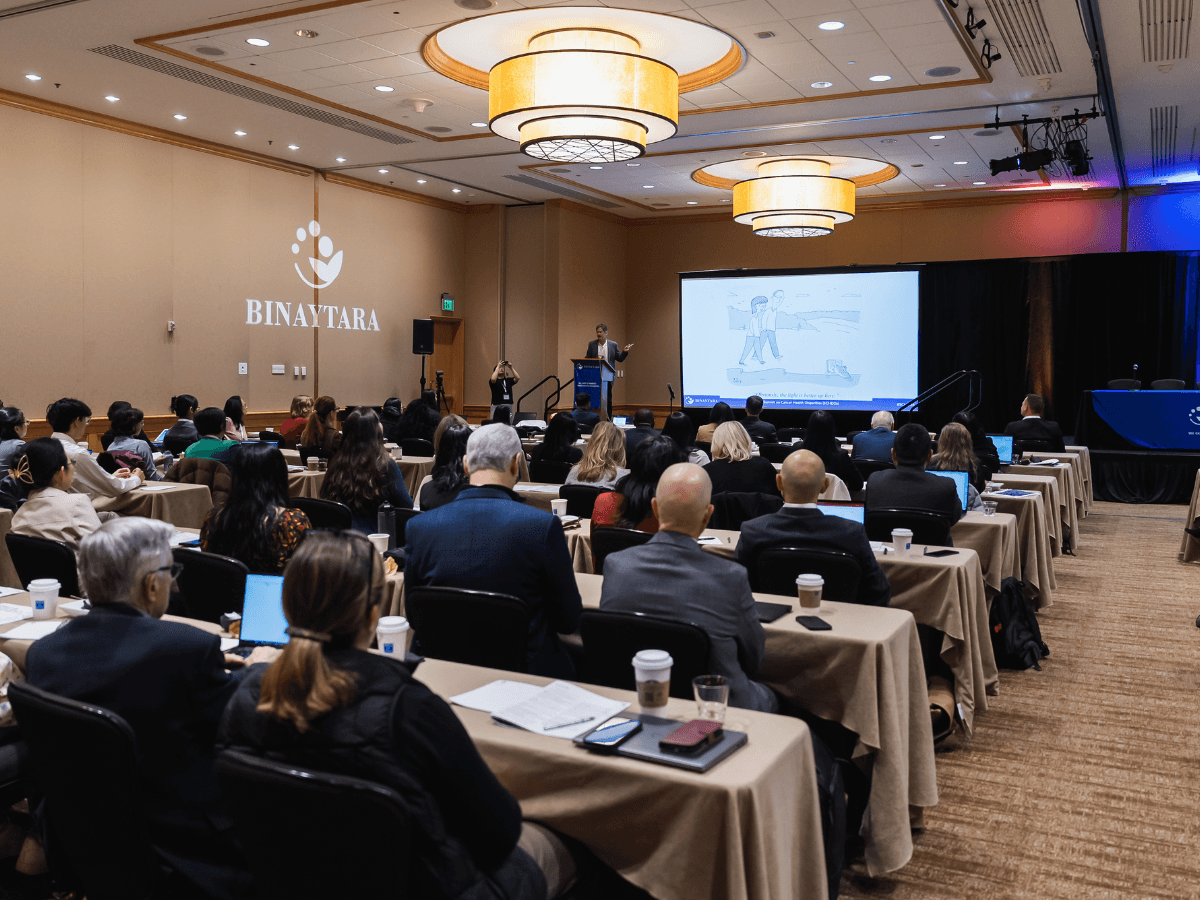
In March 2026, Binaytara convened its inaugural Spring Research Day, bringing together researchers, clinicians, and global collaborators under the theme Catalyst for Change: Advancing Global Cancer Equity. This milestone event further establishes research as one of Binaytara’s four core pillars.
Leadership Vision: Advancing Global Cancer Equity Through Research
The event opened with remarks from Dr. Binay Shah, co-founder and president of Binaytara, who outlined how Binaytara’s four pillars work together. The nonprofit’s strategic programming is guided by the C.A.R.E model:
- Cancer Care: Deliver care in underserved regions
- Advocacy: Influence health policy and access
- Education (CME): Train healthcare professionals
- Research: Generate evidence to improve care delivery
This integrated model ensures that research informs real-world programs, while education and advocacy amplify its impact—because multifaceted challenges require multi-pronged solutions.
Launching the Binaytara Cancer Research Institute
One of the most significant announcements was the development of the Binaytara Cancer Research Institute, a forthcoming center dedicated to Implementation Science (IS). As a field, IS takes “Does this intervention work?” as the starting point for the ever-more-critical question: “How can it work in real-world settings, and reach the people who need it most?”
This second question is especially important in global oncology, where many challenges stem from a lack of access, not a lack of knowledge. Successful cancer interventions will look different for different communities across the globe. Interventions that overlook this leave entire populations out of potential health solutions—a disparity the Binaytara Cancer Research Institute seeks to address.
Why Implementation Science Matters in Global Oncology
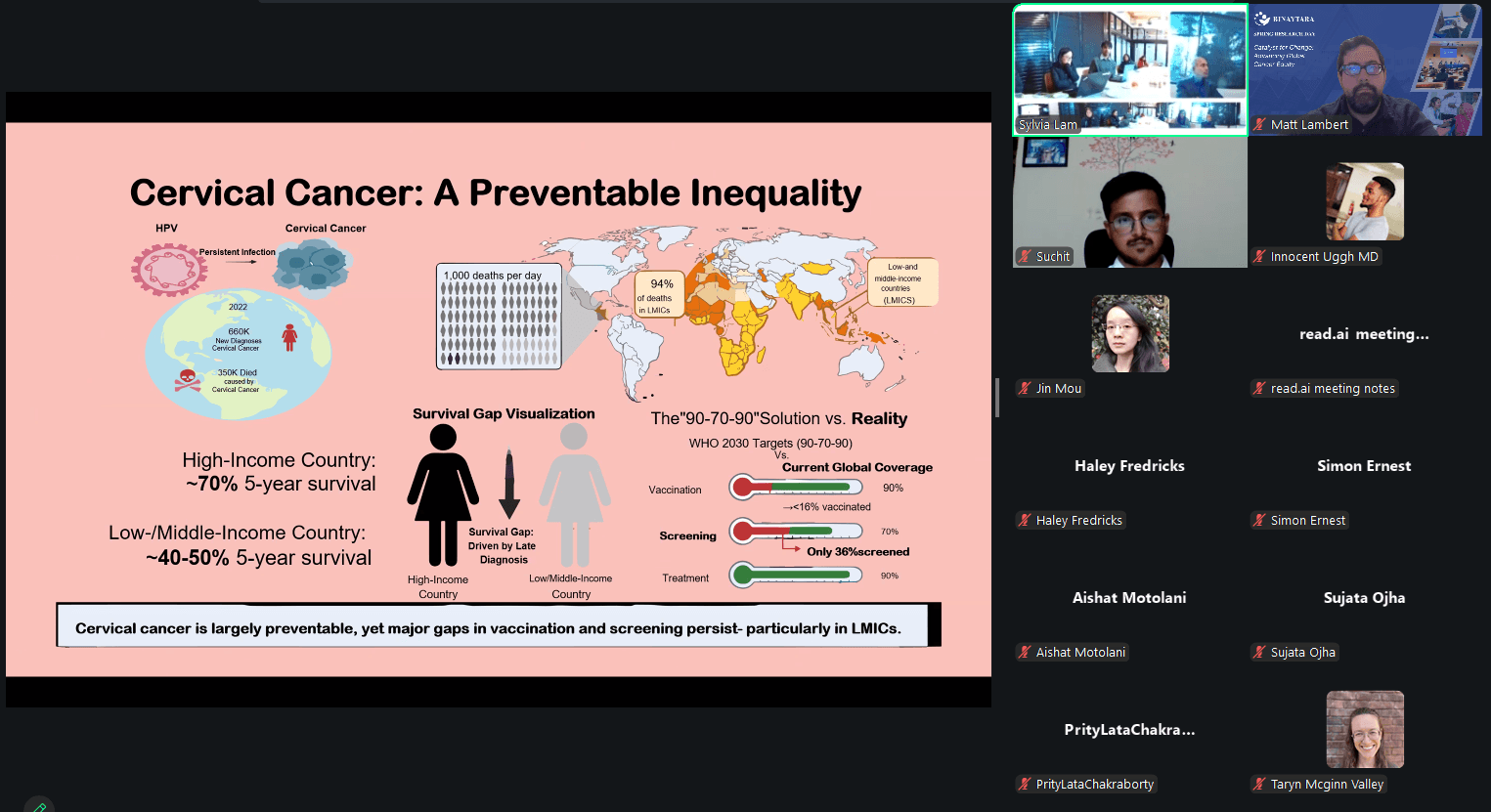
Figure 1: Presentation on cervical cancer inequities
As an example, take cervical cancer, one of the few cancers that is almost completely preventable through vaccination (the HPV vaccine) and regular screening (Pap/HPV tests). Both the HPV vaccine and screening tools exist. Still, cervical cancer persists in low- and middle-income countries (LMICs) like Nepal.
It’s not enough that the HPV vaccine and screening tools exist when they’re not reaching underserved populations such as rural communities and low-resource health systems. The gap lies in delivery.
The institute, born from Binaytara’s longtime prioritization of health equity initiatives, will focus on closing health gaps by studying how to scale interventions, improve patient understanding, strengthen health systems, and ensure equitable access to care.
Key Research Highlights: Speakers, Topics, and Global Collaboration
Binaytara’s Research Day brought together a diverse group of global experts, researchers, and trainees presenting across completed studies, keynote sessions, ongoing research, and new initiatives.
Keynote Presentations
Sujan Marahatta, PhD, MPH; and Roshan Mahato, PhD, MPH
- Affiliation: Kathmandu University
- Topic: Nepal’s Cancer Burden: A Systematic Review and Meta-Analysis
- Provided a comprehensive overview of national cancer trends, highlighting gaps in early detection and data infrastructure.
Sean Duffy, MD, MPH
- Affiliation: University of Wisconsin–Madison
- Co-presenters: Alejandro Chavez; Taryn McGinn Valley
- Topic: Implementing Cervical Cancer Screening and Prevention in Rural Guatemala
- Shared implementation strategies for delivering screening programs in low-resource, rural settings.
Innocent H. Peter Uggh, MD, MPH
- Affiliation: Kilimanjaro Clinical Research Institute (KCRI), Tanzania
- Topic: HPV Vaccination Delivery to Out-of-School Girls in Maasai Communities
- Highlighted culturally adaptive strategies to reach underserved adolescent populations.
Completed Studies
Gamala Luitel
- Affiliation: Binaytara
- Co-presenter: Gamvirta Devkota
- Topic: HPV Screening in Nepal: Training Female Community Health Volunteers to Reduce Cancer Inequity in Janakpur
- Demonstrated a scalable community-based model for expanding cervical cancer screening.
Bipul Luitel, PhD
- Affiliation: Binaytara
- Co-presenter: Suyog Kadel
- Topic: OncoBlast: Data Trajectory and Direction Forward
- Presented platform analytics and strategic direction for digital oncology education.
Elizabeth Damitio
- Affiliation: Binaytara
- Topic: Best of ASCO Faculty Data Analysis
- Showcased insights from oncology conference data and faculty engagement trends.
Ongoing Research: Global Cancer Disparities
Suchit Shashikumar, MBBS
- Affiliation: Binaytara (Volunteer Research Intern)
- Topic: Cancer Screening Disparities in LMICs: Cervical Cancer in Nepal and India
- Examined inequities in screening access and outcomes across low- and middle-income countries.
Prity Lata Chakraborty
- Affiliation: Binaytara
- Co-presenter: Divyanshu Kumar
- Topic: Adoption of Isothermal Nucleic Acid Amplification-Based HPV Testing for Cervical Cancer Screening
- Explored innovative, low-cost diagnostic approaches for scalable screening.
Maeve Doolin
- Affiliation: Binaytara
- Topic: Binaytara Hospital Project: Lessons, Achievements, and Internship Overview
- Highlighted progress and learning from building healthcare infrastructure in underserved regions.
IJCCD (International Journal of Cancer Care and Delivery) Presentations
Matt Lambert
- Affiliation: Director of Marketing and Communications, Binaytara
- Topic: IJCCD Publication Data Summary
- Presented journal growth metrics and publication trends.
Aishat Motolani, PhD
- Affiliation: Communications Manager, Binaytara
- Topic: Journal Indexing as a Quality Improvement Process
- Discussed strategies for achieving indexing in major academic databases.
Umang Swami, MD, MSCI, FASCO
- Affiliation: Huntsman Cancer Institute; and IJCCD Editor-in-Chief
- Topic: Vision, Strategies, and Achievements of IJCCD
- Outlined the journal’s role in advancing global oncology research equity.
New Research Initiatives
Suyog Kadel
- Affiliation: Binaytara
- Topic: ChemoConnect: Mobile Applications for Cancer Patient Education
- Introduced a digital app solution to improve patient understanding of chemotherapy.
Kate Liu
- Affiliation: University of California, Davis
- Topic: Chemotherapy Education Needs Assessment
- Presented early findings on patient education gaps and opportunities for intervention.
Building a Sustainable Global Research Ecosystem
Binaytara’s Research Day marks the beginning of a sustained research ecosystem. It fosters further cooperation between the C.A.R.E. pillars, creating a space where research can enter into dialogue with and inform the other arms of the nonprofit’s programming.
Binaytara plans to host two Research Days annually, in Spring and Fall. These convenings will serve as platforms to present new findings, strengthen collaborations, launch new research initiatives, and translate evidence into practice. The long-term vision is clear: to position research as a direct lever for improving cancer care delivery in underserved communities worldwide.
Why Implementation Science Is the Future of Global Cancer Care
In a field focused on the gold-medal finish line—a one-and-for-all cure for cancer—implementation science focuses on tailoring existing innovations, delivering solutions effectively to those who need them. It enables faster adoption of proven interventions, scalable healthcare models, better patient outcomes in low-resource settings, and more equitable access to life-saving care.
By investing in this field, Binaytara is addressing one of the most critical gaps in global oncology today. To stay up-to-date with the nonprofit’s global oncology programs, subscribe to the newsletter.
___
Frequently Asked Questions
What is Binaytara’s mission?
Binaytara is a U.S.-based global cancer equity nonprofit focused on reducing disparities through four pillars: cancer programs, advocacy, CME education, and research. It operates Nepal’s only cancer hospital in Madhesh Province and hosts more than 60 oncology CME conferences annually across the United States.
What is the Binaytara Cancer Research Institute?
It is a new institute in development dedicated to implementation science, focused on translating evidence-based cancer care into real-world practice, especially in underserved settings.
What is implementation science?
Implementation science studies how to ensure proven healthcare interventions are successfully adopted, scaled, and sustained in real-world environments.
Why is implementation science important in cancer care?
Because many effective tools already exist, but patients in underserved communities often cannot access them. Implementation science helps bridge that gap.
What research areas does Binaytara focus on?
Key areas include:
- Cervical cancer screening and HPV vaccination
- Digital health and patient education
- Global cancer disparities
- Oncology education and conference analytics
- Research publishing infrastructure
How often will Binaytara host Research Days?
Twice per year, once in spring and once in autumn, aiming to support ongoing research collaboration and innovation.
Recommended Articles