
Binaytara Cancer Research Institute
Advancing Implementation Science to Improve Access to Cancer Care
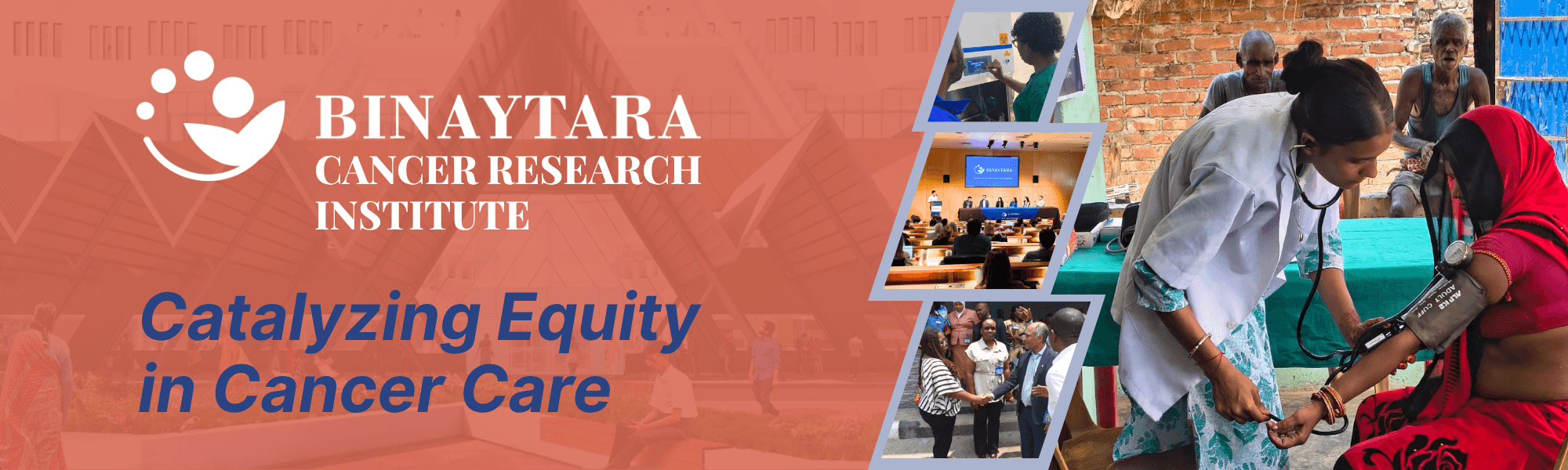
Advancing Implementation Science to Improve Access to Cancer Care
The Binaytara Cancer Research Institute addresses a critical need for cancer patients. The primary research focus is on implementation science. Broadly speaking, implementation science is the field dedicated to ensuring that health solutions actually work for marginalized communities and are accessible to those communities. The Research Institute is currently producing original research on cervical cancer screening, technology-enabled solutions for effective cancer care delivery, and continuing education, among others.
The Challenge
Cancer research is often associated with finding a “cure” for the disease, or other interventions like prevention, early detection, and treatments. While researchers have made great strides in those endeavors, there is a troubling gap in access to those interventions for many cancer patients.
Despite the $24.5 billion invested globally in cancer research between 2016 and 2020, a profound translational gap persists: an estimated $19.6 billion worth of those potential oncology innovations may never reach the patients who need them most. From structural barriers in lung and prostate cancer screening to the underutilization of point-of-care HPV testing in rural communities, systemic inequities severely inhibit the delivery of evidence-based care. Furthermore, while novel solutions, such as decentralized screening pathways or digital patient education platforms, are frequently introduced, the lack of systematic, framework-driven evaluation often prevents their successful adoption and sustainable scale-up across low-resource global health ecosystems.
Our Research Impact at a Glance
Binaytara is committed to scientific research as a means to move toward cancer health equity. Along with fostering research externally through oral and poster presentation opportunities as well as research awards and funding, the Binaytara Cancer Research Institute is conducting original research internally. The Research Institute is contributing to the field of implementation science research, aiming to improve cancer outcomes for underserved, rural, and marginalized populations worldwide.
- Abstracts at ASCO | The American Society for Clinical Oncoloygy Annual accepted three abstracts by Binaytara Cancer Research Institute for ASCO 2026 Annual Meeting.
- SCD TrialOps Simulation Lab | Partnering with researchers at Augusta University and University of Tennessee to launch SCD TrialOps Simulation Lab to close the sickle cell disease trial readiness gap.
BCRI Implementation Science Approach
At the Binaytara Cancer Research Institute (BCRI), this translational gap is addressed by systematically embedding implementation science (IS) theoretical frameworks into the lifecycle of all global and domestic oncology research. By anchoring initiatives in models such as the Consolidated Framework for Implementation Research (CFIR) and the RE-AIM (Reach, Effectiveness, Adoption, Implementation, and Maintenance) framework, BCRI rigorously evaluates how complex interventions interact with localized health systems.
For global health initiatives, such as the community-based cervical cancer screening programs deployed via Female Community Health Volunteers in Madhesh Province, Nepal, CFIR is utilized to systematically map the sociocultural and systemic determinants of health autonomy, procedural knowledge, and screening uptake. Domestically, in initiatives targeting cancer disparities, the RE-AIM framework guides the evaluation of intervention scalability and real-world impact. These theoretical models are operationalized through advanced quantitative methodologies. Utilizing robust biostatistical techniques, BCRI precisely isolates the variables driving the successful adoption of continuous medical education (CME) programs and digital health tools like the OncoConnect platform. By mapping rigorous statistical modeling onto established IS frameworks, our research initiatives ensure that evidence-based interventions are contextually adapted, scientifically validated, and sustainably integrated into clinical practice to advance cancer health equity worldwide.
Our Team:
Leadership:
Binay Shah, MD | President
Jin Mou, MD, MSc, MPH, PhD | Implementation Science & Research Development Officer
Members - Binaytara Staff:
Suyog Kadel | Informatics and Technology Specialist
Bipul Luitel, PhD | Chief Technology Officer
Tara Shah, RN | Executive Director
Bhawana Srivastava | Director of Education Programs
Collaborators:
Jordan Ciuro, MD | Emory Winship Cancer Institute, and Assistant Professor, Department of Hematology and Medical Oncology, Emory University School of Medicine
Sean Duffy, MD | Assistant Professor; Department of Family Medicine and Community Health, University of Wisconsin - Madison
Siddhartha Devarakonda, MD | Swedish Cancer Institute
Lesa Dawson, MD | Vancouver Coastal Health Research Institute
Elaine Leung, MBChB (Medicine), PhD | Department of Cancer and Genomic Sciences, University of Birmingham
Tianhong Li, MD, PhD | UC Davis Comprehensive Cancer Center
Roshan Kumar Mahato, PhD, MPH | College of Medical Sciences at Kathmandu University
Marquita Nelson, MD, MS | Belz Medical Director of the Methodist Comprehensive Sickle Cell Center Assistant Professor, University of Tennessee Health Science Center
Girindra Raval, MD | Associate Professor, Medical College of Georgia, Department of Medicine: Hematology and Oncology
Innocent H. Peter Uggh, BSc (Doctor of Medicine)/MD, Msc | Kilimanjaro Clinical Research Institute (KCRI)
Siddhartha Yadav, MBBS, MD | Mayo Clinic
Volunteer Research Interns:
Fady El Tom, MD | Kansas University School of Medicine – Wichita
Divyanshu Kumar | University of Washington Bothell
Suchit Shashi Kumar, MBBS | BGK Hospital, Bagalkot, Karnataka, India
Sixuan Liu, BS | University of California - Davis
Sujata Ojha, MD | Dell Medical School at the University of Texas at Austin
Aira Shah | Issaquah High School
Daniel Su | University of Michigan - Ann Arbor
Bo Wen (Angelina) Yang, BS | University of Michigan - Ann Arbor
Active Research Programs within Implementation Science
Cervical Cancer Detection and Prevention
Analyzing the effectiveness of cervical cancer screening programs and self-administered HPV testing to make prevention and early detection more accessible in low-resource settings in Madhesh State, Nepal from more than 600 participants in four pilot free health camps delivered through the volunteer female healthcare worker models.
Technology in Continuing Education and Healthcare Delivery
Researching the impact of gamifying continuing medical education (CME) to healthcare providers via the OncoBlast app, which has been downloaded by more than 1,300 oncology practitioners across more than 50 countries.
Technology-Enabled Cancer Patient Education
Researching the need for and development of ChemoConnect, an app for patients undergoing chemotherapy to supplement the limited time patients have with their care teams in order to better understand potential side effects, pain management, and prescription schedule.
Continuing Education
As a leading provider of continuing education (CE) for oncology professionals, recorded webcasts, and gamified CE app, Binaytara has a multimodal approach to improving the reach and impact of oncology education. The field of oncology is rapidly evolving and there is a need for healthcare practitioners to adopt the latest practices. Deriving insights from data across 678 faculty and attendees invited to 50 oncology conferences across the United States from more than 60 CME conferences to assess trends across local vs national faculty, early-career vs established physicians, female vs male, and community practitioners vs comprehensive cancer centers. Binatyara's CE programs are accredited by ACPE, Washington State Medical Association and California Board of Nursing.
Binaytara Research Day
Binaytara Research Day is a biannual convening that brings together oncologists, researchers, clinicians, and global health collaborators to advance the institute's mission of translating cancer research into real-world impact. Held each spring and fall, Research Day serves as a platform for presenting original findings, launching new research initiatives, and strengthening partnerships across high- and low-resource settings. Presentations span implementation science, cancer screening, digital health tools, and global health disparities, with particular focus on underserved communities in low- and middle-income countries. The inaugural Spring 2026 Research Day, themed Catalyst for Change: Advancing Global Cancer Equity, featured keynote speakers and researchers from Nepal, Tanzania, Guatemala, and across the United States. Research Day is open to the public, reflecting Binaytara's commitment to accessible, equity-centered science. The next event will be our Fall Research Day on September 17th, 2026.
News and Articles
Binaytara Cancer Research Institute: Innovating for a Better Future
[Half a Million Hidden Cancers: How a $10 Test in Nepal Could Change Women’s Healthcare Everywhere(https://binaytara.org/news/news/cervical-cancer-screening-nepal-hpv-model)]
Why Indigenous Communities Face Higher Cancer Rates By Jin Mou, MD, MSc, MPH, PhD
Centering Cancer Patients’ Voices in Global Health Advocacy By Sujata Ojha, MD
Nepal’s Cancer Burden: A Systematic Review and Meta-Analysis of 15 Years of Evidence By Roshan Kumar Mahato, PhD, MPH; Sujan Babu Marahatta, PhD; Kyaw min Htike, MBBS, MPH
Binaytara Research FAQ
What is the Binaytara Cancer Research Institute?
The Binaytara Cancer Research Institute is a research organization focused on improving cancer outcomes through implementation science. Its mission is to ensure that proven cancer prevention, screening, and treatment solutions effectively reach underserved and marginalized communities around the world.
What is implementation science in cancer research?
Implementation science is the study of how to deliver healthcare solutions effectively in real-world settings. In cancer research, it focuses on: Ensuring treatments and screenings are accessible Adapting interventions for low-resource environments Bridging the gap between research discoveries and patient care
Why is implementation science important in oncology?
Despite major advances in cancer research, many innovations never reach patients. Studies show that up to 80% of medical research does not translate into public health impact. Implementation science addresses this gap by making cancer care more accessible, especially in rural and underserved populations.
What are the main research areas at the Research Institute?
The Binaytara Cancer Research Institute focuses on four key areas:
- Continuing Medical Education (CME): Improving how oncology knowledge is shared and retained among healthcare professionals.
- Cervical Cancer Screening: Expanding access to HPV testing through simplified, scalable screening methods in low-resource settings.
- Technology in Healthcare Delivery: Developing digital tools, including gamified platforms, to train healthcare providers.
- Cancer Patient Education Technology: Creating tools like ChemoConnect to help patients manage chemotherapy side effects and treatment schedules.
How does the Research Institute support underserved communities?
The Binaytara Cancer Institute designs and implements solutions specifically for:
- Rural populations
- Low-resource healthcare systems
- Marginalized communities For example, cervical cancer screening programs are delivered through free health camps in Nepal, ensuring access to early detection services.
Does the Research Institute fund or support research?
Yes. The Institute supports research through awards and collaborations, including: Implementation Science Research Award
Shaji Kumar Hematology Research Award
These programs help advance cancer research focused on real-world impact.
How can I get involved or collaborate?
Please contact Jin Mou at [email protected] to get involved. Opportunities include:
- Research collaborations
- Volunteering and internships
- Participation in global health initiatives
Interested individuals and organizations can connect with Binaytara to explore partnerships.