Building Cancer Care Where It's Needed Most
Author
Dr. Binay Shah
When people think about what it takes to build a world-class cancer hospital, they usually think about the medicine involved: linear accelerators, oncologists, treatment protocols. What they don't think about is flower pots. (I’ll come back to that.)
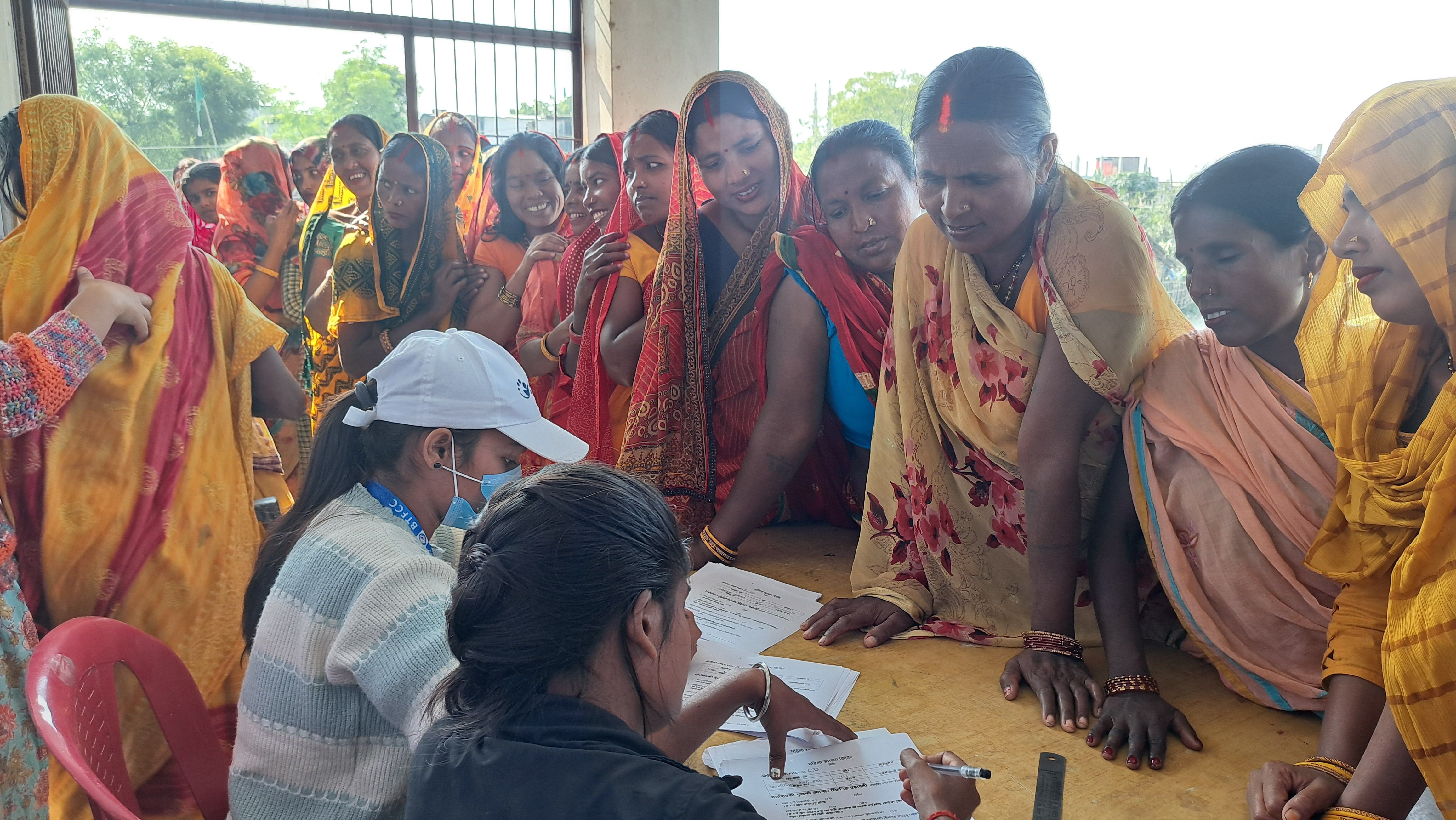
Binaytara is a global oncology nonprofit working to reduce cancer health disparities — in the United States, in Nepal, and wherever geography dictates survival. For several years now, we have been working toward something audacious: building a comprehensive cancer hospital in Janakpur, in Nepal's Madhesh Province, a region of more than six million people with no dedicated cancer facility and no access to radiation therapy. This is a place where cervical cancer, head and neck cancer, lung cancer, and breast cancer claim thousands of lives every year. Interventions for these diseases, and in cases cures, exist; the infrastructure to deliver them does not.
Where Things Stand
We have recently cleared two significant regulatory milestones: Environmental Impact Assessment (EIA) approval, and architectural approval from Nepal's Department of Urban Development and Building Construction. We are currently awaiting structural approval, after which we will be permitted to begin construction. Our plan is to break ground on a radiation oncology unit first, which will be the first such facility in the entire province.
This is strategic: for many of the most common cancers in the region, radiation is an essential part of treatment. A linear accelerator, the machine that delivers radiation therapy, costs between two and a half and three million dollars—before you account for CT simulators, brachytherapy equipment, the specialized physicists, dosimetrists, and radiation oncologists required to operate it safely. This is precisely why radiation oncology remains out of reach for so much of the developing world: it is capital intensive, technically complex, and demands a level of multidisciplinary expertise that takes years to build. That doesn’t mean a province of six million people should go without.
The 200-bed main hospital building will be constructed using base isolation technology, making it, to our knowledge, the only building in Nepal with this earthquake protection system. For a region that sits in one of the world's most seismically active zones, that is not a small thing.
More Than a Hospital
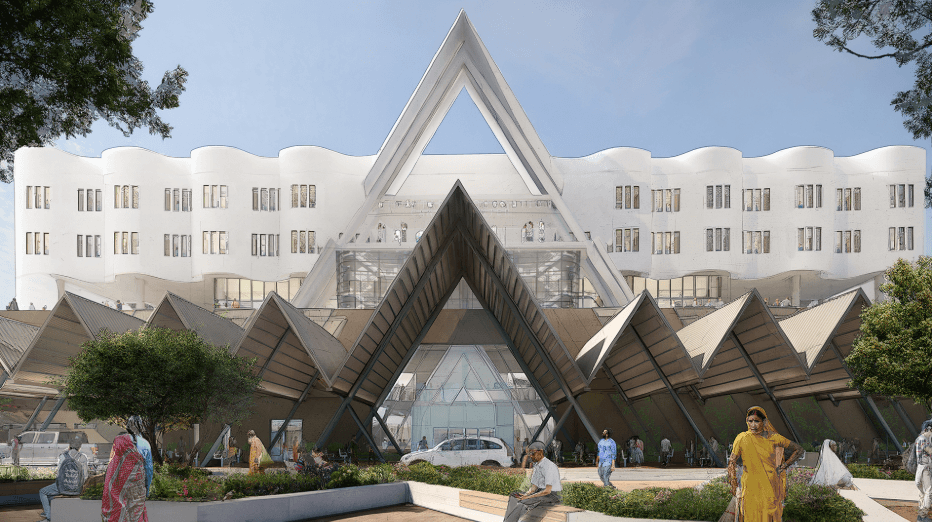
We expect the hospital to become a major referral center for patients from across Nepal and from Northern India. We are planning to establish our own specialty training programs like oncology and hematology fellowships and nursing programs, each modeled on what institutions like Fred Hutch have built in Seattle—tailored, as needed, to meet the unique need observed in Nepal. The goal is to train the next generation of cancer specialists who will stay in the region, build on what we've started, and create a self-sustaining healthcare ecosystem.
To this end, construction of a project this size will generate significant economic activity in Janakpur: hundreds of construction jobs, and downstream growth in hospitality, pharmacy, and other businesses that tend to cluster around major healthcare facilities. We anticipate medical tourism from across the region. None of that is the primary goal, but it is a meaningful byproduct of investing seriously in a place that has long been underinvested.
Our current health clinic, operating in a rented building near the permanent site, will continue serving patients throughout construction and will eventually move to the new campus, offering both outpatient and inpatient services.
On the Challenge of Building Anything
Global health is hard. Global oncology is harder. Establishing a state-of-the-art cancer hospital in a setting where expertise, supply chains, and regulatory infrastructure are all still developing—that is harder still. This is worth being honest about. Some of the obstacles are financial, some are logistical, and some involve navigating bureaucratic processes that are, to put it charitably, still maturing.
This is where the flower pots come in. At one point during our clinic approval process, an official indicated that our facility should have flower pots. When I asked our team to request the specific regulation requiring flower pots in a clinical setting — what color, what type, how many — the question was not well received. But I think it is a fair question. Regulations should be specific, objective, and consistently applied. Does the facility have two exam rooms? Yes or no. Adequate waiting space? Yes or no. These are the kinds of criteria that make a regulatory process workable for any organization that wants to invest in Nepal's healthcare system.
Nepal has an enormous and largely untapped resource in its diaspora: professionals across medicine, engineering, education, and finance who would be deeply willing to invest their expertise back home, if the path to doing so were clearer. The government's job, as we see it, is not to add requirements but to define them transparently, consistently, and in writing. That would be transformational for the entire ecosystem of international nonprofits and diaspora-led initiatives that want to be part of Nepal's development.
Why This Can Be Done
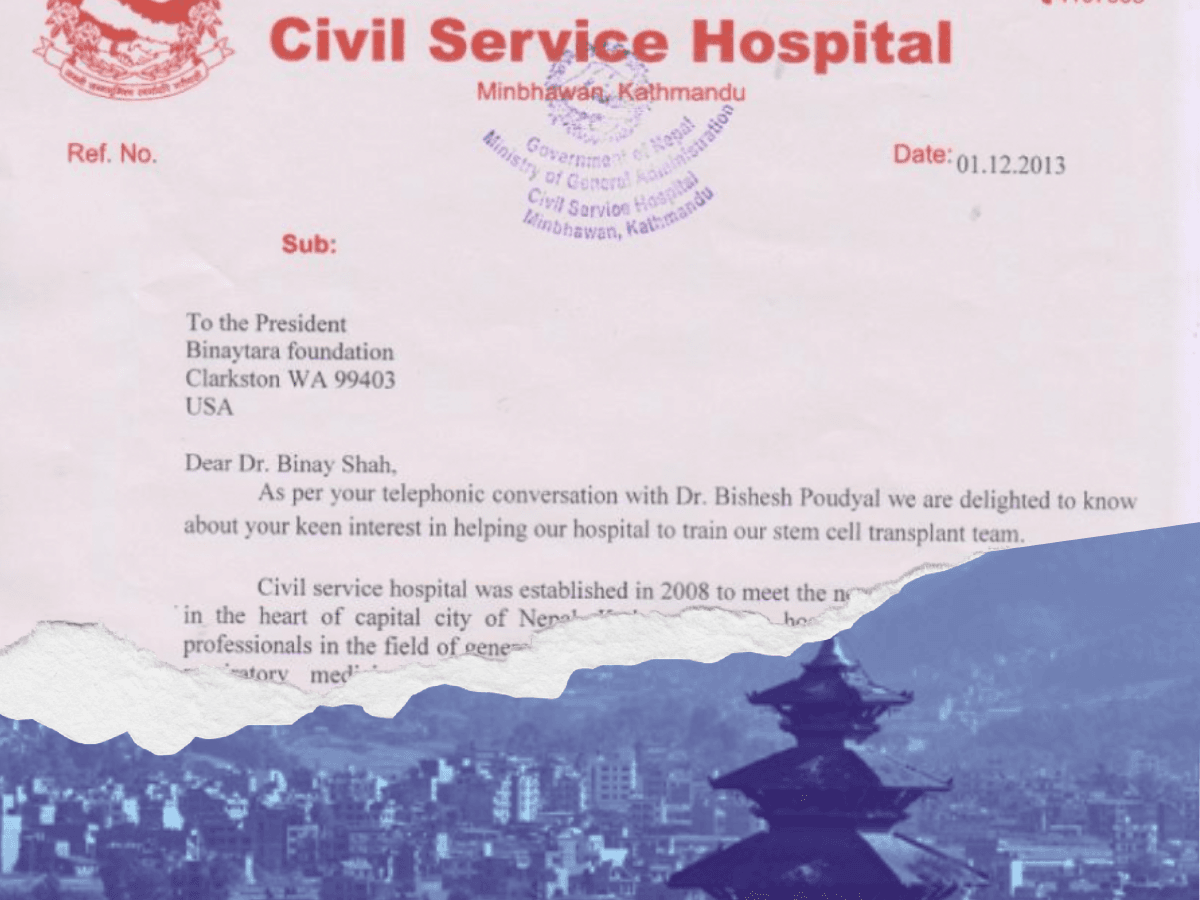
I am often asked whether it is realistic to build world-class cancer care in a low-resource setting. My answer is that it has already been done. In 2016, with support from Binaytara and training facilitated through the University of Illinois Chicago, Civil Service Hospital in Kathmandu performed Nepal's first bone marrow transplant — one of the most complex medical procedures in existence. That program is still running. It has since established its own hematology fellowship and is producing the next generation of transplant specialists.
What made that possible was not unlimited resources. It was the right partners, a committed local institution, and a willingness to do the painstaking work of building something from nothing. We are trying to do the same thing in Janakpur, at a larger scale.
The cancer care that is standard in Seattle or San Francisco should not be a privilege of geography. It will take time, it will take resources, and it will occasionally require arguing about flower pots. But it can be done, and we intend to do it.
Binay Shah, MD is the founder of Binaytara, a global oncology nonprofit working to reduce cancer health disparities.
Recommended Articles
Dr. Binay Shah Contributes to Article Published in Nature Health About Improving Nepal Healthcare System
Learn more