Binaytara's Fall Research Day 2026 Puts Cancer Equity at the Center of the Conversation
Author
Binaytara Team
Binaytara Fall Research Day: Building a Research Community
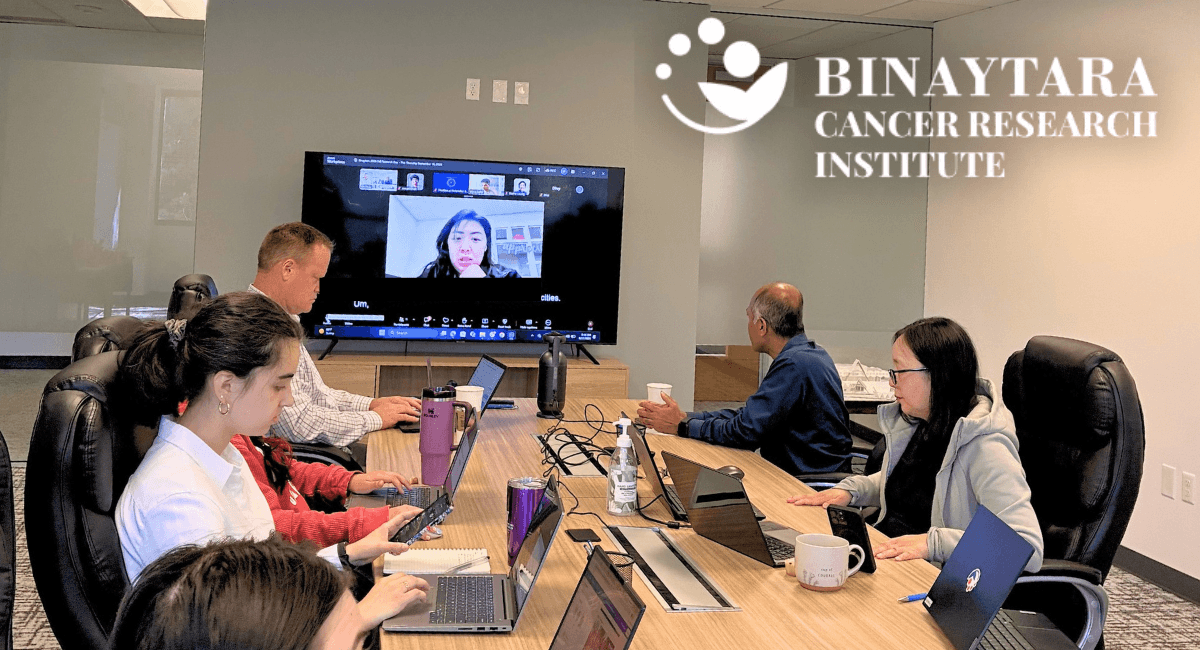
Autumn is setting in, and with the changing seasons comes Binaytara’s Fall Research Day. The oncology nonprofit’s sophomore research event took place on September 17—led, like its March 2026 predecessor, by Binaytara Implementation Science & Research Development Officer Jin Mou, MD, PhD.
Alongside planning Research Days, Mou heads the Binaytara Cancer Research Institute (BCRI), the organization’s research arm. In June, BCRI’s work on cancer care in global and low-resource settings was highlighted at the 2026 ASCO Annual Meeting. Forthcoming, the team is partnering with research and healthcare institutions across the globe to launch several projects focused on cancer health equity, which have recently been granted funding.
BCRI’s wide network of research partners was evident in Fall Research Day’s speaker lineup. The agenda reflected a diverse array of institutions, cancer specialties, and research modalities. Mou, not one for hierarchies, invited undergraduate investigators under her mentorship to speak alongside seasoned clinician-researchers for a rich agenda grounded in patient-centered, equity-oriented investigation.
Fall Research Day 2026 Agenda
Kyaw Min Htike, DrPH | Khon Kaen University, Thailand
- Cancer in Nepal: Insights from a Systematic Review and Meta-Analysis
Amit Chaudhary, MBBS | Binaytara Cancer Research Institute / Binaytara Cancer Trust
- Improving FCHV Competency in Cervical Cancer Screening Through Structured Training
Aman Shah, MBBS | Binaytara Cancer Research Institute / Binaytara Cancer Trust
- Building a cervical cancer prevention research program in Madhesh, Nepal
Jin Mou, MD, PhD | Binaytara Cancer Research Institute
- Advances in Isothermal HPV Assays for Cervical Cancer Screening in Low- and Middle-Income Countries
Tina Xiwen Zhou | Chicago Medical School, Rosalind Franklin University of Medicine and Science
- MAP vs Intensified Chemotherapy for pediatric osteosarcoma
Bipul Luitel, MS, PhD; Suyog Kadel, MS | Binaytara
- Developing a Patient-Facing Mobile Cancer Care Platform
Divyanshu Kumar | University of Washington
- Disparities in Colorectal Cancer Screening Recommendations
Elaine Leung, MBChB, MRes, AFHEA, MRCOG, PhD | University of Birmingham (Department of Cancer and Genomic Sciences)
- AAIMC-OC: The Application of AI-defined Molecular Classifications in Ovarian Cancer
Akshee Batra, MD | University of Miami Sylvester Comprehensive Cancer Center
- Implementing patient education videos to improve understanding of systemic cancer therapy.
Umang Swami, MD, MSCI, FASCO; Matt Lambert, MBA | Huntsman Cancer Institute, University of Utah, Salt Lake City; Binaytara
- IJCCD impact and indexing: Advancing Global Equity in Cancer Care Delivery
Fady El Tom, MD | University of Kansas School of Medicine, Wichita
- Faculty abstract selection at Best of ASH as a CME needs assessment in myeloma
Angelina Yang, Daniel Su
- Two cancer screenings, same rules, opposite outcomes: breast and cervical cancer screening in the United States, 2019 to 2023
Jordan Ciuro, MD | Winship Cancer Institute, Emory University
- Advancing Precision Oncology in Metastatic Prostate Cancer: From Biomarker Discovery to Implementation
Implementation Science: The Framework Advancing Cancer Care and Delivery
A recurring focus throughout the meeting: implementation science, the scientific study of effective care delivery in real-world settings (rather than, say, the development of new drugs and treatments). Implementation science often looks at the populations not receiving equitable cancer care, surveys the barriers unique to that population, and designs for the observed lived reality.
Binaytara's efforts to screen Nepali women for cervical cancer provides a familiar example. In Nepal—-as Binaytara Cancer Trust Medical Officer Amit Chaudhary, MBBS, pointed out in his Fall Research Day presentation—the screening rate for adult women is between 1 and 3%, despite a high disease burden and morbidity. Chaudhary presented his work providing accessible and highly effective training for female community health workers in Madhesh Province, building off of Binaytara’s past-year initiative. Filling in the gaps, Aman Kumar Shah, MBBS, gave an update on his structured efforts to engage a male cohort of community volunteers. Mou herself zoomed out from Nepal, assessing the scalability and reliability of isothermal HPV assays as a means of screening for CIN3+ and CIN2+ — pre-cancerous indications on the cervix — in low- and middle-income countries.
Fall Research Day Highlights
Other global presenters shared BCRI’s implementation science core. "It was exciting to hear about implementation science across different cancer types,” Mou said. “We appreciate the opportunity for our collaborators to engage, presenting on their own prioritized cancer focus."
To start, the meeting’s keynote speaker, Khon Kaen University’s Kyaw Min Htike, DrPH, performed a systematic review and meta-analysis of the cancer burden in Nepal. Later on in the day, Chicago Medical School’s Tina Xiwen Zhou reviewed treatment options for pediatric osteosarcoma, with emphasis on the financial burden of care. University of Birmingham’s Elaine Leung, MBChB, MRes, AFHEA, MRCOG, PhD, shared about a low-cost HRD test intended to be operational in low- and middle-income countries. University of Kansas School of Medicine’s Fady El Tom, MD, looked at the blind spots in myeloma revealed by an analysis of Best of ASH meetings. Finally, Jordan Ciuro, MD, closed the day out; the Winship Cancer Institute clinician-researcher shared how gaps in molecular data mean precision medicine isn’t tailored for everyone.
From the BCRI Team to You
With another Research Day in the books, it’s time for BCRI and its collaborators to get back to the wet labs, bedsides, and datasets that are powering their investigation. For Binaytara, that means another round of cervical camps in Nepal’s Madhesh Province, and the launch of a brand-new digital health solution. Interested in collaborating with BCRI and seeing the next Research Day in real time? Contact [email protected] to get involved.
Recommended Articles
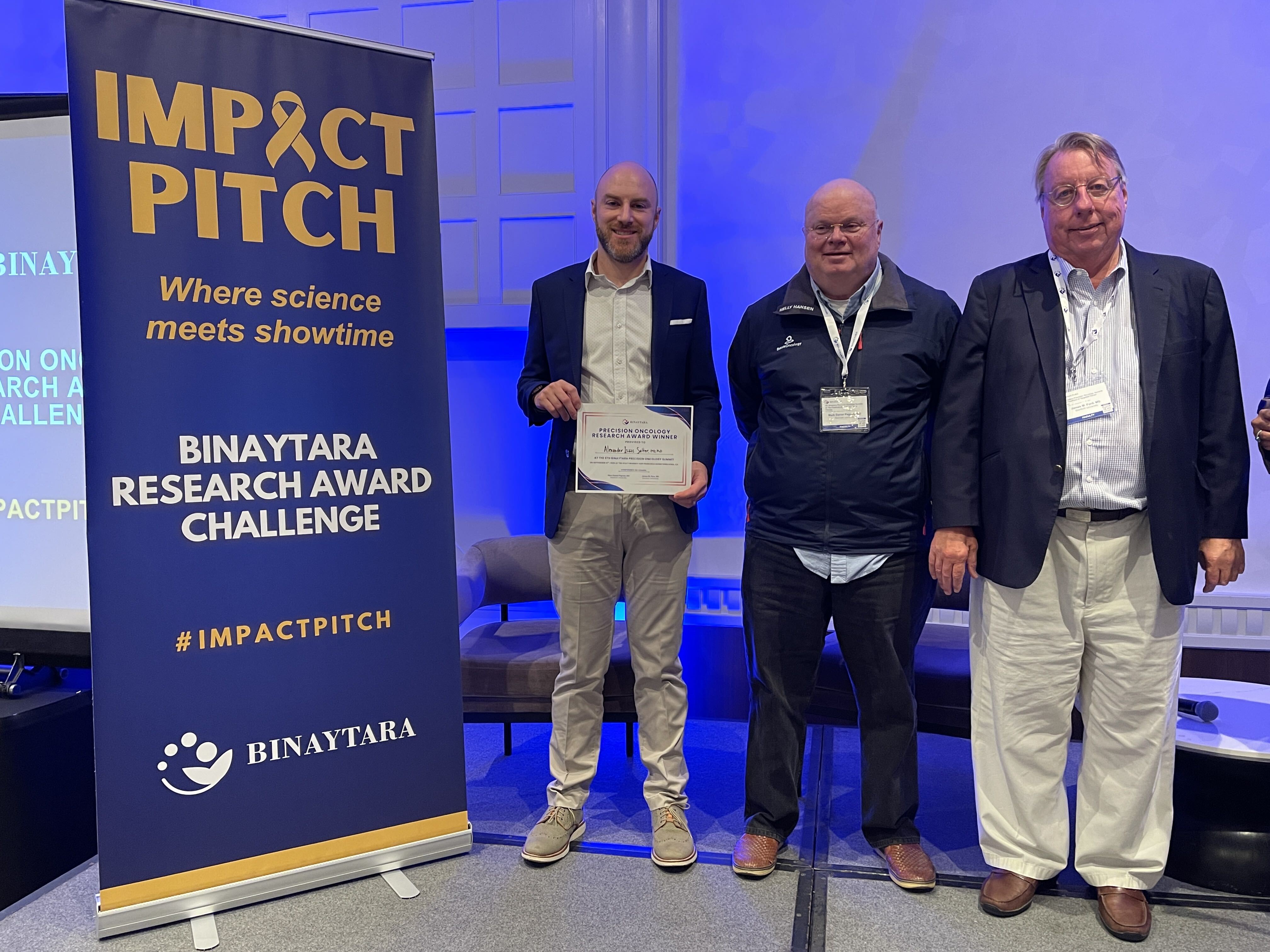
Stanford's Alexander Salter Wins Binaytara Precision Oncology Research Award
Learn More