
When Treatment Exists but Patients Still Miss Out: Lessons from SCHD26 on Cancer Health Disparities
Despite groundbreaking advances in cancer treatment, many patients still fail to receive timely care. Insights from the 2026 Summit on Cancer Health Disparities (SCHD26) reveal that the real barrier is not science—but implementation, access, and systemic inequities.
Why Cancer Disparities Persist Despite Scientific Progress
There is a particular kind of frustration that comes when you already know the answer. The trials exist, the guidelines exist, the cost-effectiveness models have been published and yet patients with preventable cancers still walk in too late, stage four, the window already closing. Over two days, Binaytara's Summit on Cancer Health Disparities (SCHD26) brought together oncologists, providers, nurses, researchers and advocates to sit with that frustration and do something about it. The question running through every session was not simply what the disparities are, but why we continue to build systems that produce them and what, specifically, we can do differently.
The answer that kept emerging: science is not the bottleneck, implementation is.
The Prevention Paradox: Why Screening Still Falls Short
The conference opened with a session on lung cancer screening. A field where more than a decade of evidence has only modestly shifted outcomes. Dr. Hina Khan, a thoracic oncologist at Brown University, laid out the numbers: low-dose CT reduces lung cancer mortality by 20 to 26% in high-risk populations. Yet national screening rates stubbornly remain below 20% in most states. In her Rhode Island cohort, 60% of patients who skipped screening had never discussed it with a provider, 45% didn't know it was covered by insurance, and 46% had never heard the words "lung cancer screening" at all. A navigator embedded in a Somali community health center pushed rates from 1.5% to 12%. Still far from ideal but enough to demonstrate that the barrier is not patient indifference. It is a system that asks too much of patients who are already carrying too much.
Global Cancer Disparities: Access Gaps Across Borders
The conversation then widened beyond the U.S., reinforcing that disparities are both local and global. Dr. David Aboulafia brought the room to Sub-Saharan Africa, where kaposi sarcoma remains the second or third leading cause of cancer mortality in many countries. A disease antiretroviral therapy made manageable in the U.S. and devastating where those drugs still can't reach. He warned that shifts in global funding priorities could jeopardize decades of progress. Dr. Barbara Goff followed with the WHO's goal to eradicate cervical cancer by 2030 through vaccination, self-collected HPV testing, and community health workers treating precancerous lesions. Science exists. What remains uncertain is whether systems will mobilize at the scale required.
The comment that stayed longest came from the audience. Dr. Enzealou, a pediatrician and implementation scientist who worked in the U.S. for a decade before returning to Nigeria, when asked what is the first thing he would like to fix before anything else in his system. He said, “proper diagnosis”. Not targeted therapy, not genomic testing. Diagnosis. “You cannot treat what you have not named”. He added another reflection that lingered in the room, “In every country, there is a first world, a second world, and a third world”. And within each, disparities persist.
Precision Oncology and Unequal Access to Innovation
Precision oncology promises to match patients to treatments most likely to help them. What it often delivers instead is a pipeline that works well for patients who are already well-served. Dr. Monica Yellowhair of the University of Arizona reframed the barrier not as biological, but as linguistic. The Navajo Nation had no word for cancer; early translations named it "the sore that never heals," a phrase that arrived as a verdict before any conversation about treatment could begin. Over time, it evolved to "the cell that keeps growing." Language is not a side issue in health equity, it is either the first barrier or the first bridge.
Dr. Ira Klein, from the payer’s perspective, addressed why next-generation sequencing remains inaccessible even where available: insurance policies cite 2015 studies, and prior authorization requirements create friction by design. "Testing might be $2,000 to $4,000," she said. "Therapy is $100,000 to $300,000. Testing is one time. Therapy continues." One underused fix discussed was the pathologist-driven reflex testing, where molecular profiling is automatically initiated on surgical specimens. By removing the "silo" between the pathologist and the oncologist, centers have meaningfully shortened the time to treatment decisions, though it remains far from the standard of practice.
At the same time, innovation is accelerating. Dr. Ayokunle Olanrewaju and Dr. Jerald Radich from Fred Hutchinson Cancer Center demonstrated portable diagnostics design small enough to hold in your hand, built for places that cannot wait for a centralized lab and a lateral flow assay detecting the T315I mutation in CML and a nanopore sequencer capable of identifying leukemia-defining mutations within hours. The science is ready. The challenge is ensuring that these advances reach the patients who need them most.
Invisible Populations: The Data Gaps in LGBTQ+ Cancer Care
Perhaps the most glaring example of "structural invisibility" is the lack of data on the LGBTQ+ community. About 9% of the U.S. adult population identifies as LGBTQ+ likely an underestimate given underreporting, that number jumps to nearly 23% for Gen Z. Yet most cancer registries do not collect sexual orientation or gender identity (SOGI) data. As a result, disparities cannot be accurately measured, studied, or addressed. We cannot study what we don't measure. A natural experiment presented highlighted this gap. When New Jersey mandated SOGI data collection in 2023, the share of patients with missing gender identity information at a dual-state cancer center dropped from 35% to 5.6% by 2025. In Pennsylvania, without such a mandate, rates remained largely unchanged. Same electronic health record, same institutional leadership, one policy difference. The patients were always there. The system simply was not designed to see them.
Why Patient Advocacy Is Now a Clinical Responsibility
A session on advocacy and community partnerships produced one of the conference’s most direct statements. As she was leaving the panel, Dr. Jasmine Kamboj was asked for a message:
"Patient advocacy is not a choice anymore. It's the need of the hour."
That clarity reframed advocacy not as an optional extension of clinical care, but as a core responsibility. At the end of the first day, Dr. Shailender Bhatia, reflecting on what he appreciated the most was the thought of decentralizing clinical trials. The idea has a historical parallel. CAR-T therapy today is where dialysis was in the early 1970s, available only at academic centers, shaped by infrastructure rather than patient need. Dialysis is now at every corner. The question is not whether CAR-T can follow that arc. The question is not whether innovation will diffuse but how long it will take, and how many patients will be left behind in the process.
Technology in Cancer Care: Bridge or Barrier to Equity?
Day 2 sessions asked an honest question: can technology accelerate equity, or will it bake existing disparities into infrastructure that's harder to argue with? Dr. Guannan Gong of Yale Cancer Center showed AI-based trial matching cutting enrollment timelines from 30 days to 5 and increasing recruitment sixfold, with over 70% of newly identified patients coming from underserved populations. At the policy level, his priority was clear: embed equity frameworks at the earliest stages of trial design and build data governance that stops information about hard-to-reach populations from getting lost between systems. When designed intentionally, technology can expand access.
But the panel held the other side too. For instance, AI trained on biased datasets may replicate inequities, patients without digital access remain excluded and poorly designed systems can disrupt clinical workflows. A rural oncologist described a text reminder system that failed to account for chemotherapy workflows, creating confusion rather than improving adherence. Technology does not solve inequity by default, it reflects the systems in which it is built.
The Impact Pitch: Redefining How Cancer Research Is Evaluated
The Binaytara Shark Tank-style research challenge was the conference's most dynamic session. Four early-career researchers, seven minutes each, then questions from the Catalysts (panel members) included Dr. Christine Laine, Dr. Radich, Dr. Shivaani Kummar, and Dr. Don Dizon and Dr. Bhatia. What stood out was not just the science but the process. Questions were precise, direct, and deeply constructive. The catalysts thought out loud in ways that made visible exactly how rigorous science gets built and where the weak points are. Dr. Akshat Chitkara defended that frailty-informed prostate cancer care won't scale until someone quantifies what ignoring it costs administrators. Dr. Akshee Batra proposed multilingual video modules to replace the inconsistent verbal chemotherapy education that most patients receive and promptly forget. Dr. Sara Freeman asked whether the reimbursement policy for HRD testing in ovarian cancer (not the biology), does the funding decision independently determine who receives precision therapy. Dr. Benjamin Li demonstrated a point-of-care clinical decision app for radiation oncologists in resource-constrained settings, already in use, already showing improved outcomes.
None of the presenters crumbled. The sharpest questions are a form of care and the format makes that visible. Awards of up to $25,000 each were announced for the approved two proposals. Without doubt this kinetic session was by far the best amalgamation of science and excitement in the world of conferences.
The Hidden Cost of Cancer Care: Time, Access, and Tradeoffs
After a cancer diagnosis, patients spend roughly 25 to 30% of their remaining time interacting with the healthcare system. When Dr. Li asked whether we should be putting a dollar value on that time, not to rank patients by income, but to make time a visible variable in treatment decisions? A millisecond of silence passed through the room, followed by acknowledgement and small smiles of recognition. The realization was not new information. It was the question being asked plainly for the first time: if a regimen offers 1% improvement at the cost of substantially more healthcare contact days, are we asking patients whether that trade is actually what they want? Mostly, no. This tension is particularly visible in palliative care decisions, where treatment intensity may not align with patient priorities.
Meanwhile, on drug costs, policy solutions exist. Michigan offers a model worth replicating. The drug repository legislation allows unused, unexpired medications to be redistributed to patients who need them, saving tens of millions of dollars. Thirty-eight states now have some version of this law, but few cover oral chemotherapy clearly. Michigan does. The panel also noted that the U.S. is the only high-income country without universal health coverage and without mandatory paid leave, both of which independently predict cancer mortality. There is a great deal to learn from countries that have already worked this out. The challenge is not identifying solutions, it is implementing them at scale.
Patient Navigation: The Backbone of Equitable Cancer Care
The final session on patient navigation is the often invisible infrastructure of equitable care. The Virginia Mason Francis team described translating chemotherapy materials into seven languages and deploying video interpreter cards. Changes that doubled language-line usage, meaning patients who had been receiving information they couldn't process were, for the first time actually receiving it. A clinical social worker on the panel noted that 75% of her time goes to logistics: transportation, housing, insurance, and childcare. When navigation systems are absent, that burden shifts entirely onto patients. Navigators absorb that complexity so patients don't have to. These are not peripheral issues. They are central determinants of whether care is completed.
Dr. Binay Shah, the founder of Binaytara, said something in conversation that stayed with me. Paraphrased as, Purpose - not interest, is what drives sustained work.
Health Equity as Infrastructure: The Future of Oncology
The 19th century's greatest public health gains did not come from a new drug or a new procedure. They came from clean water and sanitation, a structural decision to make the system work for everyone, not just those with the means to live near something better. Health equity, pursued seriously and at scale, is the clean water of 21st-century oncology. The treatments exists. The evidence exists. What remains unresolved is whether we are willing to design systems to ensure those benefits reach every patient.
I left SCHD26 with more answers and more hope than I arrived with. At a conference about what medicine is still evolving to fix, that is not a small thing. That may be the most important outcome of all. The work continues at SCHD 2027.
About the Author
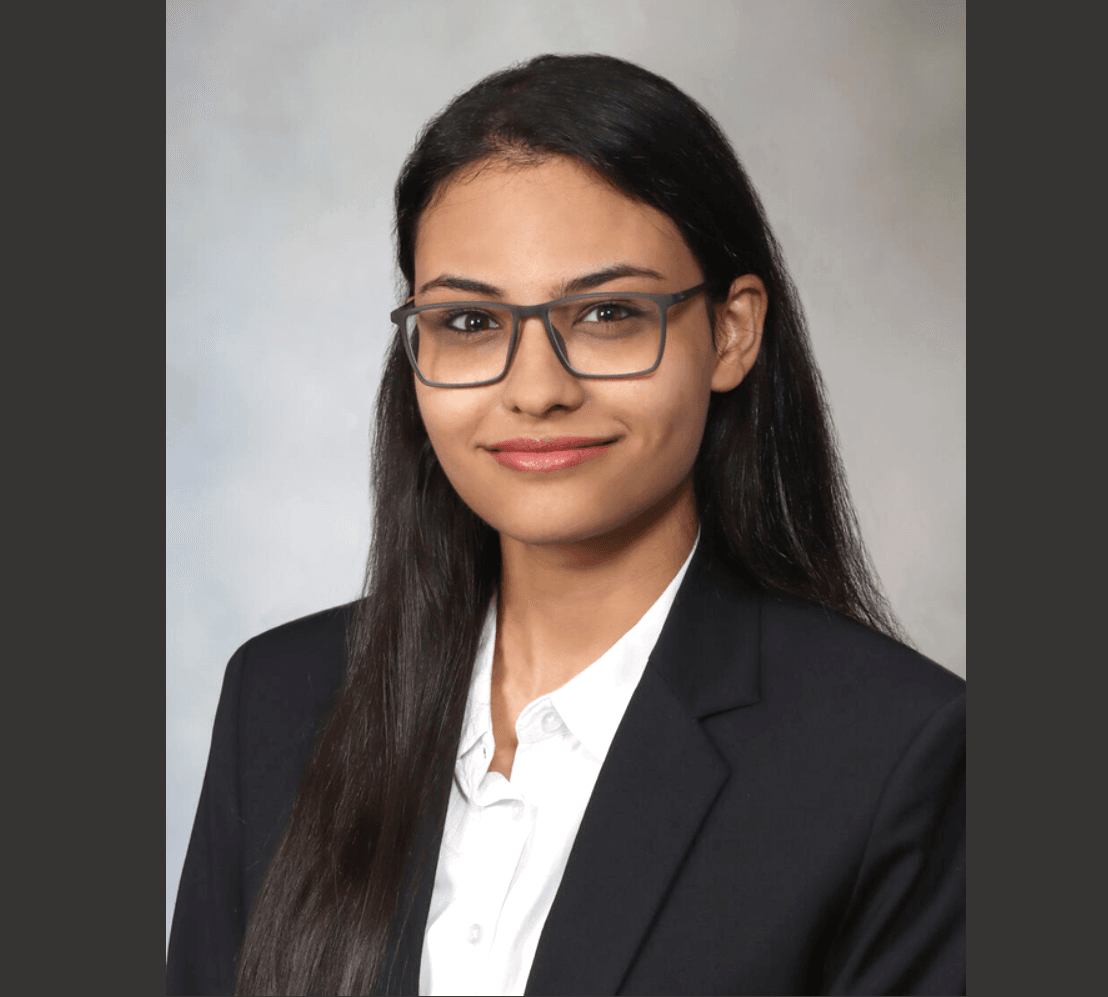
Biography: Aayushi Pareek, MD, is a PGY-1 Internal Medicine resident at St. Bernard's Medical Center, Arkansas. Originally from India, she completed her medical school at the University of Perpetual Help System, Philippines. Her research interests include hematologic malignancies, GI oncology, and cancer health disparities with active collaborations at Fred Hutchinson Cancer Center and Mayo Clinic Florida.
Conflict of interest statement: I have no relevant conflicts of interest.
- LinkedIn: https://www.linkedin.com/in/aayushi-pareek-9a8335235
- X/Twitter: https://x.com/aayu_ship?s=21
- Contact: [email protected]
Frequently Asked Questions About Cancer Health Disparities and Access to Care
1. Why do cancer disparities persist despite medical advances?
Because access to care, early detection, insurance coverage, and system-level barriers prevent many patients from benefiting from available treatments.
2. What is the biggest barrier to improving cancer outcomes today?
Implementation—not scientific discovery. Systems often fail to deliver existing solutions effectively to all populations.
3. How does patient navigation improve cancer care?
Patient navigation helps address logistical barriers like transportation, language, and insurance, ensuring patients complete treatment.
4. Why is data collection important for health equity?
Without accurate data—such as sexual orientation and gender identity—disparities cannot be measured or addressed effectively.
5. Can technology reduce cancer disparities?
Yes, but only if designed intentionally. Poorly designed systems can reinforce existing inequities.
6. What role does policy play in cancer disparities?
Policies influence access to screening, treatment, and medications, making them critical to achieving equitable care.