
AN AUTHORITATIVE RESOURCE FOR EVERYTHING ABOUT CANCER
Research
The volume and pace of cancer research, from preclinical studies to clinical trials and FDA approvals, can make it challenging to stay informed. This section highlights the latest developments and translates complex scientific concepts into clear, accessible insights for both healthcare professionals and the broader public.

CAR-T Cell Therapy for Large B-Cell Lymphoma: Who, When, and Where to Deliver It
By Chenyu Lin, MD
CAR-T cell therapy for large B-cell lymphoma is expanding through broader patient eligibility, earlier treatment, head-to-head trials, and remote monitoring.
CAR-T Cell Therapy for Large B-Cell Lymphoma: Who, When, and Where to Deliver It
By Chenyu Lin, MD
CAR-T cell therapy for large B-cell lymphoma is expanding through broader patient eligibility, earlier treatment, head-to-head trials, and remote monitoring.
CAR-T Cell Therapy for Large B-Cell Lymphoma: Who, When, and Where to Deliver It
By Chenyu Lin, MD
CAR-T cell therapy for large B-cell lymphoma is expanding through broader patient eligibility, earlier treatment, head-to-head trials, and remote monitoring.

Pancreatic Cancer: A RAS Inhibitor Nearly Doubles Survival, and a KRAS Vaccine Shows Real Promise
By Weijing Sun, MD
Pancreatic cancer has been a difficult disease to move the needle on: median survival with first-line chemotherapy has hovered around six months for decades, and targeted therapy has largely unsuccess here despite working elsewhere.
Pancreatic Cancer: A RAS Inhibitor Nearly Doubles Survival, and a KRAS Vaccine Shows Real Promise
By Weijing Sun, MD
Pancreatic cancer has been a difficult disease to move the needle on: median survival with first-line chemotherapy has hovered around six months for decades, and targeted therapy has largely unsuccess here despite working elsewhere.
Pancreatic Cancer: A RAS Inhibitor Nearly Doubles Survival, and a KRAS Vaccine Shows Real Promise
By Weijing Sun, MD
Pancreatic cancer has been a difficult disease to move the needle on: median survival with first-line chemotherapy has hovered around six months for decades, and targeted therapy has largely unsuccess here despite working elsewhere.

Cellular Therapy Gets More Precise: In Vivo CAR T, a New Treg Therapy, and Menin Inhibitor Maintenance
By Moataz Ellithi, MD
Cellular therapy for blood cancers is moving in two directions at once: toward manufacturing CAR T-cells directly inside a patient's body rather than in a lab
Cellular Therapy Gets More Precise: In Vivo CAR T, a New Treg Therapy, and Menin Inhibitor Maintenance
By Moataz Ellithi, MD
Cellular therapy for blood cancers is moving in two directions at once: toward manufacturing CAR T-cells directly inside a patient's body rather than in a lab
Cellular Therapy Gets More Precise: In Vivo CAR T, a New Treg Therapy, and Menin Inhibitor Maintenance
By Moataz Ellithi, MD
Cellular therapy for blood cancers is moving in two directions at once: toward manufacturing CAR T-cells directly inside a patient's body rather than in a lab

Lymphoma and CLL at ASCO 2026: New Frontline and Relapsed-Setting Data
By Poornima Ramadas, MD
Lymphoma and CLL data at the 2026 ASCO Annual Meeting spanned the treatment continuum, from frontline diffuse large B-cell lymphoma (DLBCL) to relapsed/refractory disease across several lymphoma subtypes, to a striking early combination in frontline CLL.
Lymphoma and CLL at ASCO 2026: New Frontline and Relapsed-Setting Data
By Poornima Ramadas, MD
Lymphoma and CLL data at the 2026 ASCO Annual Meeting spanned the treatment continuum, from frontline diffuse large B-cell lymphoma (DLBCL) to relapsed/refractory disease across several lymphoma subtypes, to a striking early combination in frontline CLL.
Lymphoma and CLL at ASCO 2026: New Frontline and Relapsed-Setting Data
By Poornima Ramadas, MD
Lymphoma and CLL data at the 2026 ASCO Annual Meeting spanned the treatment continuum, from frontline diffuse large B-cell lymphoma (DLBCL) to relapsed/refractory disease across several lymphoma subtypes, to a striking early combination in frontline CLL.

Managing Bispecific T-Cell Engager Toxicity: CRS and ICANs in Practice
By Allison Hamner, PharmD, BCPS
Bispecific T-cell engagers (BiTEs) offer major efficacy in hematologic malignancies, but their signature toxicities—cytokine release syndrome (CRS) and ICANS—require real-time vigilance and management similar to CAR T-cell therapy.
Managing Bispecific T-Cell Engager Toxicity: CRS and ICANs in Practice
By Allison Hamner, PharmD, BCPS
Bispecific T-cell engagers (BiTEs) offer major efficacy in hematologic malignancies, but their signature toxicities—cytokine release syndrome (CRS) and ICANS—require real-time vigilance and management similar to CAR T-cell therapy.
Managing Bispecific T-Cell Engager Toxicity: CRS and ICANs in Practice
By Allison Hamner, PharmD, BCPS
Bispecific T-cell engagers (BiTEs) offer major efficacy in hematologic malignancies, but their signature toxicities—cytokine release syndrome (CRS) and ICANS—require real-time vigilance and management similar to CAR T-cell therapy.
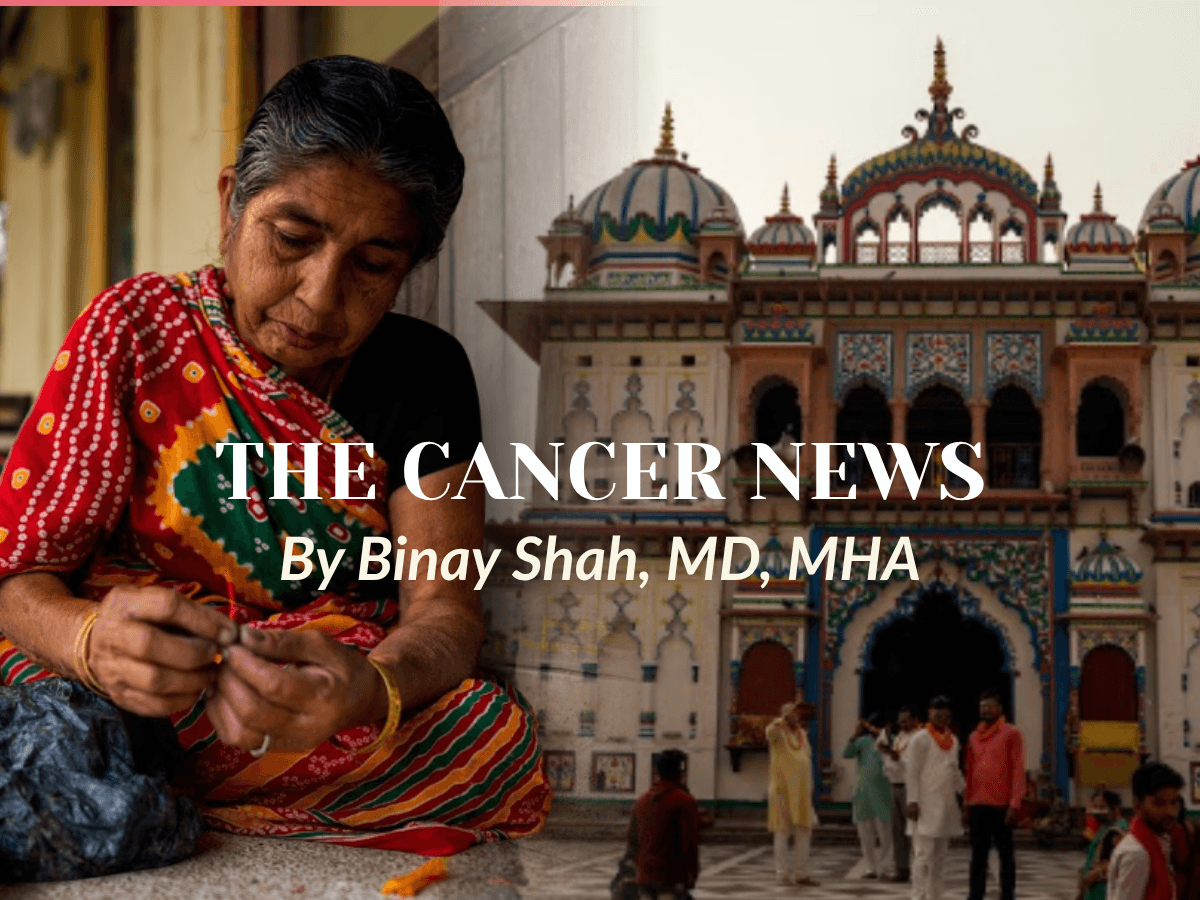
Community Health Needs Assessment in Janakpurdham Sub-Metropolitan City, Madhesh Province, Nepal
By Dr. Binay Shah
Janakpurdham Sub-Metropolitan City is the capital of Nepal's Madhesh Province, which shares a southern border with India.
Community Health Needs Assessment in Janakpurdham Sub-Metropolitan City, Madhesh Province, Nepal
By Dr. Binay Shah
Janakpurdham Sub-Metropolitan City is the capital of Nepal's Madhesh Province, which shares a southern border with India.
Community Health Needs Assessment in Janakpurdham Sub-Metropolitan City, Madhesh Province, Nepal
By Dr. Binay Shah
Janakpurdham Sub-Metropolitan City is the capital of Nepal's Madhesh Province, which shares a southern border with India.

Multiple Myeloma at ASCO 2026: Bispecifics, CELMoDs, In Vivo CAR-T, and Smoldering Disease Care
By Adeel M. Khan, MD, MPH, MS
Multiple myeloma had another eventful year at the 2026 ASCO Annual Meeting, with notable data across nearly every stage of disease
Multiple Myeloma at ASCO 2026: Bispecifics, CELMoDs, In Vivo CAR-T, and Smoldering Disease Care
By Adeel M. Khan, MD, MPH, MS
Multiple myeloma had another eventful year at the 2026 ASCO Annual Meeting, with notable data across nearly every stage of disease
Multiple Myeloma at ASCO 2026: Bispecifics, CELMoDs, In Vivo CAR-T, and Smoldering Disease Care
By Adeel M. Khan, MD, MPH, MS
Multiple myeloma had another eventful year at the 2026 ASCO Annual Meeting, with notable data across nearly every stage of disease
Recognizing and Treating Triple M Syndrome: A Checkpoint Inhibitor Toxicity Case
By Katherine Hill, PharmD, BCOP
Triple M syndrome, the co-occurrence of myocarditis, myasthenia gravis, and myositis, is a rare but potentially fatal complication of immune checkpoint inhibitor (ICI) therapy, with reported fatality rates approaching 30-50%.
Recognizing and Treating Triple M Syndrome: A Checkpoint Inhibitor Toxicity Case
By Katherine Hill, PharmD, BCOP
Triple M syndrome, the co-occurrence of myocarditis, myasthenia gravis, and myositis, is a rare but potentially fatal complication of immune checkpoint inhibitor (ICI) therapy, with reported fatality rates approaching 30-50%.
Recognizing and Treating Triple M Syndrome: A Checkpoint Inhibitor Toxicity Case
By Katherine Hill, PharmD, BCOP
Triple M syndrome, the co-occurrence of myocarditis, myasthenia gravis, and myositis, is a rare but potentially fatal complication of immune checkpoint inhibitor (ICI) therapy, with reported fatality rates approaching 30-50%.
Hormone Receptor-Positive Breast Cancer in 2026: Navigating a More Complex Treatment Landscape
By Christos Vaklavas, MD
The treatment algorithm for hormone receptor-positive, HER2-negative (HR+/HER2-) breast cancer has grown substantially more complex over the past several years
Hormone Receptor-Positive Breast Cancer in 2026: Navigating a More Complex Treatment Landscape
By Christos Vaklavas, MD
The treatment algorithm for hormone receptor-positive, HER2-negative (HR+/HER2-) breast cancer has grown substantially more complex over the past several years
Hormone Receptor-Positive Breast Cancer in 2026: Navigating a More Complex Treatment Landscape
By Christos Vaklavas, MD
The treatment algorithm for hormone receptor-positive, HER2-negative (HR+/HER2-) breast cancer has grown substantially more complex over the past several years
Adjuvant Immunotherapy Keeps Falling Short in Early Lung Cancer, So the Field Is Moving the Timeline Up
By Balazs Halmos, MD
Lung cancer remains the leading cause of cancer death worldwide, though the trajectory has shifted meaningfully: lung cancer mortality in the United States has fallen by roughly half over the past 25 years.
Adjuvant Immunotherapy Keeps Falling Short in Early Lung Cancer, So the Field Is Moving the Timeline Up
By Balazs Halmos, MD
Lung cancer remains the leading cause of cancer death worldwide, though the trajectory has shifted meaningfully: lung cancer mortality in the United States has fallen by roughly half over the past 25 years.
Adjuvant Immunotherapy Keeps Falling Short in Early Lung Cancer, So the Field Is Moving the Timeline Up
By Balazs Halmos, MD
Lung cancer remains the leading cause of cancer death worldwide, though the trajectory has shifted meaningfully: lung cancer mortality in the United States has fallen by roughly half over the past 25 years.