

Abstract
Background: Community-level health data in Madhesh Province, Nepal remains sparse, limiting evidence-based planning for primary healthcare and cancer prevention programs. This community-based cross-sectional survey was conducted to establish a baseline profile of health status, health-seeking behavior, disease burden, and access barriers among residents of Janakpurdham Sub-Metropolitan City (SMC).
Methods: Structured household interviews were administered by trained enumerators across multiple wards of Janakpurdham SMC. A total of 69 households were surveyed covering demographic, socioeconomic, clinical, and behavioral health indicators.
Results: Non-communicable disease burden was high, with hypertension reported in 66.7% of households and diabetes in 21.7%. Treatment discontinuation was documented across three distinct patterns: regular adherence, irregular use, and complete cessation. Cancer awareness was severely limited — 75% of respondents could not identify a single cancer warning sign, and fewer than 5% of female household members had ever undergone any cancer screening. Ward-level variation was observed, with Ward 25 demonstrating higher NCD prevalence, lower asset ownership, greater reliance on biomass fuels, and more complete cancer unawareness compared to Ward 16. Mental health services were among the most frequently cited unmet needs. The predominant symptom response behavior was clinic or hospital attendance, though a subset of respondents reported a pattern of watchful waiting before seeking care.
Conclusions: This survey documents a high burden of undertreated NCDs, near-absent cancer screening, and critical gaps in cancer literacy in a peri-urban Nepalese community. These findings support the urgent need for accessible community health services, targeted cancer awareness programming, and longitudinal follow-up studies with larger samples.
1. Introduction
Janakpurdham Sub-Metropolitan City is the capital of Nepal's Madhesh Province, which shares a southern border with India. Sub-metropolitan city (SMC) is a Nepalese administrative classification denoting major suburban hubs below the population and infrastructural threshold of primary metropolitan cities. Despite its status as a provincial capital, systematically collected information on health-related behaviors and disease burden within Janakpurdham SMC, and Madhesh Province more broadly remains lacking.
This knowledge gap poses a challenge for any party seeking to establish healthcare infrastructure that is responsive to community need. Non-communicable diseases — including hypertension, diabetes, and cancer — are known to be rising across South Asia, yet community-level data to guide prevention and early detection programming in peri-urban Nepal is limited. The burden of cervical and breast cancer in Nepal is particularly pronounced: cervical cancer remains one of the leading causes of cancer death among Nepalese women, yet screening coverage is extremely low nationally.
This report presents findings from a community-based cross-sectional baseline survey conducted across multiple wards of Janakpurdham SMC. The survey was designed to characterize prevailing health status, disease burden, health-seeking behavior, cancer awareness and screening uptake, and barriers to healthcare access. Findings are intended to inform the establishment of community health services and structured health education programs in the area.
2. Survey Methodology
This community-based cross-sectional survey was conducted through structured household interviews administered by trained enumerators across multiple wards of Janakpurdham Sub-Metropolitan City. Data collection followed a household-level sampling approach, with enumerators deployed across geographically distributed wards to capture variation in living conditions, health-seeking behavior, and access to services.
A total of 69 households were surveyed. Each interview was administered in person using a structured questionnaire covering key health and socioeconomic indicators, including demographics, disease burden, health-seeking behavior, access to services, cancer awareness, hygiene practices, and health infrastructure availability. Responses were recorded at the household level, with the primary adult respondent serving as the informant for household-level variables.
Given the structured and standardized instrument, responses across enumerators are assumed to reflect consistent data collection procedures. Findings are reported descriptively, with frequencies and proportions used to characterize the surveyed population. The sample size of 69 households is sufficient to generate descriptive community-level data but precludes inferential statistical analysis or generalization beyond the surveyed wards. Ward-level comparisons are presented as observed patterns warranting further investigation in larger studies.
3. Sociodemographic Profile
3.1 Age and Gender Distribution
The survey covered respondents with a mean age of 45 years, spanning five age groups. The majority of respondents (63.8%) fell within the economically active age band of 21–65 years.
| Age Group | No. of Respondents | Percentage (%) |
| 0–20 years | 5 | 7.2% |
| 21–35 years | 18 | 26.1% |
| 36–50 years | 20 | 29.0% |
| 51–65 years | 18 | 26.1% |
| > 65 years | 8 | 11.6% |
| Total | 69 | 100% |
Of the total respondents, 44 (63.8%) were male and 25 (36.2%) were female. The overrepresentation of male respondents is a methodological limitation with direct clinical implications: women's health-related behaviors, care-seeking patterns, and screening uptake are likely underrepresented in this sample. Targeted data collection focused on female respondents would be valuable in follow-up studies.
The majority of respondents (88.4%) were married, with an average household size of 6.8 persons — notably higher than the national average of 4.37 — indicating significant dependence per household on healthcare services.
3.2 Education Level
The education profile reflects a significantly under-educated population. 46.4% of respondents had no formal schooling, while a further 21.7% had only primary or basic education. Only 5.8% had attained university-level education. This low literacy rate has direct implications for health awareness, disease prevention behavior, and the capacity to navigate the formal health system.
| Education Level | Count | Percentage (%) |
| No formal schooling | 32 | 46.4% |
| Basic / Primary | 15 | 21.7% |
| Secondary | 10 | 14.5% |
| Higher Secondary | 5 | 7.2% |
| University / Graduate | 4 | 5.8% |
| Technical / Other | 3 | 4.3% |
3.3 Occupation and Income
The primary occupation of respondents was farming and agriculture (33.3%), followed by daily labour (18.8%) and small business or trade (17.4%). A significant proportion depend on subsistence farming and daily wages, indicating economic vulnerability and limited capacity for out-of-pocket health expenditure. Foreign employment accounted for a small proportion of households, though remittances were reported as a supplementary income source in those cases.
4. Health Service Access and Health-Seeking Behavior
4.1 Nearest Available Health Facility
While 59.4% of respondents reported that a health post or health center was the nearest facility within a 30-minute walk, the quality, staffing, and availability of such facilities was reported to be inconsistent. Three households (4.3%) reported having no health facility of any kind within accessible distance.
4.2 First Point of Care When Ill
Despite health posts being the geographically nearest option for the majority, 37.7% of respondents reported going directly to a government hospital in the city as their first point of care when ill. An additional 13.0% bypass local facilities entirely in favor of private clinics. Only 13.0% rely on the nearest health post as their first point of care. This pattern reflects a widespread lack of trust in, and inadequacy of, local-level health services.
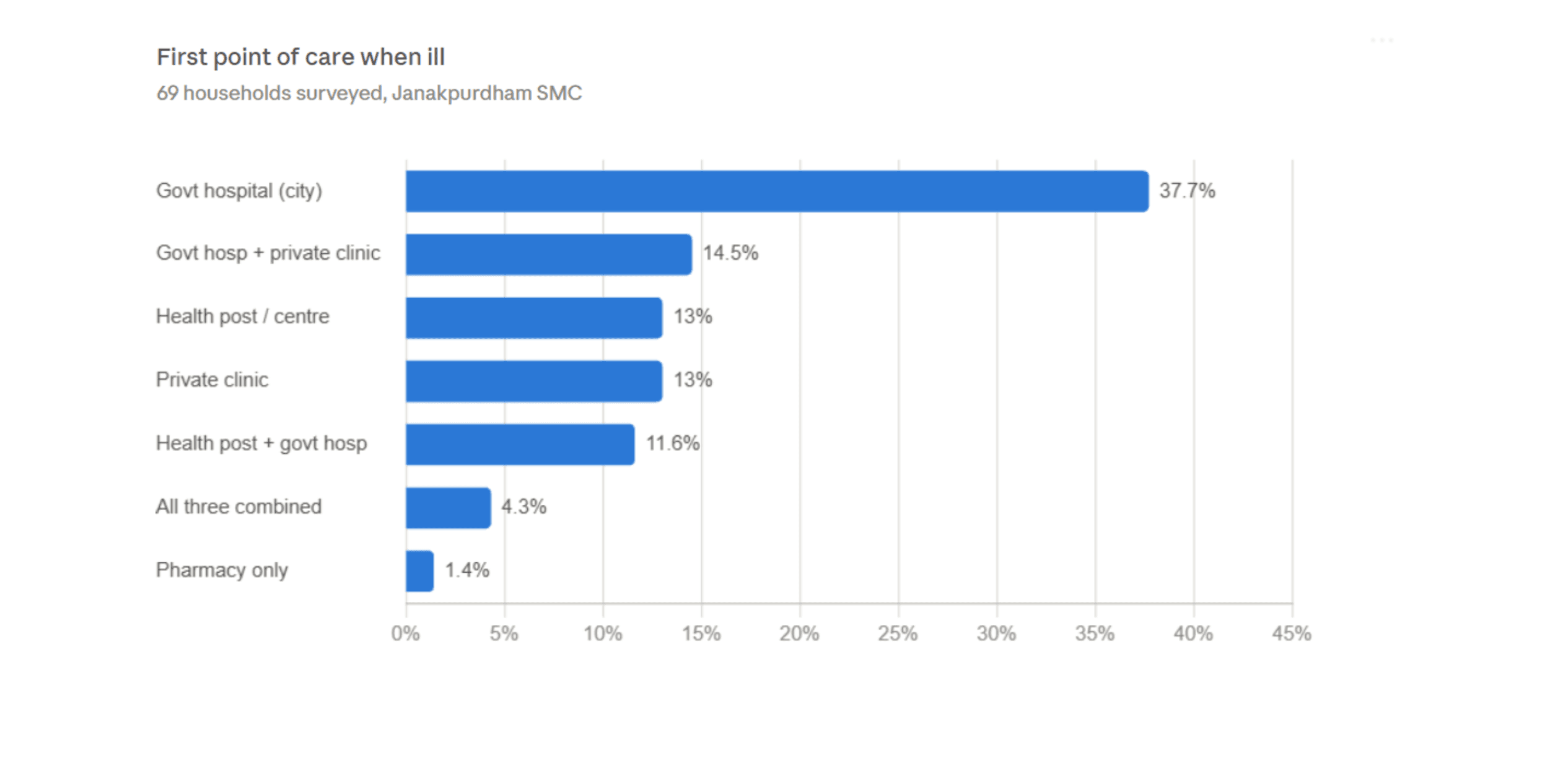
Figure 1: horizontal bar chart denoting which institutions Janakpurdham residents favor when ill, with the majority (37.7%) opting for government hospitals in the city.
4.3 Symptom Response Behavior
When asked what they would do upon noticing an abnormal lump or symptom, the majority of respondents indicated they would go directly to a clinic or hospital. However, a notable subset reported a pattern of watchful waiting — choosing to observe whether symptoms resolved spontaneously before seeking care. This behavior, distinct from simply lacking access or awareness, represents a meaningful behavioral barrier to early detection and warrants attention in health education programming.
4.4 Barriers to Accessing Health Services
A substantial 81.2% of respondents reported facing at least one significant barrier to accessing healthcare. The most prevalent barriers were cost and inability to afford treatment, distance and lack of transport, facility closure or absence of a doctor, medicine unavailability at local health posts, and absence of female health workers — the latter being a particularly significant barrier for women seeking care.
Financial distress from healthcare costs was further evidenced by the fact that among those who cited cost as a barrier, approximately 50% reported having taken loans or sold assets to pay for medical treatment — a severe indicator of healthcare-induced economic hardship.
5. Health Insurance Status
Government health insurance remains largely inaccessible in this community. 44.9% of respondents were completely unaware of the government health insurance scheme; a further 39.1% were aware but had not enrolled. Only 10 households (14.5%) had any member enrolled in government health insurance, and only 1 household had all members covered.
| Insurance Status | Count | Percentage (%) |
| Unaware of government insurance scheme | 31 | 44.9% |
| Aware but not enrolled | 27 | 39.1% |
| Some household members enrolled | 9 | 13.0% |
| All household members enrolled | 1 | 1.4% |
| Total | 69 | 100% |
The near-total absence of insurance coverage means that virtually all healthcare costs are borne out-of-pocket, compounding the financial vulnerability of already low-income households and discouraging timely care-seeking.
6. Prevalent Diseases and Chronic Illness Burden
Non-communicable diseases dominate the disease burden in the surveyed community. Hypertension was the most commonly diagnosed condition, present in 46 households (66.7%) either alone or in combination with other conditions. Diabetes was reported in 22.5% of households. Multiple comorbidities — such as hypertension combined with diabetes or heart disease — were reported in 12 households.
| Condition | Households Reporting | % of Total |
| Hypertension (High BP) | 32 | 46.4% |
| Diabetes | 15 | 21.7% |
| Hypertension + Diabetes (combined) | 7 | 10.1% |
| Heart Disease | 1 | 1.4% |
| Tuberculosis (TB) | 1 | 1.4% |
| Other chronic illness | 1 | 1.4% |
| No diagnosed disease | 14 | 20.3% |
6.1 Treatment Adherence
Among those with diagnosed chronic conditions, treatment adherence was variable. Three distinct patterns were observed in the survey data: regular medication use, irregular or inconsistent use, and complete treatment cessation. The cessation group — respondents who had previously been on treatment and had stopped entirely — is clinically distinct from those who are merely inconsistent, as it may reflect treatment abandonment due to cost, side effects, or perceived improvement rather than simple access barriers. The exact proportion in each category warrants verification with the primary researcher, but the presence of all three patterns underscores the need for chronic disease management support beyond initial diagnosis.
6.2 Ward-Level Variation in NCD Burden
Analysis of ward-level data reveals notable differences between the two primary survey wards. Ward 25 (Lohana and surrounding areas) demonstrates a higher concentration of hypertension diagnoses, lower household asset ownership, greater dependence on firewood and biomass fuels for cooking, and more complete unawareness of cancer — both in terms of type recognition and warning sign knowledge — compared to Ward 16 (Jalad pool and Kapileshwor areas). Ward 16 respondents showed relatively higher rates of education, more diverse health-seeking behavior, and some, albeit limited, cancer screening uptake. These observed differences suggest that health vulnerability within Janakpurdham SMC is not uniformly distributed and that ward-stratified programming may be more effective than area-wide approaches. These patterns should be confirmed in larger, formally stratified studies.
7. Living Conditions, Water, Fuel, and Lifestyle Factors
7.1 Drinking Water Source
The majority of households (78.3%) rely on tube wells or boring as their primary drinking water source, with a further 17.4% using hand pumps. Only one household reported using filtered or purified water. The absence of safe, treated piped water increases the risk of waterborne disease across the community.
7.2 Cooking Fuel
While 50 households (72.5%) reported using LPG gas as a cooking fuel — either alone or in combination with other fuels — 41 households (59.4%) continue to use firewood, and eight use cow dung or biogas in combination. This dual-fuel pattern is especially pronounced in Ward 25, where firewood and biogas use is more common. Continued reliance on solid biomass fuels is associated with indoor air pollution and respiratory illness, representing an environmental health risk that is unevenly distributed within the surveyed population.
7.3 Tobacco and Alcohol Use
Tobacco and/or alcohol use was reported in 46.4% of households. Among these, 17 individuals reported personal regular tobacco use (cigarettes, khaini, or gutkha). In the context of high NCD prevalence and, notably, the elevated oral cancer risk associated with khaini and gutkha use specifically, tobacco use represents a compounding risk factor in this community that is relevant to cancer prevention programming.
8. Cancer Awareness, Screening Knowledge, and Uptake
8.1 General Cancer Awareness
While 56 respondents (81.2%) reported having heard of cancer, awareness was largely superficial. Only 17.4% could identify any cancer type beyond having heard the word. The most frequently recognized types were oral cancer and blood cancer — awareness largely attributable to tobacco-related health messaging — while awareness of breast and cervical cancer remained critically low at 23% and 17% respectively, despite these being among the most common and preventable cancers affecting women in Nepal.
8.2 Knowledge of Cancer Warning Signs
Awareness of cancer warning signs was critically low across the surveyed population. Of 69 respondents, 52 (75.4%) could not identify a single cancer warning sign. Among the 17 who demonstrated some awareness, knowledge was primarily limited to recognition of an abnormal lump or swelling. Few respondents were aware of persistent fatigue, prolonged cough, sudden unexplained weight loss, or unexplained recurring pain as potential warning signs.
This profound knowledge gap has direct clinical implications: cancers presenting in this community are likely to be identified at late, less treatable stages. Early detection depends not only on service availability but on a community's capacity to recognize and act on warning signs. Ward-level data suggests this gap is more severe in Ward 25, where cancer awareness of any kind — including general awareness — was lower than in Ward 16.
8.3 Cancer Screening Awareness and Uptake
Cancer screening awareness was severely limited across both wards. 52.2% of respondents had never heard of cancer screening at all; a further 27.5% were uncertain whether they had encountered the concept. Only 4 respondents (5.8%) were aware of both screening and its role in enabling successful early treatment. Of 69 households, only 2–3 female members had ever undergone any form of cancer screening — a screening rate of under 5%.
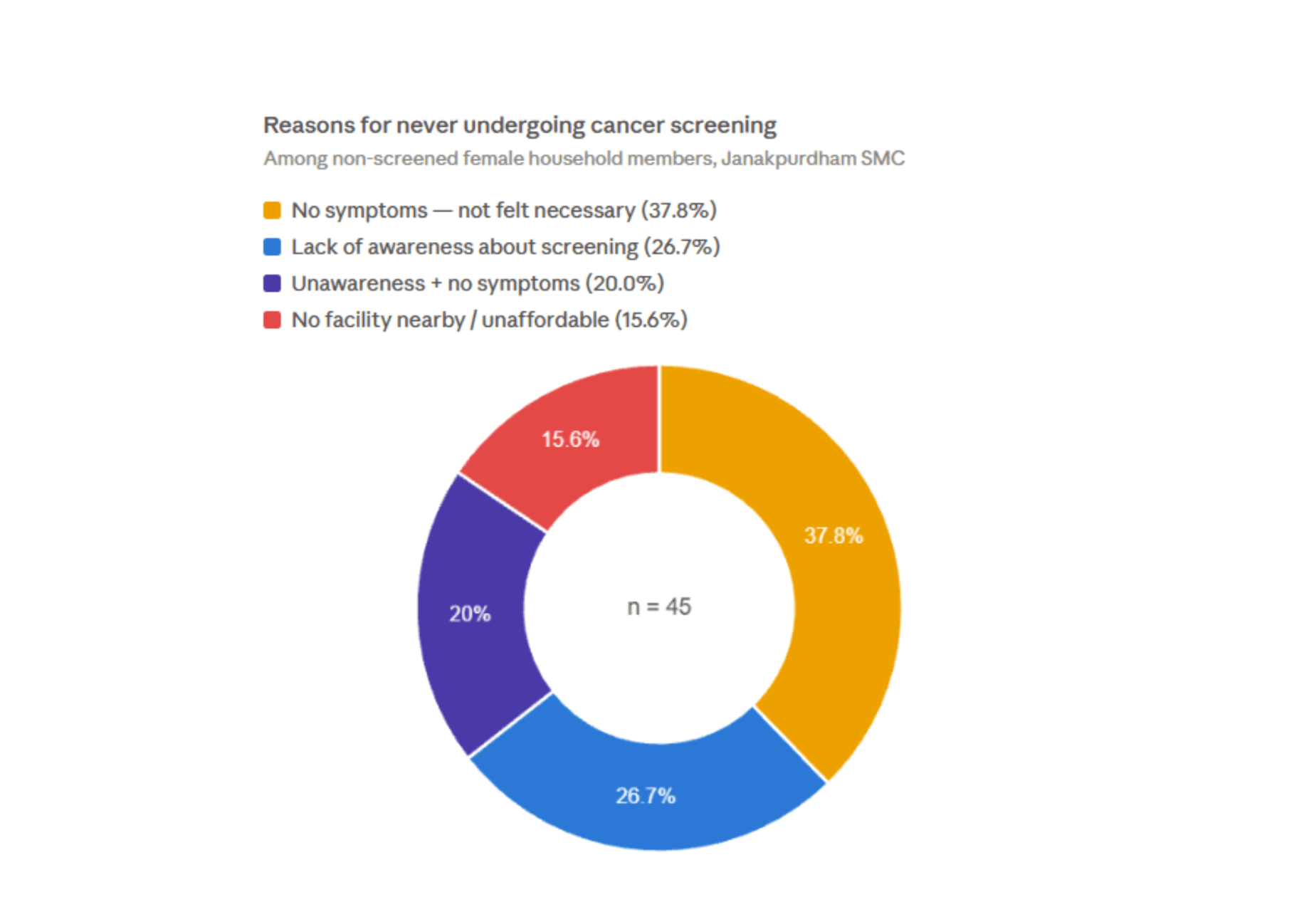
Among non-screened respondents, the primary stated reasons were absence of symptoms (37.8%), lack of awareness about screening (26.7%), combined lack of awareness and absence of symptoms (20.0%), and lack of nearby facilities or affordability (approximately 15.6%). The dominant belief that screening is only warranted in the presence of symptoms represents a significant behavioral barrier operating independently of service availability.
9. Mental Health as an Unmet Need
Mental health services were among the most frequently cited unmet healthcare needs across the surveyed population, appearing consistently in respondents' lists of desired clinic services alongside expected priorities such as qualified doctors, diagnostics, and pharmacy access. This finding is notable given the known stigma surrounding mental health help-seeking in South Asian communities and the tendency for mental health needs to be underreported in community surveys. The frequency with which mental health was spontaneously identified as a gap — without being prompted as a distinct category — suggests that community awareness of and concern about mental health may be greater than typically assumed in this context. This warrants dedicated follow-up assessment.
10. Health Camp Participation and Outreach Program Access
Only 22 respondents (31.9%) had ever participated in a health camp or community health awareness program. Of the remaining 68.1%: 39.1% were aware of camps but had been unable to attend due to timing, distance, or competing obligations; and 27.5% were entirely unaware that any camps had been held in their area. This data indicates that existing outreach efforts have reached only a minority of the community, with a substantial portion remaining entirely unreached by health education and preventive care programming.
11. Community-Expressed Demand for Health Services
Respondents were asked directly about their interest in accessing a nearby community health clinic. 94.2% indicated they would definitely use such a facility. When asked about their most pressing current healthcare challenges, the most common responses were: difficulty finding a qualified doctor; lack of medicine and pharmacy access; health facility being too far away; unaffordable treatment costs; and no laboratory or diagnostic services.
The top healthcare services identified as most needed were: qualified doctors and specialists; diagnostic services including laboratory, X-ray, and ultrasound; emergency services; medicines and pharmacy; maternal and child health services; cancer screening; and — notably — mental health services.
Willingness to participate in future health programs showed a gradient: a majority indicated clear and definite interest, while a substantial proportion indicated conditional or moderate interest. A small minority indicated no interest. This distribution, rather than a uniformly high participation rate, provides a more nuanced and actionable picture of community engagement potential.
12. Summary of Key Findings
| Indicator | Finding | Implication |
| Insurance coverage | Only 14.5% enrolled | Near-total out-of-pocket health expenditure |
| Access barriers | 81.2% face barriers | Urgent need for affordable local services |
| Loan/asset sale for treatment | ~50% of cost-burdened households | Healthcare causing financial hardship |
| Hypertension prevalence | 66.7% of households | High NCD burden; continuity of care needed |
| Treatment cessation | Documented distinct from irregular use | Active discontinuation requiring follow-up |
| Cancer warning sign knowledge | 75.4% unaware of any sign | Critical education gap for early detection |
| Cancer screening uptake | <5% of female members | Massive unmet screening need |
| Mental health as unmet need | Spontaneously cited across wards | Understudied gap in this community |
| Symptom response: watchful waiting | Present as a behavioral subgroup | Barrier to early detection independent of access |
| Ward-level variation | Ward 25 more vulnerable across indicators | Stratified programming warranted |
| Trust in local health workers | 43.4% low or no trust | Demand for qualified professional care |
| Demand for community clinic | 94.2% would use it | Strong community receptiveness |
| Preventive check-up behavior | 92.8% never had routine check | Reactive-only care culture |
13. Conclusions
This community-based cross-sectional survey documents a community characterized by a high and undertreated burden of non-communicable disease, near-absent cancer screening, critically low cancer literacy, and compounding barriers to healthcare access. Several findings merit particular emphasis for clinical and public health audiences.
First, the treatment adherence data reveals not simply poor adherence but active treatment cessation among a subset of patients with diagnosed chronic conditions — a pattern with distinct causes and requiring distinct interventions compared to inconsistent use.
Second, the watchful waiting response to symptoms represents a behavioral barrier to early detection that operates independently of service availability. Health education programming focused on symptom recognition and timely care-seeking is warranted regardless of improvements in facility access.
Third, the spontaneous and frequent identification of mental health as an unmet need — in a context where such needs are typically underreported — is a signal that deserves dedicated follow-up rather than treatment as incidental.
Fourth, ward-level variation in health vulnerability, NCD burden, and cancer awareness suggests that area-wide programming may miss the most underserved subpopulations. Stratified, ward-level data collection and program design are recommended for future work.
Fifth, the cancer awareness and screening data together present a dual barrier: most community members neither recognize warning signs nor understand the role of screening in early detection. Addressing screening uptake without simultaneously addressing the belief that screening is only warranted in the presence of symptoms is unlikely to be sufficient.
Given the sample size and non-probabilistic sampling approach, these findings should be interpreted as descriptive and hypothesis-generating rather than definitive. Larger, formally stratified community health surveys are needed to confirm these patterns and support generalization. Nonetheless, the consistency and severity of the findings across multiple domains provide a strong evidence base for prioritizing community health services, cancer education, and NCD management support in Janakpurdham SMC and Madhesh Province.