

The Success Story With an Asterisk
Pediatric oncology has a story it likes to tell about itself: that over the last half century, survival rates for children with cancer have climbed above 80% in the United States, that cooperative clinical trial groups have transformed once-fatal diagnoses into treatable diseases, that modern medicine has largely solved childhood cancer.
There’s an asterisk on that story, and Lisa Marie Force, MD, MPH, a pediatric oncologist at Seattle Children's Hospital and Assistant Professor at the University of Washington School of Medicine, wants clinicians to sit with it. "Over 80% of children and adolescents and young adults with cancer are cured in the US today," Force acknowledges. "But that's not the case for many countries. The best estimates that we currently have for survival for children with cancer in low- and middle-income countries is more on the order of 20% rather than 80%."
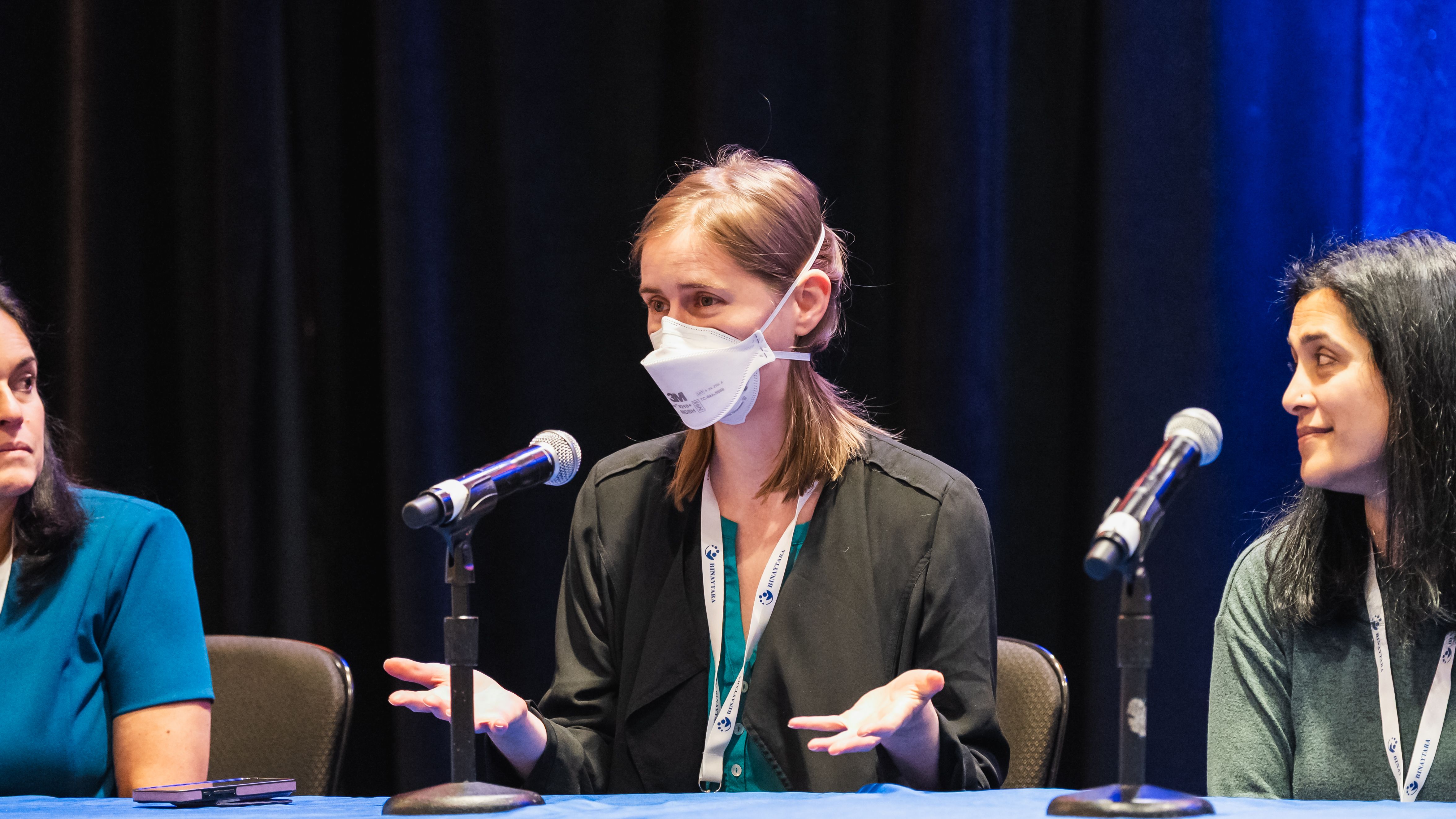
Force presented "Access to Cancer Care and Clinical Trials for Children, Adolescents and Young Adults" at Binaytara's 2026 Summit on Cancer Health Disparities in Bellevue, WA. "Where a child's born shouldn't be their most important prognostic factor for survival,” she said. Right now, it is.
A Case That Puts a Face on the Data
To illustrate what a 20% survival rate looks like in practice, Force opens with a case: a 10-year-old boy brought to a rural East African hospital by his grandmother with a progressive jaw mass, intermittent fevers, and microcytic anemia. The uric acid reagent is out of stock. Ultrasound is unavailable. Pathology is not locally accessible. But things turn around: a local surgeon performs a biopsy without charge. Visitor funding is secured for pathology. After several weeks, what turns out to have been a benign neoplasm has been diagnosed and excised. The child survives.
"This child was very fortunate," Force says, "that he was in this kind of circumstance and didn't have a rapidly growing cancer like a Burkitt lymphoma." The outcome depended on the biology of his lesion and the generosity of individuals, not on a functioning system of care. "This is clearly not a sustainable approach financially or from a clinical care standpoint," she notes.
Why the Gaps Exist: Barriers at Every Level
Force maps the problem carefully, because solutions depend on understanding exactly where the system breaks down.
Diagnosis is the first and highest barrier. "Health systems may not be strong or have efficient referral networks to actually get a child that you suspect of having cancer from wherever you're located to a place where they can actually be diagnosed and effectively treated," she explains. Specialized diagnostics can be limited and centralized, with results taking many weeks to return. Cancer can be misdiagnosed as something more common: for example, "a lymphoma being misdiagnosed as tuberculosis in some settings where that's a much more common diagnosis."
Even after diagnosis, the barriers compound. Later-stage presentation worsens prognosis, and financial toxicity pulls treatment from the forefront. "A lot of families have to really weigh the cost of cancer treatment with the cost of other things that their family might need to survive,” Force said. Therapy abandonment rates are higher in low- and middle-income countries for multifactorial reasons, and cultural values can shape treatment decisions in ways that require culturally competent engagement to address.
Clinical trial access is perhaps the most structurally entrenched inequality. Maps of active pediatric cancer trials show dense clustering in high-income countries and western and northern Europe, with vast gaps across Africa, much of Asia, and eastern Europe. The reasons, Force notes, "likely include things like differences in access to diagnostics and novel therapeutics, differences in research infrastructure, differences in the time availability of clinicians, who often have many more patients in low and middle income countries than in high income countries — and then of course there can be challenges with research mistrust because of historic exploitation or colonial kind of practices."
The result, she argues, is a medical literature built almost entirely on data from high-income populations, "being implemented in settings where they may or may not be generalizable to. And we really need more clinical trials for patients where the results are going to be implemented."
The U.S. Has Not Solved This Either
Force is direct on a point that can get lost in global health conversations: meaningful disparities in pediatric and AYA oncology outcomes persist within the United States as well.
"There are inferior outcomes, decreased survival, increased relapse rates for certain groups, such as those of lower socioeconomic status, racial and ethnic minorities, and those without health insurance," she says. AYAs are particularly vulnerable to insurance disruptions, with research showing an increased risk of death associated with public or no insurance in this age group.
Clinical trial enrollment in the U.S. is itself inequitable. There is "decreased enrollment of minority groups in pediatric clinical trials and worse outcomes even when enrolled." Historically, Force notes, "we've collected very little data on these kind of variables like socioeconomic status, which make it really challenging to figure out what's driving some of these differences."
Her conclusion is measured but firm: "Access to and equitable enrollment in clinical trials is necessary, but not sufficient to eliminate survival disparities in pediatric oncology."
What Is Being Done
Force points to several meaningful developments in global pediatric oncology infrastructure.
The WHO Global Initiative for Childhood Cancer (GICC), announced in 2018, aims to increase global childhood cancer survival to at least 60% by 2030. The CureAll Framework operationalizes this through centers of excellence, national cancer registry development via the ChildGICR initiative, and integration of childhood cancer into universal health coverage packages.
The WHO-St. Jude Global Platform for Access to Childhood Cancer Medicines uses collective purchasing power to reduce medication costs for LMICs and supports supply chain infrastructure, addressing one of the most concrete barriers to treatment access.
Regional twinning programs and capacity-building collaborations, Force notes, are building local clinical and research workforces in ways that complement broader policy approaches. Both levels matter: policy creates the enabling environment; local capacity building creates the workforce that can operate within it.
What Clinicians Can Do
-
Support global and domestic clinical trial equity. Communicate trial availability to all eligible patients regardless of race, socioeconomic status, or insurance type, and collect and report demographic and socioeconomic data systematically.
-
Treat insurance instability for AYAs as a clinical priority. Insurance disruptions in young adulthood are associated with worse survival outcomes, and advocacy for continuous, affordable coverage for this age group is both a clinical and a policy imperative.
-
Treat financial toxicity as a clinical issue. Connecting families to financial assistance, transportation support, and housing resources should be a standard component of cancer care.
-
Engage with global health advocacy. Institutional partnerships, research collaborations, and direct advocacy for international global health funding all contribute to the infrastructure that the GICC and CureAll Framework need to reach their potential.
For Patients and Families
If your child has been diagnosed with cancer, outcomes have improved dramatically over the past several decades, and clinical trials are often among the best available treatment options for certain cancers. Ask your care team whether your child may be eligible for a trial. If cost, transportation, or other practical barriers are affecting your ability to complete treatment, ask about financial assistance programs — these resources exist and can make a real difference. For families in low- and middle-income countries facing a pediatric cancer diagnosis, international organizations including the WHO's Global Initiative for Childhood Cancer and St. Jude's global programs are actively working to expand access to treatment and reduce the cost of essential medicines.
Key Takeaways
-
Overall survival for children with cancer exceeds 80% in high-income countries but is approximately 20% in low- and middle-income countries, a gap driven by barriers to diagnosis, treatment access, trial availability, financial toxicity, and healthcare system capacity.
-
Geography is currently among the strongest predictors of whether a child with cancer will survive — a situation that demands action at every level from clinical practice to global health policy.
-
Clinical trial access is globally inequitable, with trials concentrated in high-income countries and an evidence base that may not generalize to the settings where most of the world's children with cancer are treated.
-
Disparities persist within the U.S., with racial and ethnic minority patients, lower-SES children, and uninsured AYAs facing inferior outcomes driven by factors that have been systematically undercollected in research data.
-
The WHO GICC, CureAll Framework, and WHO-St. Jude Global Platform represent meaningful infrastructure for change, and require sustained clinical advocacy, funding, and engagement.
References
-
GBD 2023 Childhood Cancer Collaborators. Global burden of cancer in children and adolescents aged 0–19 years, 1990–2023. The Lancet, 2024.
-
World Health Organization. Global Initiative for Childhood Cancer and CureAll Framework. who.int
-
WHO-St. Jude Global Platform for Access to Childhood Cancer Medicines. stjude.org
-
ChildGICR: Childhood Cancer International Global Initiative for Cancer Registry Development. childhoodcancerinternational.org
-
Institute for Health Metrics and Evaluation. Global Burden of Disease Study. healthdata.org
-
Force LM. "Access to Cancer Care and Clinical Trials for Children, Adolescents and Young Adults." Presented at Binaytara's 2026 Summit on Cancer Health Disparities, Bellevue, WA, March 2026.