

Real-World Impact: Applying SABCS 2025 Advances in Community Oncology
The 2025 San Antonio Breast Cancer Symposium (SABCS) introduced not only breakthrough therapies but also practical, scalable solutions for improving breast cancer care in community settings. From risk-based screening models to digital adherence tools and survivorship platforms, these innovations are reshaping how clinicians deliver equitable, patient-centered care beyond academic centers. This article focuses on how updates from SABCS 2025 are being applied in community settings, emphasizing practical integration, access considerations, and strategies for equitable implementation.
From Research to Reality: Bringing SABCS 2025 Advances to Community Oncology
The 2025 San Antonio Breast Cancer Symposium showcased a wide range of research advances aimed at improving breast cancer care across a wide range of clinical settings. While many advances focus on novel therapeutics, several presentations offered new strategies to improve access, adherence, and quality of care, particularly in community environments where resource limitations and structural barriers can significantly affect patient outcomes. This report highlights the presentations that demonstrate new and practical strategies to improve access and equitable implementation of breast cancer care in community settings.
Bridging the Gap: Expanding Access to Breast Cancer Screening in Community Settings
Access to breast cancer screening remains a significant challenge for many patients, particularly in community settings due to transportation limitations, financial constraints, competing work obligations, and limited availability of nearby screening centers1. Innovative strategies are needed to both improve accessibility to screening and reduce unnecessary interventions.
One potential approach is risk-based breast cancer screening. The WISDOM Trial, presented at SABC2025, suggests that risk-based breast cancer screening is safe and may reduce unnecessary interventions in low-risk patients. In this trial, women with no prior history of breast cancer were randomized to standard annual screening beginning at age 40 or risk-based screening with an individualized screening schedule. Risk stratification incorporated the BCSC Risk Calculator v2 along with germline genetic testing results.
Based on this assessment, screening recommendations were tailored accordingly: low-risk individuals began screening at age 50, intermediate-risk individuals underwent biennial screening, and those at highest risk received annual mammography with MRI and follow-up with a breast health specialist. Importantly, detection of stage 2 or more advanced cancers was non-inferior in the risk-based screening strategy. As expected, reduced screening frequency resulted in fewer biopsies in the risk-based screening group.
Interestingly, despite similar overall cancer detection rates between the groups, the ratio of early-stage to late-stage cancer detection was higher in the risk-based screening arm. These findings suggest that risk-based screening may represent a cost-effective strategy that reduces unnecessary procedures while maintaining cancer detection outcomes, with potential to improve accessibility and efficiency of screening programs in community settings1.
Improving Treatment Adherence with Digital Health Innovations
Medication adherence, particularly with endocrine therapy, has historically been a challenge for patients with breast cancer due to perceived side effect burden or safety concerns, complex medication regimens, difficulty establishing consistent medication routines, and challenges related to cost or accessibility2. Despite the clinical importance of endocrine therapy adherence, successful patient-centered interventions to improve long-term compliance have been limited.
At SABCS 2025, investigators presented a technology-based intervention designed to address these barriers using a “smart” pill bottle. The device was programmed to provide time-specific daily reminders via text message prompting patients to take their medication. In addition to reminders, the system monitored adherence patterns. If patients were identified as non-adherent for five or more consecutive days, a follow-up telehealth visit was triggered to address potential barriers to continued therapy. When comparing this method to usual care with no intervention, use of the "smart" pill bottle nearly doubled the odds of medication adherence at 12 months.
Notably, adherence improvements were equally consistent across multiple patient characteristics, including age, endocrine therapy type, year of treatment, and race. This intervention represents a promising approach to improving medication adherence, particularly in community settings where frequent in-person follow-up may be difficult, and patients may otherwise discontinue therapy without clinical support2.
Enhancing Survivorship Care for AYA Breast Cancer Patients
Adolescent and young-adult (AYA) breast cancer patients and survivors are a particularly vulnerable population due to the distinct psychosocial challenges that they face, particularly reproductive concerns, unique emotional obstacles, long-term effects of treatment, and systemic healthcare delivery barriers3. A new technology-based survivorship tool presented at SABCS 2025 aims to address these challenges and improve quality of life for AYA patients.
The platform, known as Young Empowered Survivors (YES) Program, provides an electronic portal through which patients can complete monthly symptom and concern assessments that are shared with their care team, then automatically delivers tailored educational content based on reported symptoms or concerns. In addition to symptom monitoring, the platform includes community-building features such as a moderated peer chat forum for AYA survivors, and a journaling tool designed to promote expressive writing and emotional processing.
In a randomized study comparing this intervention with usual care, participants using the YES platform demonstrated improvements in both general and cancer-related quality-of-life scores based on validated questionnaires. Anxiety scores, measured using the Generalized Anxiety Disorder 7 (GAD‑7) scale, also improved among users of the platform. However, no significant differences were observed in measures of depression or fatigue. These findings suggest that technology-enabled psychosocial support tools may offer meaningful quality-of-life benefits for AYA survivors and could be implemented in community oncology settings with minimal additional staffing requirements3.
Advancing Patient-Centered End-of-Life Care in Resource-Limited Settings
Navigating end-of-life preferences in cancer care is a critical component of comprehensive cancer care4. However, meaningful advance care planning (ACP) conversations often require substantial time and trained personnel—resources that may be limited in community oncology practices. At the conference, investigators presented an ACP questionnaire designed to facilitate discussions about goals of care, particularly in settings with limited staff support. The tool was administered to both breast cancer patients and their family members and assessed perspectives on life priorities, end-of-life preferences, and surrogate decision-making.
Analysis revealed significant discrepancies between patients’ preferences and those of their family members, particularly spouses. Patients were more likely to place value on autonomy, whereas spouses were more likely to emphasize life-sustaining care. These findings underscore the importance of initiating early conversations about end-of-life preferences to ensure that patients’ values are clearly understood and respected rather than relying on the surrogate decision-maker at end of life. This questionnaire demonstrates a practical strategy for initiating these discussions in resource-limited settings, providing clinicians with a structured approach to understanding patient priorities while minimizing additional staffing demands4.
Scaling Practical Innovations to Achieve Equitable Breast Cancer Care
Collectively, these selected studies presented at the 2025 San Antonio Breast Cancer Symposium highlight innovative approaches aimed at improving access, adherence, and patient-centered care in breast oncology. Many of these strategies require minimal additional infrastructure and may be scalable across diverse clinical settings. As the majority of patients with breast cancer receive care outside of large academic centers, continued development and implementation of such pragmatic interventions will be essential to advancing equitable cancer care and improving outcomes for patients across the healthcare system.
Literature
- Esserman LJ, Fiscalini AS, Naeim A, et al. Risk-based breast cancer screening is safe, preferred by women and identifies highest risk individuals: Results from WISDOM 1.0. Presented at: San Antonio Breast Cancer Symposium (SABCS); December 9–12, 2025; San Antonio, TX.
- Manobianco SA, Lopez A, Silver DP, et al. Utilization of ePROs and smart pill bottles to improve adherence to adjuvant endocrine therapy in early-stage breast cancer. Presented at: San Antonio Breast Cancer Symposium (SABCS); December 9–12, 2025; San Antonio, TX. Abstract RF1-05.
- Partridge AH, Graham N, Dibble KE, et al. Randomized controlled trial of Young, Empowered & Strong (YES), an mHealth intervention for adolescents and young adults with breast cancer. Presented at: San Antonio Breast Cancer Symposium (SABCS); December 9–12, 2025; San Antonio, TX. Abstract GS3-03.
- Ozaki A, Gonda K, Hara A, et al. Discordance in end-of-life decision-making: a quantitative study on the values and preferences of Japanese cancer patients and their family members. Presented at: San Antonio Breast Cancer Symposium (SABCS); December 9–12, 2025; San Antonio, TX. Abstract RF1-07.
Author Bios
Christos Vaklavas, MD

Dr. Vaklavas received his MD degree from the Aristotle University of Thessaloniki in Greece. He completed his residency in Internal Medicine at the University of Texas at Houston. After a fellowship at the Phase I program at MD Anderson, he went on to complete his fellowship in Hematology and Medical Oncology at the University of Alabama at Birmingham where he was retained as faculty.
He joined Huntsman Cancer Institute in summer 2019. As the Breast Cancer Translational Science Lead at the Huntsman Cancer Institute, he is bringing all the basic science done in the Institute closer to clinical applications. He is the recipient of multiple awards including a Young Investigator Award from ASCO, a Career Catalyst Award in Basic and Translational Research from Susan G Komen, and the very first recipient of the Daniel D. Von Hoff Innovative Protocol Award from ASCO and AACR. His research is currently funded by the Department of Defense.
Sara Zhukovsky, MD
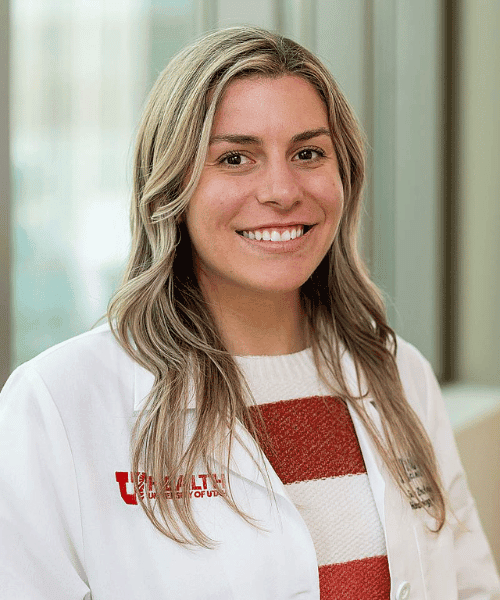
Sara Zhukovsky is a medical graduate from Rush University and completed her residency training in internal medicine at the University of Utah. She is now pursuing a fellowship in Hematology and Oncology at the Huntsman Cancer Institute.
Frequently Asked Questions About SABCS 2025 Community Oncology Impact
1. What were the key takeaways from SABCS 2025 for community oncology?
SABCS 2025 highlighted practical strategies such as risk-based screening, digital adherence tools, and survivorship platforms that can be implemented in community settings to improve access and outcomes.
2. How does risk-based breast cancer screening improve care?
Risk-based screening tailors screening frequency based on individual risk, reducing unnecessary procedures while maintaining effective cancer detection.
3. What tools are improving medication adherence in breast cancer patients?
Innovations like smart pill bottles with reminders and telehealth follow-ups have significantly improved adherence to endocrine therapy.
4. Why is survivorship care important for young breast cancer patients?
AYA patients face unique psychosocial challenges, and tools like the YES platform help improve quality of life through monitoring, education, and peer support.
5. How can community practices improve end-of-life care discussions?
Structured advance care planning tools can help initiate meaningful conversations about patient preferences, even in resource-limited settings.