
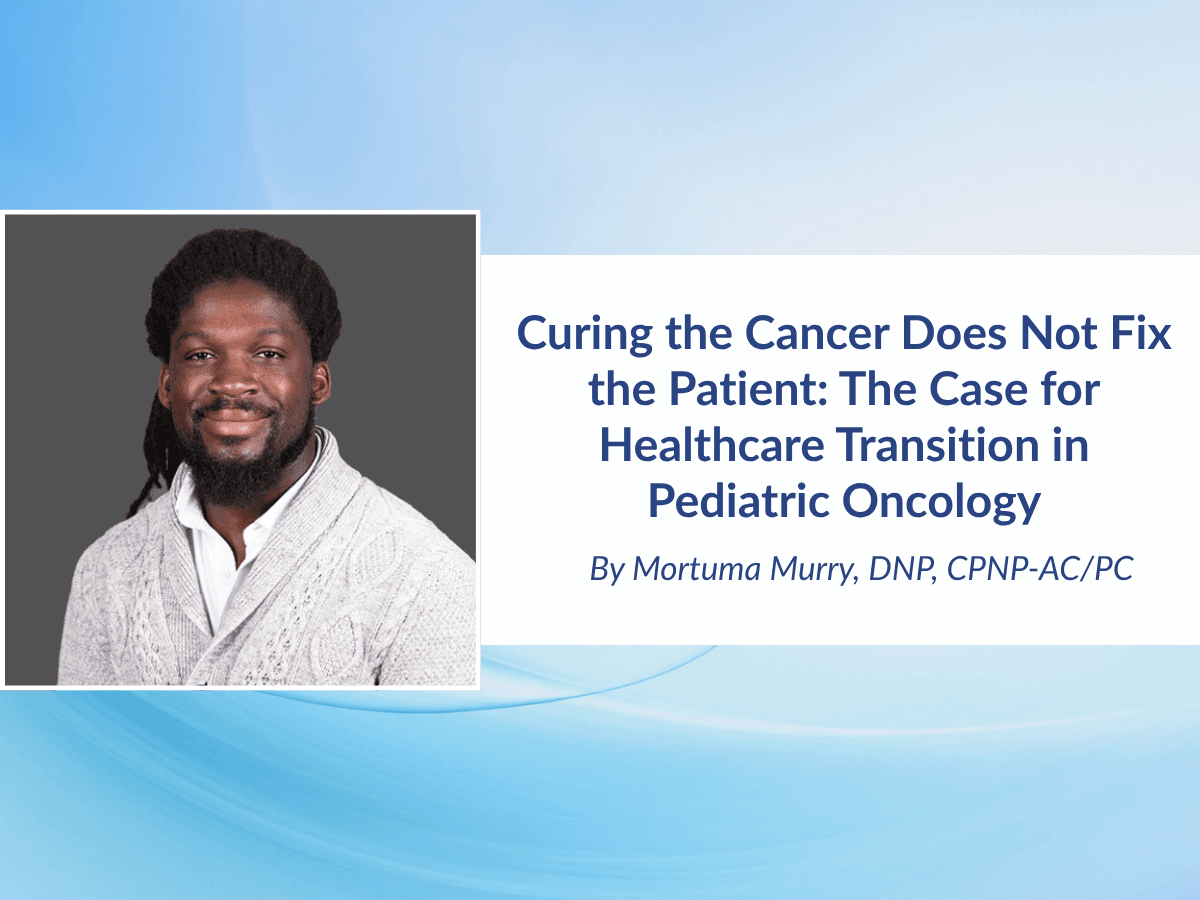
Curing the Cancer Does Not Fix the Patient: The Case for Healthcare Transition in Pediatric Oncology
Curing cancer is only part of the journey. Pediatric oncology survivors face lifelong health challenges, making structured healthcare transition programs essential for guiding young patients into adult care and long-term survivorship.
Introduction: A Reframing Question
Is cancer a chronic disease?
Take a moment with that. Your answer, true or false, will shape how you think about what cancer care actually requires of us, and where we are most likely to fall short in serving our patients.
If cancer is a chronic disease — meaning a condition with lasting biological, psychological, financial, and social consequences that start before diagnosis and extend far beyond the end of active treatment — then our obligation to patients doesn't start at treatment or end at cure. It starts at diagnosis and follows them: into survivorship, into adulthood; into a healthcare system that often has no idea how to receive them. If cancer is a chronic disease, then healthcare transition cannot remain a logistic afterthought in pediatric oncology, but emerge as a clinical imperative.
Healthcare Transition vs Transfer: Why the Distinction Matters
There is a persistent misconception that healthcare transition and transfer of care are the same thing. They are not.
Transfer is a single event: the moment a patient moves from one care team to another. It is important, but it is one of the last steps — not the whole process. Healthcare transition is the comprehensive, longitudinal work that makes transfer possible without crisis. It is the deliberate preparation of young patients — from the time of diagnosis — to understand their disease, navigate the healthcare system, communicate with their care team, make informed decisions, and eventually manage their own care with competent independence.
The Three Pillars of Effective Healthcare Transition: Medical Literacy, Health Literacy. Health Systems Literacy
This involves three overlapping domains. The first is medical literacy: understanding what your diagnosis means, what your treatment involves, and what the long-term implications of your disease and its treatment are for your body and your life. The second is health literacy: the ability to find, understand, and use health information to support your wellbeing. The third — and the one I find most underappreciated — is health systems literacy: the ability to navigate the healthcare system itself. This is hard. I say this to clinicians regularly: you struggle with health systems literacy too. When you get sick or face an unfamiliar medical situation, you often question where to seek care and which services to access when. Now imagine navigating that system as a teenager who has been in and out of treatment for years, who may have missed school, whose parents have managed every medical decision, and who is suddenly expected to do all of this on their own at 18 or 21.
That gap — between where young patients are and where we expect them to be — is not a personal failure. It is a systems failure. The belief that the cancer education we give our patients in a condensed aggressive fashion at time of diagnosis is adequate, requires a cultural and clinical paradigm shift. Healthcare transition is the infrastructure designed to close this gap and bring this paradigm shift.
A Real-World Case: Where Healthcare Systems Fall Short
Consider a 16-year-old who has just been diagnosed with a new cancer. His parents do not speak English; he has English as a second language. His family has no prior experience with the healthcare system. His mother manages the home and younger children; his father works and is often unavailable for appointments. He is stoic, reserved, and unlikely to volunteer information about how he is feeling or what he doesn't understand.
When I walk through this case with clinicians, the concerns they immediately identify include: Will the family retain the education they are given during this terrifying initial period? Will they correctly manage oral chemotherapy at home? Will they recognize and appropriately report a fever? Is medication being properly stored? Will language barriers create gaps in communication with the care team?
These are real clinical concerns with real clinical consequences. And they are all, at their core, healthcare transition concerns — questions about a family's current capacity to navigate a complex medical situation, and about what our responsibility is to build that capacity rather than simply presume it or write it off.
A structured healthcare transition program does not solve all of these problems overnight. But it provides the framework: repeated, structured education that meets patients and families where they are; attention to medical, health, and systems literacy from the beginning; a plan for decision-making support that doesn't depend on the availability of one parent; and a pathway toward the patient's own growing autonomy in managing their care over time.
Why Healthcare Transition Is Critical in Oncology
Adolescents and young adults with cancer represent a population with distinct and well-documented challenges. The AYA age range — roughly 15 to 39 — encompasses a period of critical developmental transition in which cancer arrives at precisely the wrong time: disrupting education, career formation, relationships, and identity in ways that compound the disease's medical burden.
The Unique Challenges of Adolescents and Young Adults (AYA)
But the transition challenge in oncology goes beyond the AYA population. It applies to any child who is treated for cancer and survives — because survival, as we know, does not mean restored health. Cancer treatment has long-term consequences: cardiac effects, endocrine disruption, neurocognitive changes, secondary malignancy risk, fertility implications, disruptions in development, etc. These consequences require ongoing monitoring and care, often by specialists who may not have been part of the original treatment team.
Long-Term Effects of Cancer Treatment and Survivorship Needs
When a 10-year-old is treated for leukemia, we are not just treating a disease — we are shaping a health trajectory that will unfold over decades. If that child reaches adulthood without understanding their medical history, without a survivorship care plan, without adult providers who know how to receive and care for them, and without the skills to navigate the healthcare system on their own, we have cured the cancer and left the patient adrift.
As I put it to audiences: when we cure the cancer, we don't fix the patient. And through the process of treatment, we sometimes break the patient in new ways. Our job is not done at the end of therapy.
The PATH Program at OHSU: Building the Infrastructure
At OHSU Doernbecher Children's Hospital, we have begun embedding healthcare transition into our pediatric hematology oncology program through the Pediatric to Adult Transitions in Health Care (PATH) Program. PATH is designed to be a structural support — a team of transition experts who work across clinical programs to provide the layer of transition resources, tools, and where feasible, care that most individual clinicians simply do not have the time or training to deliver consistently.
The healthcare transition model we follow starts at diagnosis or an appropriate developmental age (11-13 for most young adults) — not at age 17, when transfer is imminent. From the beginning of a patient's journey, we are building medical literacy, supporting family navigation, assessing readiness, and planning for what comes next. Transfer, when it occurs, is then a supported milestone in a longer process rather than a sudden handoff.
Our initial pilot data shows that clinics receiving PATH support performed more of the recommended transition activities — and that most clinics, when surveyed, acknowledged they lacked the expertise, staffing, and clinical time to provide this care routinely on their own. That is not a criticism of those clinics; it is a description of a gap in how our healthcare system is currently resourced. I propose our health system needs a culture change, and our care teams need a paradigm shift.
Clinical Implications and Practice Takeaways
Start healthcare transition at diagnosis, not at transfer. The most effective transition work happens longitudinally, over the course of a patient's treatment, not as a hurried afterthought to a handoff at 18.
Distinguish transfer from transition. Transfer is one step, and not the last step Transition is the educational and developmental preparation that makes transfer possible without gaps in care or patient functioning, and integration is the last step that ensures successful transfer.
Assess and build health systems literacy explicitly. Don't assume that patients or families can navigate the healthcare system. Build in structured support for learning how to communicate with providers, understand insurance, access records, and find appropriate adult care.
Include the patient in their own care, progressively. Even young adolescents can begin to take age-appropriate ownership of aspects of their care — understanding their diagnosis, knowing their medications, learning to speak for themselves in clinical encounters. This builds the foundation for adult independence.
Survivorship programs should begin before treatment ends. Long-term follow-up planning, secondary effects monitoring, and care coordination should be integrated into the treatment process, not appended to it after the fact.
Center the patient's voice in program development. People who have lived through a pediatric cancer diagnosis and the transition to adult care know things that clinicians do not. Their experience and lived expertise should inform how we design programs and what we prioritize.
Patient Perspective: Preparing for the Transition to Adult Care
If you or your child is being treated for cancer — whether at the beginning of treatment or approaching the end — the transition to adult care is something worth asking about now, not later. Questions to consider raising with your care team include: How does the team define success for me and my young adult, is healthcare transition part of that? What is the long-term follow-up plan for treatment effects? Who will manage care after pediatric oncology? What survivorship resources are available? Is there a healthcare transition program or coordinator who can help us learn how to navigate the care journey and the healthcare system? Who will help us prepare for the move to adult providers, do you have a healthcare transition navigator? The transition to adult care is often more difficult than families expect, and it is much easier to navigate when it is planned well in advance. You do not have to figure this out at the last minute.
Key Takeaways
Healthcare transition is not the same as transfer: transfer is a single event; transition is the comprehensive, longitudinal preparation — beginning at diagnosis — that makes transfer successful, and integration makes it sustainable.
Three interlocking domains define healthcare transition: medical literacy (understanding the disease), health literacy (finding and using health information), and health systems literacy (navigating the healthcare system) — all of which require deliberate cultivation in young cancer patients.
Curing cancer does not fix the patient: treatment has long-term consequences — cardiac, endocrine, neurocognitive, and others — that require ongoing surveillance and care, making structured survivorship and transition planning a clinical necessity, not an optional extra.
The PATH Program at OHSU Doernbecher demonstrates that a dedicated healthcare transition infrastructure, embedded within a pediatric hematology oncology program and beginning at diagnosis and appropriate developmental age, meaningfully increases the delivery of recommended transition activities and supports patient and family readiness.
Patients must be included in program design: people with lived experience of pediatric cancer and the transition to adult care are essential partners in building transition programs that actually meet young patients and families where they are.
References and Resources
Got Transition / National Alliance to Advance Adolescent Health. Six Core Elements of Health Care Transition. Available at: gottransition.org
OHSU Doernbecher PATH Program. Available at: ohsu.edu/doernbecher
Children's Oncology Group. Long-Term Follow-Up Guidelines for Survivors of Childhood, Adolescent, and Young Adult Cancers. Available at: survivorshipguidelines.org
National Cancer Institute. Adolescents and Young Adults with Cancer. Available at: cancer.gov
About the Author

Mortuma Murry, DNP, CPNP-AC/PC, is an Assistant Professor of Pediatrics at the OHSU School of Medicine and a pediatric nurse practitioner in the Cancer and Blood Disorders program at OHSU Doernbecher Children's Hospital. He is the provider lead of OHSU's Pediatric to Adult Transitions in Health Care (PATH) Program — one of the first structured healthcare transition programs embedded within a combined pediatric and adult academic medical center. His clinical focus spans hematology-oncology and hemoglobin disorders, including sickle cell disease, where he pilots program implementation that can be applied across the health system, and his professional mission centers on supporting young patients as they develop the knowledge, skills, and independence to navigate their health across a lifetime.
Frequently Asked Questions About Healthcare Transition in Pediatric Oncology
1. What is healthcare transition in pediatric oncology?
Healthcare transition is the structured, long-term process of preparing young cancer patients to move from pediatric to adult healthcare systems. It focuses on building knowledge, independence, and navigation skills—not just transferring care.
2. How is healthcare transition different from transfer of care?
Transfer of care is a single event—moving from one provider to another. Healthcare transition is a continuous process that begins early and ensures patients are prepared to manage their care independently before transfer happens.
3. Why is healthcare transition important for pediatric cancer survivors?
Cancer treatment often causes long-term health effects such as cardiac, endocrine, or cognitive issues. Without proper transition planning, survivors may lose follow-up care, increasing the risk of complications and poor health outcomes.
4. When should healthcare transition begin?
Healthcare transition should begin early—ideally at diagnosis or during early adolescence (around ages 11–13). Starting early allows patients and families to gradually build the skills needed for adult care.
5. What challenges do adolescents and young adults (AYA) with cancer face during transition?
AYA patients often face disruptions in education, career development, and social identity. They may also lack experience navigating healthcare systems independently, making structured transition support essential.
6. What is the PATH Program at OHSU?
The Pediatric to Adult Transitions in Health Care (PATH) Program at OHSU is a structured initiative that integrates transition planning into pediatric oncology care, helping patients and families prepare for long-term survivorship and adult healthcare.
7. What skills should young cancer patients develop before transitioning to adult care?
Patients should develop:
- Understanding of their diagnosis and treatment history
- Ability to manage medications and appointments
- Communication skills with healthcare providers
- Knowledge of how to navigate insurance and healthcare systems
8. What questions should families ask about healthcare transition?
Families can ask:
- What is the long-term survivorship plan?
- Who will manage care after pediatric treatment ends?
- Is there a transition program or coordinator available?
- How can we prepare for adult healthcare systems?
9. What happens if healthcare transition is not properly planned?
Poorly planned transitions can lead to gaps in care, loss to follow-up, unmanaged late effects of treatment, and increased health risks for survivors.
10. How can healthcare systems improve transition for cancer patients?
Healthcare systems can improve transition by:
- Starting transition planning early
- Embedding structured programs like PATH
- Providing multidisciplinary support
- Including patient and survivor perspectives in program design