Binaytara’s National Summit on Hematologic Cancers Makes Its Mark in Nashville

Author
Binaytara Team
At a Glance
Binaytara’s National Summit on Hematologic Cancers convened October 16–17 in Nashville, bringing together over 300 attendees, 90-plus abstract submissions, and 24 multidisciplinary sessions under one ambitious throughline: defining the standard where the guidelines end. From a Shark Tank-style $200,000 research pitch competition to an AI in Hematology plenary and a CAR-T vs. bispecifics showdown, here’s what made the Summit stand out.
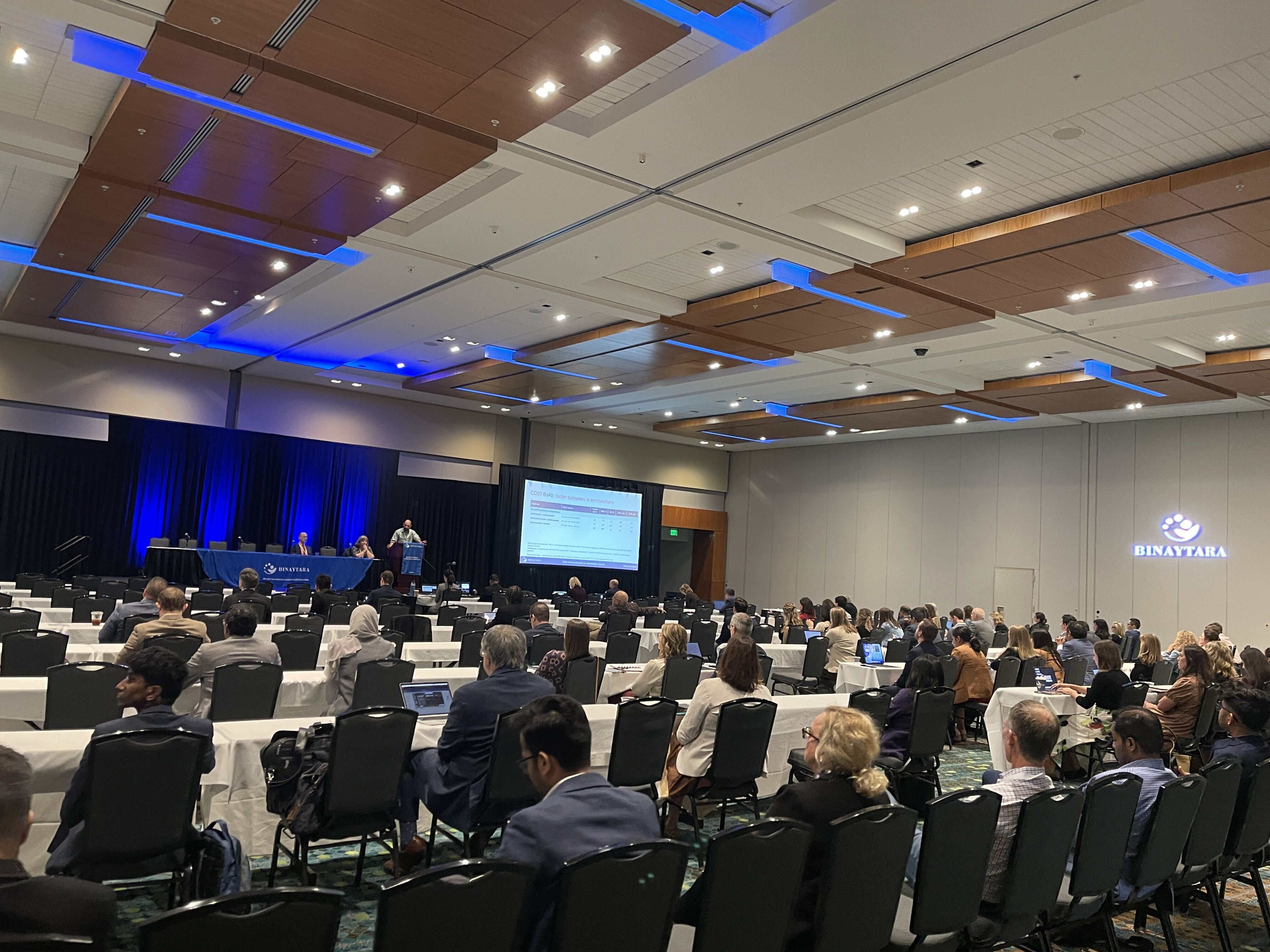
Bellevue, WA—The National Summit on Hematologic Cancers convened on October 16 and 17 in Nashville, TN. The largest of oncology nonprofit Binaytara’s 60+ annual conferences, the 2026 Summit focused its agenda with an ambitious throughline: Defining the Standard Where the Guidelines End.
Over 300 gathered hematology professionals, over 90 research abstract submissions, $200,000 in research funding (allocated through a live pitching session), and 24 multidisciplinary sessions led by top clinician-scientists were part of the effort to define a more robust treatment playbook for myeloma, leukemia, and lymphoma.
The meeting was jointly chaired by Hetty Carraway, MD (Cleveland Clinic); Shaji Kumar, MD (Mayo Clinic); Nitin Jain, MD (MD Anderson Cancer Center); and Navneet Majhail, MD (Sarah Cannon Cancer Network). Under their leadership, aided by a robust faculty from leading national institutions, the National Summit on Hematologic Cancers established itself as a budding mainstay among the nation’s top hematology meetings.
These are the highlights from a high-energy, high-output weekend.
From AI to Disparities to Defining a Treatment Playbook: The Program
The National Summit on Hematologic Cancers comprised 24 focused sessions over the course of two days, ranging from titles like “The Access & Equity Imperative in Hematologic Malignancies” to technical sessions informed by case-based discussions—like Day 2’s “Low-Grade Lymphoma: When to Treat vs Observe.” Where relevant, the agenda featured dedicated tracks for APP and pharmacists, as well as pediatrics.
AI in Hematology Plenary
Veteran organizer Binaytara’s focus is on novel conference formats and new approaches to familiar questions—and the priority showed over the course of the weekend. For one, Day 1 concluded with the ever-buzzy AI in Hematology Plenary: “Where Are We Now, and Where Are We Going?”
Led by Aziz Naza, MD, Executive Director for AI Workforce Transformation/ Education at Thomas Jefferson University, the session introduced possible use-cases for artificial intelligence in the field of blood cancers. These ranged from clearing clinicians’ plates of the job’s most mundane, automation-friendly tasks, to improving clinical trial recruitment, to developing more personalized predictions of treatment response. Of course, the speakers emphasized that these applications are promising but developing. “Pay attention, but be cautious, and be very curious,” said The Ohio State University’s Andrew Srisuwananukorn, MD.
Bispecifics vs. CAR-T: A Nuanced Showdown
A more familiar topic at a blood cancers meeting, Bispecifics vs. CAR-T, was tackled via “showdown:” a debate-style panel with clinician speakers making a case for either CAR-T or bispecific antibodies. With CAR-T widely considered one of the breakthrough treatments for hematologic malignancies of the past decade, the bispecifics backers—helmed by Ayushi Chauhan, MD, of MD Anderson Cancer Center—had their work cut out for them. Indeed, as moderator Bhagirathbhai Dholaria, MD, concluded the session, the case for CAR-T was clearer; but Dr. Chauhan made the case for bispecifics in lymphoma with an incredible amount of passion.
“The majority of the U.S. population lives in an area where they are all bispecifics candidates,” she argued. “We need access to these therapies in Spottingsburg, South Carolina; in Roswell, Georgia; in Midland, Texas. And the therapy they can reach is bispecifics.”
Of course, the relationship between the two therapies is more nuanced than a debate-style showdown can capture; but the format packages an important conversation in a way that engages the clinician audience much more than a traditional didactic lecture—a throughline across Binaytara CME meetings.
A Research Ecosystem: The Abstracts
Another highlight of the meeting: its ninety-plus associated abstracts, whose scope and depth lent the Summit the kind of science-forward energy that powers the likes of ASCO’s and ASH’s Annual Meetings.
Of the submissions, four outstanding abstracts were selected for oral presentation. “Tumor Microenvironment-Guided Therapeutic Selection in Peripheral T-Cell Lymphoma: “Non-Overlapping At-Risk Populations Targetable by Anti-TIM-3 and Anti-CCR4 Agents;” “Pre-transplant growth differentiation factor-15 independently predicts survival following allogeneic hematopoietic cell transplantation;” “Germline predisposition to immune effector cell-associated hemophagocytic lymphohistiocytosis-like syndrome (IEC-HS) after CAR T cell therapy for lymphoma and myeloma;” and “A Hematopoietic Stem Cell Transplantation AI Foundation Model for Individualized Prediction of Relapse and Non-relapse Mortality” were the abstract titles whose authors were invited to speak at the Summit.
Dozens more top submissions were invited to give poster abstract presentations at the Summit, assessed by the meeting’s abstract committee—chaired by City of Hope’s Vinod Pullarkat, MD, and Baylor College of Medicine’s Martha Mims, MD, PhD. You can peruse accepted abstracts in the supplemental issue of the International Journal of Cancer Care and Delivery, the independent peer-reviewed medical journal supported by Binaytara.
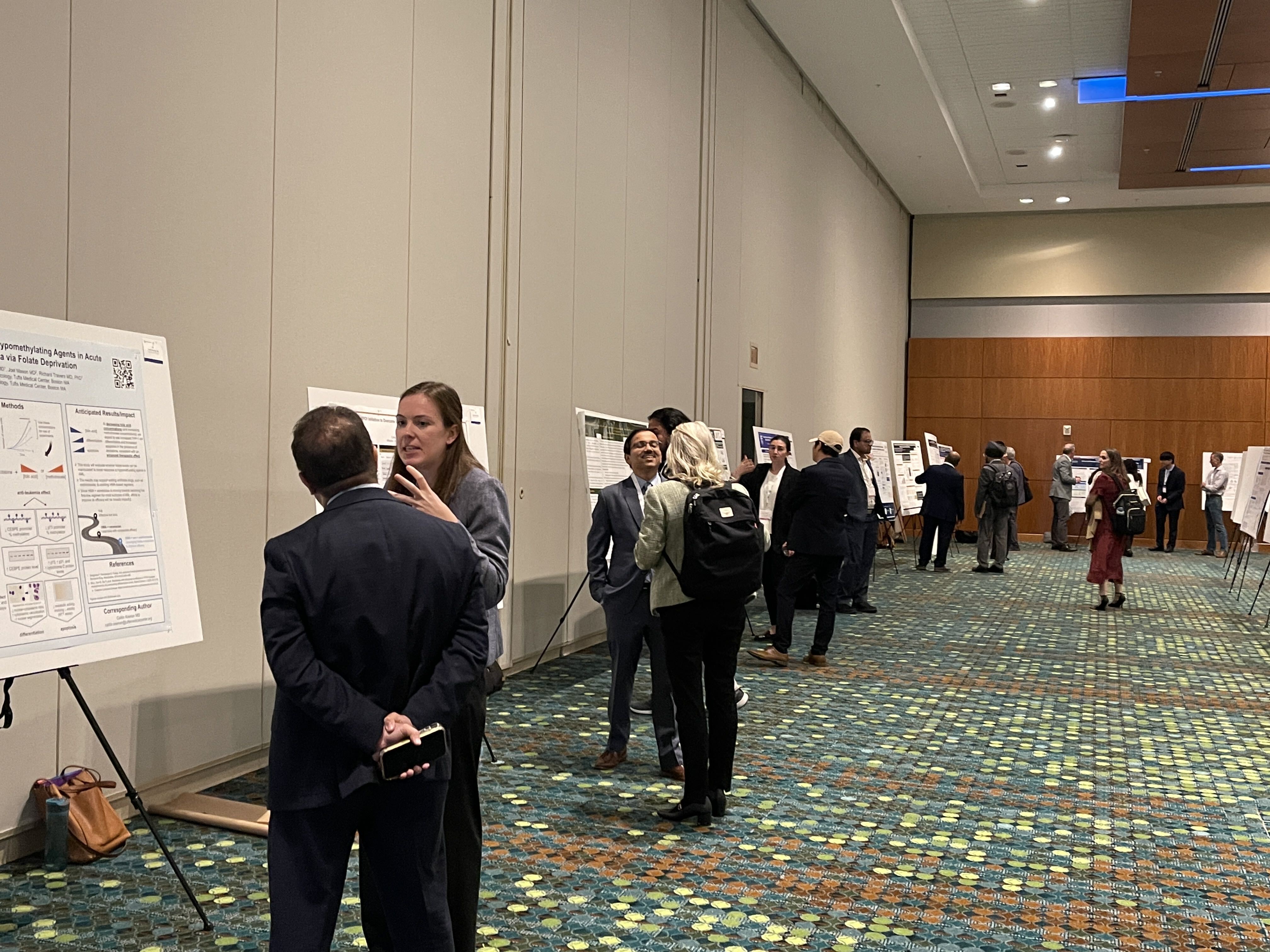
Poster abstract session at the National Summit on Hematologic Cancers.
$200,000 Toward the Next Generation of Hematology Innovation: The Impact Pitch
Most notably, Binaytara’s signature session, the Impact Pitch: Binaytara Research Award Challenge, made its biggest impression yet. The Impact Pitch is how Binaytara allocates research funding. Live on stage, participants are given seven minutes to pitch their research idea to a panel of field experts: the Catalysts. Following a sharp cutoff, the Catalysts get their own seven minutes to ask questions that eke out the pitch’s potential for real-world impact—typically covering feasibility and possible pitfalls. Those with ideas grounded in focused, scalable impact typically thrive during these seven minutes; but any oversights in research design are identified and discussed. In this, the Impact Pitch acts as a real-time mentorship session even as it dwells in the high-stakes, sometimes-stressful realm of research funding.
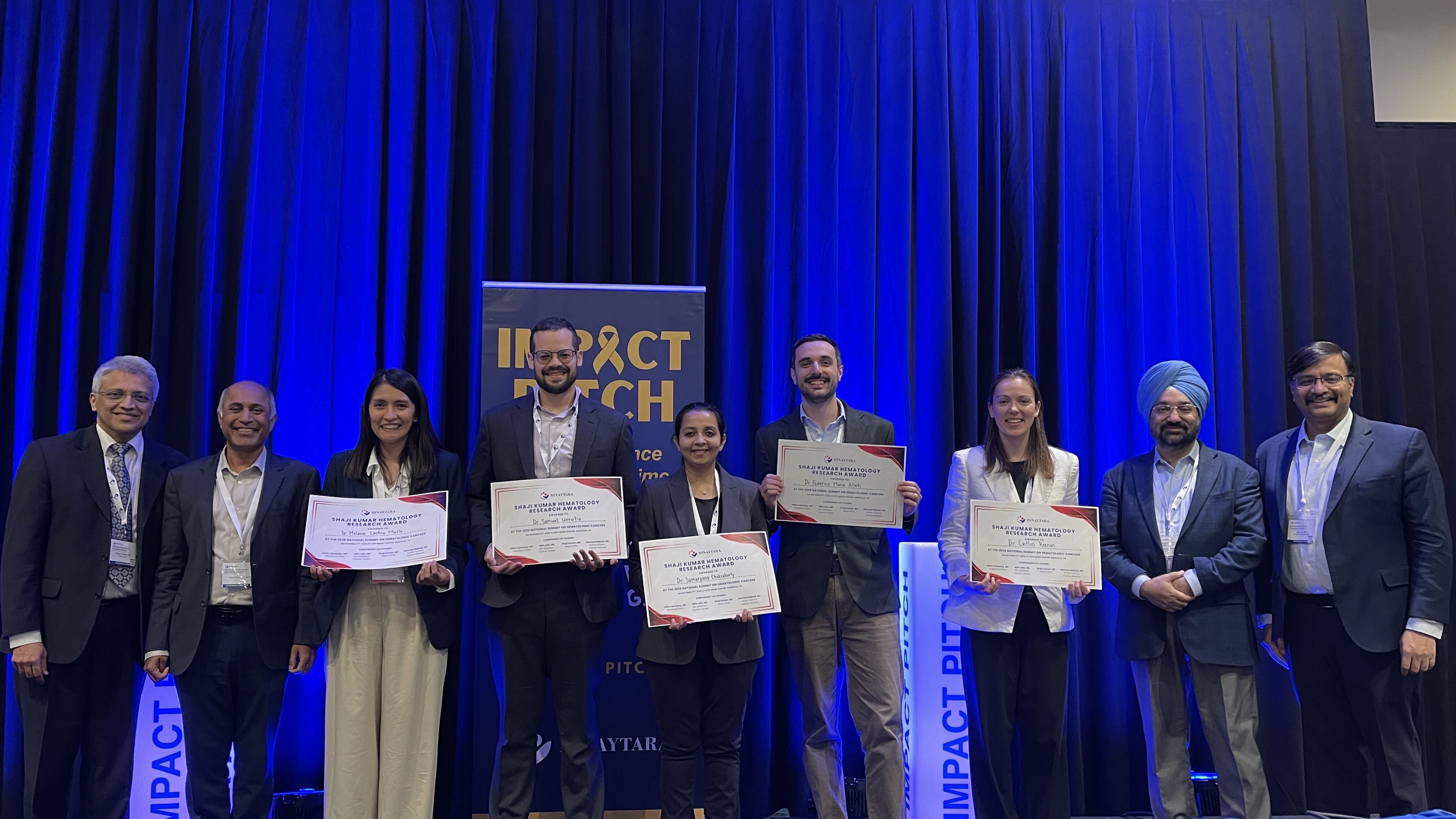
At the National Summit on Hematologic Cancers, three fellows and six junior faculty members were selected from among abstract authors as finalists for the Impact Pitch. Two fellows and three faculty walked away with a Shaji Kumar Hematology Research Award: multiple $25,000 and $50,000 grants, a $200,000 total investment in blood cancer research from Binaytara.
Read more about the winning projects here.
The overwhelming takeaway by Impact Pitch participants: a refreshing sense of immediacy and transparency.
“You really feel the competition and the adrenaline,” Franco Mario Aletti, MD, Impact Pitch presenter and one of two awardees at the fellow level, said. “It's make it or break it. It's very compact and short, and it can be a powerful way to convey the message I want to share with other researchers, rather than writing for hours and hours, sending it to co-authors, and going back and forth. This was pretty straightforward and very high impact."
Back to Impact: What Follows Nashville’s Heme Summit?
The National Summit on Hematologic Cancers has concluded. But as Conference Co-Chair Nitin Jain, MD, concluded the meeting, the Summit will return next year, aiming for ever more impact in the field of hematologic malignancies. The call for abstracts for the Shaji Kumar Hematology Research Awards will open again in 2027.
In the meantime, the call for abstracts is live for the Summit on Cancer Health Disparities, Binaytara’s flagship conference and one of the most established disparities meetings. The Impact Pitch will also return, tied this time to the Binaytara Implementation Science Research Awards of up to $25,000 per person. Binaytara’s other calls for abstracts will open shortly thereafter, marking the onset of another awards season.
Whether through funding opportunities for early-career researchers, accessible and engaging CME for hematology and oncology professionals across the United States, or programs thoughtfully designed to boost real clinical decision-making and patient outcomes, oncology education is a core part of Binaytara’s four-pronged mission to reduce cancer disparities. If you’re working in cancer care at any level, you’re part of that mission. We hope to see you there.
Recommended Articles