

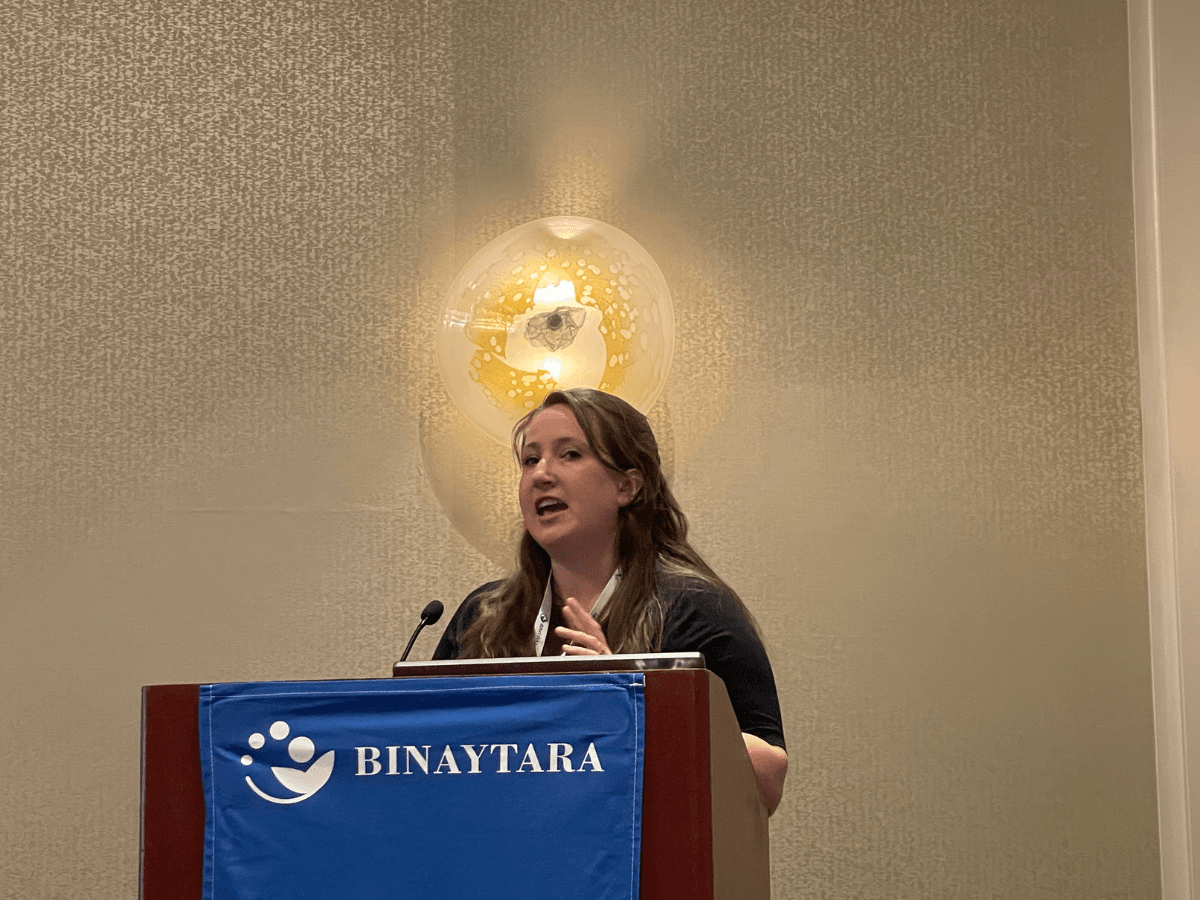
Triple-negative breast cancer remains one of the most aggressive and challenging breast cancer subtypes. At the Best of Hematology and Breast Cancer conference, Dr. Lynn Symonds reviewed emerging evidence from major trials and international meetings to assess whether recent advances signal real progress—or only incremental gains—for patients with this high-risk disease.
At the Best of Hematology and Breast Cancer conference, Dr. Lynn Symonds of Fred Hutchinson Cancer Center presented recent advances in triple-negative breast cancer treatment, examining whether progress in this aggressive disease subtype constitutes "winning." Drawing on data from the San Antonio Breast Cancer Symposium, ESMO, and ASCO, the presentation covered adjuvant carboplatin strategies, novel PARP inhibitor combinations, and emerging antibody-drug conjugates (ADCs) in the metastatic setting, while emphasizing that significant unmet needs remain despite incremental improvements in outcomes.
The transcript below has not been reviewed by the speaker and may contain errors.
Triple-Negative Breast Cancer: The Challenge
Triple-negative breast cancer is probably the most aggressive form of breast cancer. It typically follows an aggressive clinical course and is associated with a poor prognosis. It accounts for 10 to 15% of breast cancer cases and has a higher prevalence in young women and African American women. This disease really drives a lot of the disparities seen in breast cancer patients.
Treatment options for triple-negative breast cancer are, unfortunately, often limited and primarily rely on cytotoxic chemotherapy. Unlike estrogen receptor-positive disease, where there are many amazing oral therapies, options are much more limited in the setting of triple-negative disease.
There are a number of patients with triple-negative disease who have a particularly poor prognosis. Twenty-five to 30% of patients diagnosed with metastatic triple-negative breast cancer don't survive past six months. Patients who fail to achieve a pathologic complete response (pCR) after neoadjuvant treatment have a particularly poor prognosis. Patients with CNS disease also have a very limited prognosis. There are lots of unmet needs in the field of triple-negative breast cancer.
San Antonio Data: Adjuvant Carboplatin Studies
RJBC 1501 Trial
The first study from San Antonio was RJBC 1501, which looked at adjuvant chemotherapy for triple-negative patients. These were patients who would not have received Keytruda 522, and the trial examined the addition of carboplatin to standard treatment options.
This study included patients with stage one through three triple-negative breast cancer. If they were node-negative, they had to have a tumor size greater than 1 cm. These were patients who received upfront surgery and then were candidates for adjuvant chemotherapy.
In this trial, patients were randomized to receive either adjuvant AC-T or AC-T with the addition of carboplatin. The primary endpoint was disease-free survival.
At three years, with standard of care AC-T, the disease-free survival rate was 89.8% versus 93.1% in the carboplatin arm. At five years, this was 82.6% versus 89.5%. This was a significant difference with a hazard ratio of 0.66 and a p-value of 0.03. The authors also reported overall survival. They didn't share the mean follow-up time but noted a significant difference in overall survival with the addition of carboplatin as well.
CITRINE Study
A similar study presented was the CITRINE study, which also looked at the addition of carboplatin to adjuvant chemotherapy versus standard treatment. This was specifically for high-risk early-stage TNBC. Whereas the other study included stages one through three, this study specified that patients had to be lymph node-positive or lymph node-negative, but if they were lymph node-negative, they had to have Ki-67 greater than or equal to 50%.
Similar to the prior study, patients were randomized to receive either AC-T or AC-T plus carboplatin, and again, the primary endpoint was disease-free survival.
At three years, the disease-free survival was 92.3% in the carboplatin arm versus 85.8% in the standard of care chemotherapy arm, with a median follow-up of 44.7 months. They observed a significant difference with the addition of carboplatin. The authors did note that this benefit seemed to be most pronounced in the first 12 months and then attenuated over time.
Together, these studies support data that's been presented in prior years as well, suggesting that for high-risk patients who didn't receive neoadjuvant chemotherapy, it may be worth considering the addition of carboplatin to their adjuvant regimen.
Additional data from the CITRINE study showed other outcomes, including relapse-free survival, distant disease-free survival, and overall survival, all of which showed a significant difference, again suggesting a benefit with the addition of carboplatin for high-risk patients.
Neoadjuvant PARP Inhibitor Studies
TDCRC056 Trial
The next couple of studies presented are an interesting set that looked at giving neoadjuvant PARP inhibitors, often combined with immunotherapy. One of these studies, TDCRC056, was opened at Fred Hutchinson Cancer Center and enrolled several patients. This was a really interesting study design.
This study used neoadjuvant olaparib plus dostarlimab for patients with BRCA1 or BRCA2 or PALB2 mutations. Patients could have stage 1 to 3 disease, but if they were stage 1, they had to have a tumor size greater than a centimeter. This study was presented at San Antonio, specifically reporting out from the triple-negative subgroup. There was a cohort that could be ER-positive, but this data was specifically looking at the triple-negative population.
Patients were randomized to receive either niraparib plus dostarlimab for 18 weeks, or there was an arm that had a three-week lead-in with niraparib followed by niraparib plus dostarlimab. Patients were then assessed for response. The study allowed patients to receive additional neoadjuvant treatment at the discretion of the treatment provider, and then patients would go on to surgery. The primary endpoint was pCR. They also assessed tumor-infiltrating lymphocytes (TILs) as a marker as part of the study.
For both arms A and B, the pCR rate at surgery was 50%. About 23.9%, or 11 patients, received additional therapies. They didn't further stratify by which patients in those arms received additional therapies, but that may be data they publish in the future. When looking at the RCB 0 or 1 category, the rate was 60%.
There were no new toxicity signals. Everything observed was in line with PARP inhibitors and immunotherapy. They also evaluated TILs. As mentioned, they found that high baseline TIL was associated with a greater likelihood of pathologic response. Interestingly, the change in TILs during the course of the study was not.
OLYMPIA Study
This was the OLYMPIA study, which was a similar concept looking at olaparib monotherapy versus olaparib plus durvalumab in patients with BRCA mutations and early-stage HER2-negative breast cancer.
They had two different cohorts. Cohort A was lower risk, defined as T1B or T1C and node-negative. Those patients were not randomized—they received olaparib monotherapy. Cohort B was defined as high-risk patients who were T1N1 or T2. Those patients received olaparib plus durvalumab. These patients in this study did not receive additional neoadjuvant treatment prior to surgery, nor didn't have the option to receive additional neoadjuvant treatment, and then were assessed for pCR.
For cohort A with the low-risk population who received olaparib monotherapy, the pCR rate was 68%, and the RCB 0/1 rate was 72%. The data showed that the majority of patients, as expected, had BRCA1 mutations.
For cohort B, the higher-risk patients, the pCR rate was 80% with olaparib and durvalumab, and the RCB 0/1 rate was 84%.
Overall, it was pretty exciting to see that with a non-chemotherapy-based neoadjuvant regimen, these responses could be achieved. This is not standard of care yet. All of this is still being studied and evaluated. Patient advocates in the room were very excited to see these studies, as well as the clinicians, and it got a big response from a lot of clinician advocates.
ESMO and ASCO Data: ADCs in Metastatic TNBC
TROP2-Directed ADCs in First-Line Metastatic Setting
The next phase of data presented was from ESMO and ASCO this year, talking about some of the developments with antibody-drug conjugates (ADCs). First is data from ESMO looking at TROP2-directed ADCs in first-line metastatic TNBC. These were patients who were not candidates for PD-L1 inhibitors.
The key trials were the ASCENT-03 trial, which has now been published as of October, and Tropion-Breast02.
ASCENT-03 Trial
In ASCENT-03, this was looking at patients with metastatic triple-negative breast cancer. Again, they were not candidates for PD-L1 inhibitors. This could have been either because they had comorbidities that precluded treatment or because they tested negative for PD-L1.
Patients were randomized to receive either sacituzumab govitecan or the physician's choice of chemotherapy. Notably, this trial did allow for a crossover to sacituzumab as patients had verified progression on standard of care chemotherapy. This trial, in comparison to Tropion-Breast02, specified that patients could not have progressed within six months of their curative intent treatment.
Tropion-Breast02 Trial
Tropion-Breast02 was looking at datopotamab deruxtecan versus the physician's choice of chemotherapy in the first-line setting, again for metastatic TNBC, for patients who are not candidates for a PD-L1 inhibitor. In this study, there was no crossover allowed. They specified that there could be any interval since the curative intent treatment, and if patients had progressed within 12 months, they capped the number of patients at 20%.
Progression-Free Survival Results
For ASCENT-03, they observed a median progression-free survival of 9.7 months in the sacituzumab govitecan arm and a median progression-free survival of 6.9 months in the physician's choice of chemotherapy arm. The hazard ratio was 0.62 with a clearly significant p-value.
For Tropion-Breast02, the PFS was 10.8 months versus 5.6 months in the standard of care chemotherapy arm, again with a hazard ratio of 0.57 and a clearly significant p-value.
For ASCENT-03, the median difference in progression-free survival was 2.8 months versus in Tropion-Breast02, it was 5.3 months. These are not direct comparisons, just from the individual studies.
Overall Response Rate
Interestingly, they reported out overall response rate for both studies. With the sacituzumab govitecan ASCENT-03 study, there was no real difference in overall response rate between sacituzumab govitecan and physician's choice of chemotherapy versus a pretty marked difference in Tropion-Breast02 with a difference of 63% versus 29%. Some people had pointed out that the sacituzumab study allowed for [unclear] therapy, but that probably doesn't account for all of the difference being seen.
Overall Survival
Tropion-Breast02 also had overall survival data. They didn't have great median follow-up in ASCENT-03 yet, but for Tropion-Breast02, there was a significant difference in overall survival for these patients. At 27.5 months, the median overall survival was 23.7 months versus 18.7 months—a change in overall survival of five months with that ADC.
ASCENT-04 Study
This is data presented at ASCO this year from the ASCENT-04 study. This was for patients who had metastatic TNBC but were candidates for pembrolizumab—patients who are PD-L1 positive. This, similarly to ASCENT-03, specified that patients could not have progressed within six months after a curative intent treatment. Patients were then stratified one-to-one to receive sacituzumab plus pembrolizumab versus chemotherapy plus pembrolizumab as the standard of care.
For progression-free survival, there was a notable difference. In the sacituzumab plus pembrolizumab arm, the median PFS was 11.2 months versus in the chemotherapy plus pembrolizumab arm, it was 7.8 months, with a hazard ratio of 0.65 and p-value of 0.001. They noted a 35% reduction in risk of disease progression or death with first-line sacituzumab plus pembrolizumab in comparison to chemotherapy.
From Data to Practice
Based on this data, there is enthusiasm and interest to see the future of where ADCs go, particularly in the first-line metastatic setting. Right now, updated guidelines and FDA approval for these agents are pending. Some have tried to get sacituzumab govitecan covered; some have been successful, some have not. But that landscape is currently changing, and this is likely on the horizon of becoming a new standard of care in the first-line setting for high-risk patients.
As mentioned, it may be reasonable to consider the addition of adjuvant carboplatin in patients who didn't receive it in a neoadjuvant setting.
Are We Finally Winning in Triple-Negative Breast Cancer?
The question this talk was tasked with was: are we finally winning in triple-negative breast cancer? While it's exciting to see progress in triple-negative breast cancer and to have any movement in progression-free survival and overall survival improvement, at the end of the day, when looking at the metastatic setting, these trials move that bar by about five months. While it's exciting to see progress, there is still a lot of work to go before we can say that we're winning. More trials and more development are needed to help these patients and to help some of the highest-risk cohorts.
Future Directions
There are many unmet needs in triple-negative breast cancer, especially for patients who fail to achieve a pCR, those with early relapse, and those with CNS involvement.
In the next three to five years, continued interest in novel ADCs is anticipated. Most ADCs right now still are topoisomerase inhibitor agents. It will be interesting to see novel ADCs with new targets and new payloads coming through clinical trials. Further optimization of how existing ADCs are used will also be seen. There are a lot of questions about what is the ideal sequencing of these agents. After giving one ADC, when do you give another? Continued refinement of that approach is expected.
There are a number of trials exploring anthracycline-free regimens in the neoadjuvant setting. This is a really exciting area to think about. Who can be de-escalated? Who can avoid some of the more toxic parts of therapy? Exploration of additional adjuvant options for patients who fail to achieve a pCR will also be seen. Trials are exploring ADCs in this area.
Available Clinical Trials at Fred Hutchinson
Just highlighting a few of the studies available for patients at Fred Hutchinson right now—referrals for patients with triple-negative disease are welcome. There are two neoadjuvant studies looking at the de-escalation of anthracyclines, looking at anthracycline-free regimens: the SCARLET study and TROPHEUS, which will be looking at sacituzumab govitecan as part of a neoadjuvant regimen. There is an adjuvant study looking at de-escalating checkpoint inhibitor therapy for patients who achieve pCR. There are a number of trials in the metastatic setting, many looking at novel ADCs. There is also a novel pH-activated doxorubicin through the VACA study. Dr. Specht has a CAR-T study, and there are some phase one studies as well.