

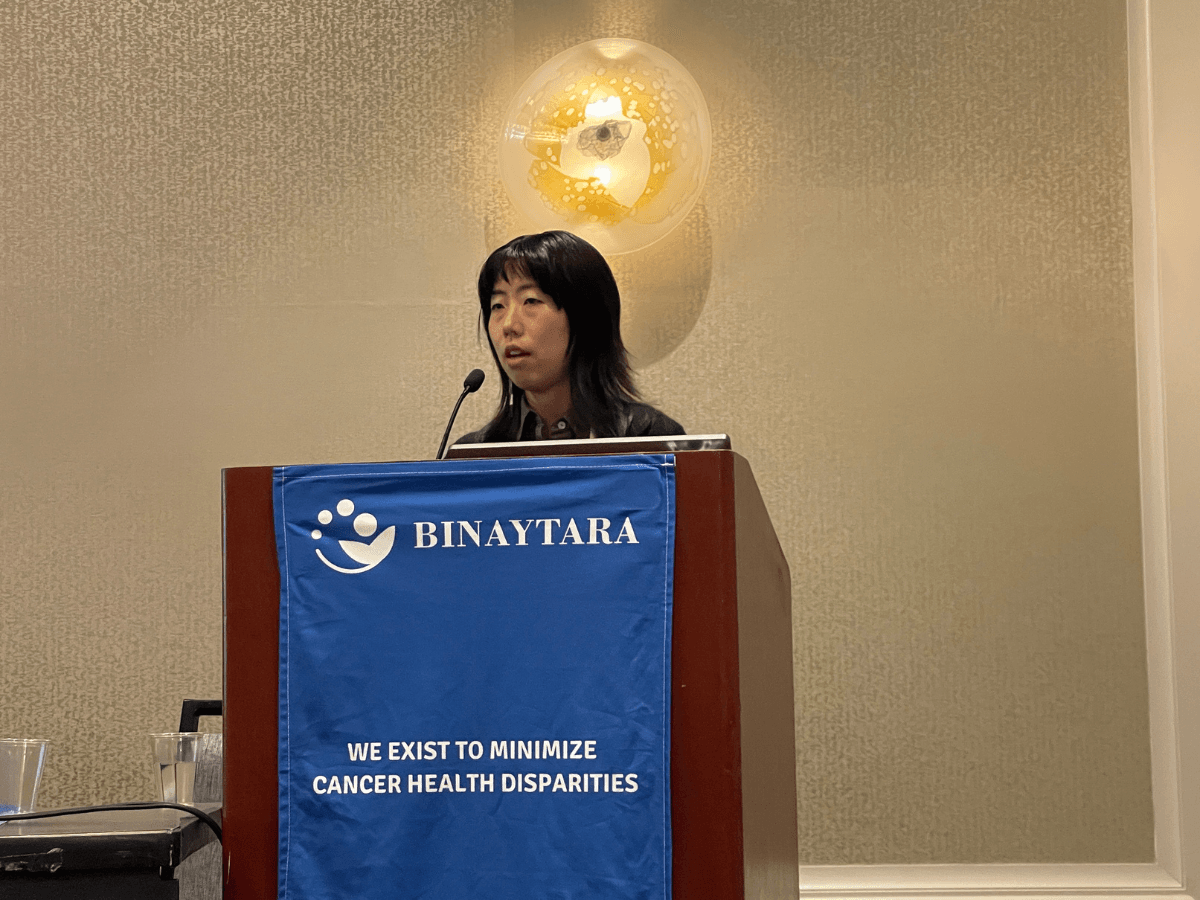
Which patients with early-stage, hormone receptor–positive breast cancer truly benefit from escalated adjuvant endocrine therapy? At the Best of Hematology and Breast Cancer conference, Dr. Brie Chun of Fred Hutchinson Cancer Center reviewed long-term SOFT and TEXT trial data, emphasizing a personalized approach to ovarian function suppression based on age, chemotherapy exposure, nodal status, tumor grade, and histology.
At the Best of Hematology and Breast Cancer conference, Dr. Brie Chun of Fred Hutchinson Cancer Center presented highlights from the San Antonio Breast Cancer Symposium, focusing on a central clinical question in early-stage, hormone receptor–positive breast cancer: which patients truly benefit from escalation of adjuvant endocrine therapy, particularly ovarian function suppression (OFS)? Drawing on long-term follow-up data and subgroup analyses, the presentation emphasized personalized decision-making rather than a one-size-fits-all approach.
The transcript below has not been reviewed by the speaker and may contain errors.
Endocrine Therapy in Premenopausal Breast Cancer
Endocrine therapy has long been a cornerstone of treatment for hormone receptor–positive breast cancer. Early data established tamoxifen as standard therapy, demonstrating reductions in recurrence and breast cancer–related mortality. Subsequent studies showed that aromatase inhibitors improved outcomes in postmenopausal patients. For premenopausal patients, however, tamoxifen alone remained standard for many years.
To address this gap, the SOFT and TEXT trials were initiated to evaluate the role of ovarian function suppression combined with endocrine therapy. These trials compared tamoxifen alone, tamoxifen plus OFS, and exemestane plus OFS, with joint analyses of the OFS-containing arms to improve statistical power.
Long-Term Outcomes From SOFT and TEXT
Recent 15-year follow-up data from SOFT and TEXT provide important insights. Earlier 12-year data had already shown improvements in disease-free survival with the addition of OFS, with an absolute benefit of approximately 5–7% compared with tamoxifen alone. Overall survival differences, however, were more modest—a common pattern in breast cancer trials, where gains in recurrence endpoints do not always translate into large overall survival differences.
With longer follow-up, the separation between treatment arms continues. At 15 years, exemestane plus OFS shows approximately a 6% absolute improvement in breast cancer–free survival compared with tamoxifen alone, while tamoxifen plus OFS confers a smaller but still measurable benefit.
Identifying Patients Most Likely to Benefit
Subgroup analyses help clarify which patients derive the greatest benefit from treatment escalation. Several clinical features consistently stand out:
- Receipt of neoadjuvant chemotherapy
- Age under 35 years
- Node-positive disease, particularly four or more positive lymph nodes
- High-grade (grade 3) tumors
In these subgroups, the magnitude of benefit from adding OFS appears larger, supporting more confident recommendations for treatment intensification.
Young Patients and Chemotherapy-Treated Disease
Among patients younger than 35 years with HER2-negative disease, long-term data show meaningful separation in both breast cancer–free survival and overall survival curves with the addition of OFS. Absolute improvements in overall survival approach 9–10% with tamoxifen plus OFS and up to 14% with exemestane plus OFS. Notably, the vast majority of patients in this subgroup had also received chemotherapy, underscoring that these risk factors are not independent.
In contrast, patients who did not receive chemotherapy—generally older, lower-risk patients with stage I, node-negative, lower-grade tumors—show far less separation between treatment arms. This highlights the importance of baseline risk when weighing the potential benefits of escalation.
Choice of Endocrine Partner: Tamoxifen vs. Aromatase Inhibitor
A common clinical question is whether tamoxifen or an aromatase inhibitor should be paired with OFS. Fifteen-year overall survival data show little difference between these two approaches, an important point for patient counseling. While disease-free endpoints may favor aromatase inhibitors in some contexts, overall survival appears comparable.
Tumor grade may further refine this discussion. In grade 3 tumors, subgroup analyses suggest a modest advantage for aromatase inhibitor–based therapy in breast cancer–free interval, although the clinical significance remains nuanced.
Lobular Carcinoma: An Emerging Signal
Invasive lobular carcinoma represents a smaller but clinically important subset of breast cancers. Data from prior trials, including BIG 1-98, suggest improved disease-free survival with aromatase inhibitors compared with tamoxifen in lobular histology. Similar patterns appear in exploratory analyses from SOFT and TEXT, with some separation favoring aromatase inhibitor plus OFS.
Although these findings are based on ad hoc analyses and remain hypothesis-generating, they raise the possibility that lobular cancers may be particularly sensitive to aromatase inhibition, warranting further study.
Where the Field Is Heading
Ongoing and upcoming trials continue to explore escalation strategies. Studies such as the OFSET trial are evaluating the addition of adjuvant therapies to optimized endocrine treatment with OFS. New agents, including oral selective estrogen receptor degraders, are also being studied in the adjuvant setting, with early data showing promise.
At the same time, there is growing recognition of the need to address symptom burden and quality of life, particularly for young patients undergoing intensified therapy.
Practical Takeaways for Clinical Practice
Long-term data reinforce the value of individualized counseling. Stronger arguments for ovarian function suppression can be made for younger patients, those who have received chemotherapy, patients with high-grade or node-positive disease, and possibly those with lobular histology. Lower-risk patients, by contrast, may see limited benefit from escalation.
Ultimately, treatment decisions should balance absolute benefit, toxicity, patient preferences, and quality-of-life considerations, using long-term data to guide nuanced, patient-centered discussions.
Stronger arguments for ovarian function suppression can be made for younger patients, those who have received chemotherapy, patients with high-grade or node-positive disease, and possibly those with lobular histology. Lower-risk patients, by contrast, may see limited benefit from escalation.
Ultimately, treatment decisions should balance absolute benefit, toxicity, patient preferences, and quality-of-life considerations, using long-term data to guide nuanced, patient-centered discussions.