

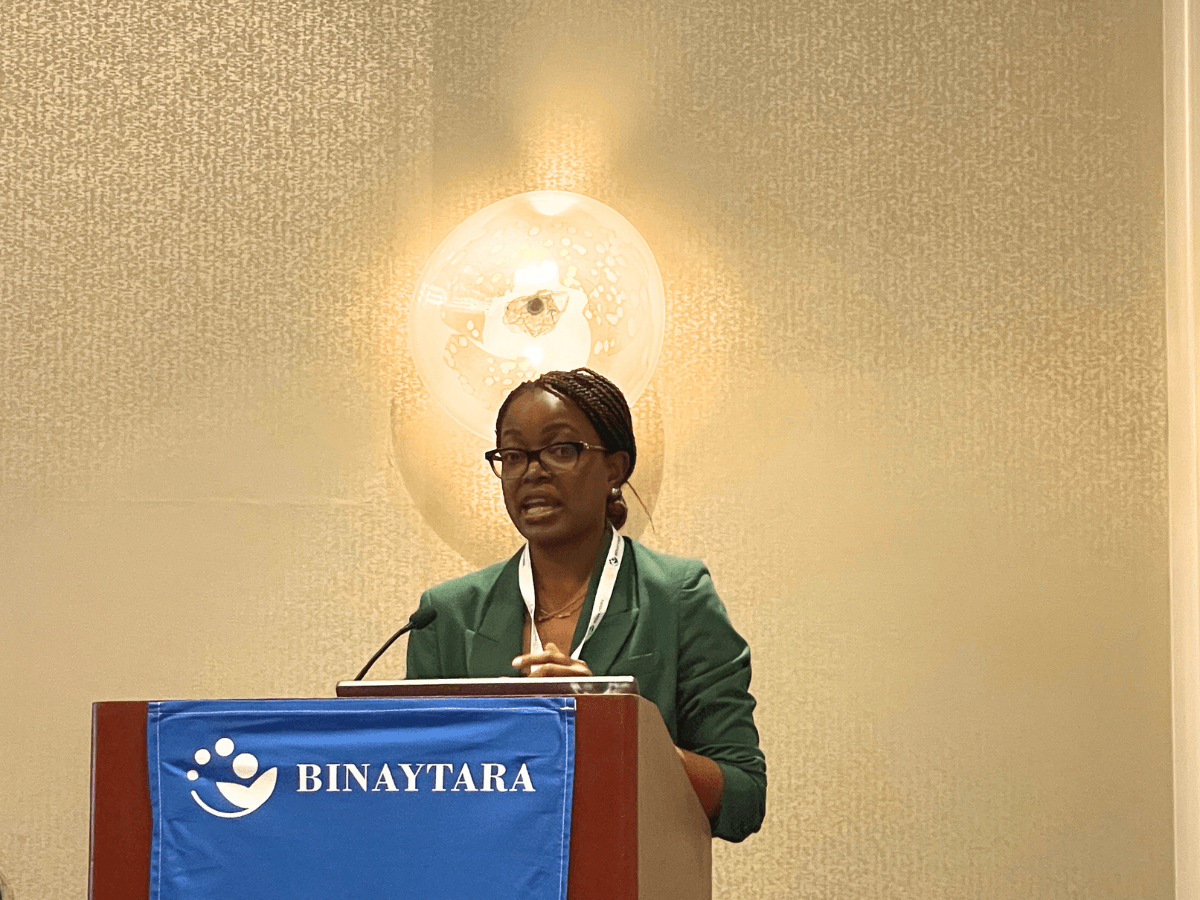
Chronic lymphocytic leukemia (CLL) treatment is rapidly evolving, with new data shaping decisions around frontline therapy, fixed-duration regimens, and next-generation BTK inhibitors. At the Best of Hematology & Breast Cancer 2026 conference, Dr. Mwanasha Hamuza Merrill of UCSF Health reviewed the latest NCCN guideline updates and pivotal clinical trials—including CLL17, BRUIN 314, and CADENCE-1—highlighting how venetoclax-based combinations, pirtobrutinib, and emerging BTK degraders are redefining care for both treatment-naïve and relapsed/refractory CLL patients.
Dr. Mwanasha Hamuza Merrill is a hematologist-oncologist who cares for patients with blood cancers, including non-Hodgkin lymphomas, Hodgkin lymphomas, and other lymphoproliferative diseases at UCSF Health. At the Best of Hematology & Breast Cancer 2026 conference in Seattle, Dr. Merrill presented a comprehensive overview of current and emerging treatment approaches for chronic lymphocytic leukemia, with particular focus on frontline therapy options and recent clinical trial data.
The transcript below has not been reviewed by the speaker and may contain errors.
NCCN Guidelines for Frontline CLL Treatment
The presentation began with an overview of preferred frontline treatment for chronic lymphocytic leukemia based on NCCN guidelines. The treatment landscape is now divided based on molecular risk, specifically TP53 deletion and TP17p. Within these risk categories, options include continuous BTK inhibitors and fixed-duration therapies. Recent updates include data for acalabrutinib based on the AMPLIFY study for patients without deletion 17p. Within the deletion TP53 category, there is now a fixed-cycle regimen using acalabrutinib that is MRD-guided, as well as venetoclax-based therapy guided by MRD data from supporting studies.
CLL17 Study: Fixed Duration Versus Continuous Therapy
The CLL17 trial, presented by Dr. Al-Sawah, examined fixed-duration versus continuous targeted treatment for previously untreated chronic lymphocytic leukemia. The key question was whether time-limited venetoclax-based therapy was noninferior to continuous BTK inhibition. This study randomized patients 1 to 1, stratified based on fitness score and IGHV mutation status. The study was conducted in 13 countries and enrolled 976 patients who were randomized to either ibrutinib 420 milligrams daily or venetoclax-obinutuzumab for 12 cycles, or venetoclax-obinutuzumab after 6 cycles, switching to venetoclax monotherapy.
The primary endpoint of the study was progression-free survival, comparing venetoclax-obinutuzumab versus ibrutinib and venetoclax-ibrutinib versus ibrutinib. The noninferiority margin was set at a hazard ratio of 1.61, meaning that less than 80% reduction in the three-year progression-free survival rate was considered clinically not meaningful. The median follow-up of the study was approximately 34 months.
Patient characteristics showed a slightly younger population than typical, with a median age of 66. All ECOG performance status patients were included, with more than half having deletion 17p and TP53 mutations in around 80% of patients. At three years, the progression-free survival for venetoclax-obinutuzumab was 81%, for venetoclax-ibrutinib was 79%, and for ibrutinib monotherapy was 81%. Both fixed-duration regimens met the noninferiority criteria, and overall survival was also quite favorable at approximately 90%.
Subgroup analysis revealed that for mutated IGHV, there was similar progression-free survival across all arms. However, for TP53-deleted patients, venetoclax-obinutuzumab showed slightly lower progression-free survival at 83% compared to 69% for TP53 wild-type. Venetoclax-ibrutinib performed closer to a continuous BTK inhibitor in these patients. In unmutated IGHV patients, the fixed-duration arms performed better, and there were high undetectable MRD rates with the venetoclax-based fixed-duration therapy as expected.
In terms of safety, there was nothing unexpected. However, infections, especially grade 3 or higher, were more common in the venetoclax-obinutuzumab arm at 35% compared to 25% in the other arms, with most being COVID-19 infections.
In summary, fixed-duration venetoclax-based therapies achieved noninferior progression-free survival. Additional follow-up is needed to refine subgroup-specific differences, particularly for high-risk disease. One question is whether treatment was applied uniformly regardless of genetic risk or MRD status, raising the question of whether high-risk biology patients are being undertreated. This includes TP53-deleted, unmutated IGHV, and complex karyotype patients, as data from the UK CLL14 study showed it took about three to four years to achieve deep responses. Ultimately, fixed-duration therapy with MRD-adapted approaches will likely be the next frontier.
BRUIN Study: Pirtobrutinib Versus Ibrutinib
The BRUIN 314 study examined pirtobrutinib, looking at further improvement in both treatment-naive and relapsed/refractory chronic lymphocytic leukemia. This was the first randomized phase 3 study comparing a noncovalent BTK inhibitor to a covalent BTK inhibitor. While covalent BTK inhibitors have transformed chronic lymphocytic leukemia treatment, they still have issues, including off-target toxicities.
Pirtobrutinib is a highly selective noncovalent BTK inhibitor that has shown sustained BTK inhibition across dosing schedules. Prior single-arm data have been presented in different studies post-covalent BTK inhibitor therapy. The study included both treatment-naive and relapsed/refractory patients randomized 1 to 1 to either pirtobrutinib 200 milligrams daily or ibrutinib 420 milligrams daily. The primary objectives were noninferiority of overall response rate with predefined criteria analyzed by intention-to-treat population, and the secondary objective was superiority for the same population, with exploratory analysis as an additional endpoint in the treatment population.
The study enrolled 662 patients, with most being relapsed/refractory at 56%. Baseline characteristics, including high-risk disease, were balanced between groups, with deletion 17p around 22%, TP53 mutations around 30%, unmutated IGHV around 60-65%, and complex karyotype around 20-25%.
Pirtobrutinib demonstrated consistently higher objective response rates compared to ibrutinib in both treatment arms. The response rate was notably higher in treatment-naive patients compared to relapsed/refractory patients. For treatment-naive patients, pirtobrutinib achieved 92% versus ibrutinib 86%, while in relapsed/refractory patients, it was 84% with pirtobrutinib versus 75% with ibrutinib.
For progression-free survival in the intention-to-treat population at 18 months, the rate was 87% with pirtobrutinib compared to [unclear] with ibrutinib, and pirtobrutinib reduced the risk of progression or death by 43%. The progression-free survival showed slightly better results in treatment-naive versus relapsed/refractory patients. At 18 months, progression-free survival was 95% in treatment-naive patients with pirtobrutinib versus 87% with ibrutinib, and in relapsed/refractory patients it was 82% with pirtobrutinib versus 75% with ibrutinib.
For adverse events of special interest, the rate of atrial fibrillation and hypertension was higher in the pirtobrutinib arm. For all grades, atrial fibrillation was 2.4% versus 3.5% with ibrutinib, but in patients 75 years or older, any grade atrial fibrillation was 4.5% with pirtobrutinib versus 21.4% with ibrutinib.
In conclusion, this was the first head-to-head comparison of a noncovalent to a covalent BTK inhibitor, and pirtobrutinib was noninferior regarding objective response rate with improved progression-free survival trends and better safety, especially regarding cardiotoxicity in older patients. Pirtobrutinib showed lower rates of some adverse events. Limitations include that this was an open-label study, follow-up is relatively short and may need to be longer, and sequencing strategies remain unclear. There is data on using pirtobrutinib after other agents, but not necessarily the other way around. Additionally, the comparator choice might overestimate the benefit compared to other newer BTK inhibitors. In practice, pirtobrutinib might be considered in frontline therapy for patients at high cardiac risk.
CADENCE-1 Study: BTK Degrader BGB-16673
The final study discussed was the CADENCE-1 study examining the BTK degrader BGB-16673 in patients with relapsed/refractory chronic lymphocytic leukemia. This phase 1 study was presented and focused on a novel mechanism of action. Resistance to ibrutinib and acalabrutinib is common in relapsed settings, and BGB-16673 is an oral BTK degrader that works by inducing proteasome-mediated degradation of BTK, disrupting both the kinase activity and the scaffolding function. It has shown activity across BTK mutations and demonstrated CNS penetration.
The CADENCE-1 study is a phase 1/2 open-label dose escalation and expansion study across different non-Hodgkin lymphomas, with a focus on chronic lymphocytic leukemia patients. Patients had significant prior therapy exposure and high-risk features, with TP53 mutations in 53% of patients, unmutated IGHV in 78% of patients, and complex karyotype in a significant proportion. The study was a dose-finding study looking at the maximum tolerated dose and the recommended phase 2 dose, with secondary objectives examining pharmacokinetics and preliminary efficacy.
The dosing strategy was oral administration over 28-day cycles, starting at 25 milligrams and escalating up to 600 milligrams. For efficacy, response rates were quite high in this high-risk disease population. The overall response rate was 85%, with the best overall response seen with 200 milligrams at 94%. Responses were seen across BTK mutations, PLCG2 mutations, TP53 mutations, and also in double-exposed patients. The median time to response was rapid. Progression-free survival at one year was 74% and at 18 months was 66%.
The safety profile was manageable, with treatment discontinuation in only 4% of patients. The most common adverse events were fatigue and cytopenias. Twenty-five percent of patients experienced grade 3 or higher neutropenia, but febrile neutropenia was rare. Notably, there was a low rate of atrial fibrillation in only three patients and major hemorrhage in only two patients.
Clinical Implications and Future Directions
BGB-16673 has shown activity in highly refractory chronic lymphocytic leukemia, with responses occurring independent of mutation status. The safety profile is promising and supports further development of this drug. There are currently phase 2/3 studies ongoing.
In current clinical practice, longer-term follow-up data from most studies is needed, particularly from CLL17 with at least five years of follow-up. Having this data supports venetoclax-based fixed-duration therapy if patients prefer time-limited treatment, but it's important to ensure that patients fit the trial population. The trial excluded TP53-deleted patients, and unmutated IGHV patients may not do as well with fixed-duration therapy. This data provides more options to customize treatment for individual patients.
In terms of future directions, BTK degraders represent an exciting area to watch. It is encouraging that responses have been seen without the same level of adverse events observed with other agents in chronic lymphocytic leukemia. BTK degraders appear promising for the field moving forward.